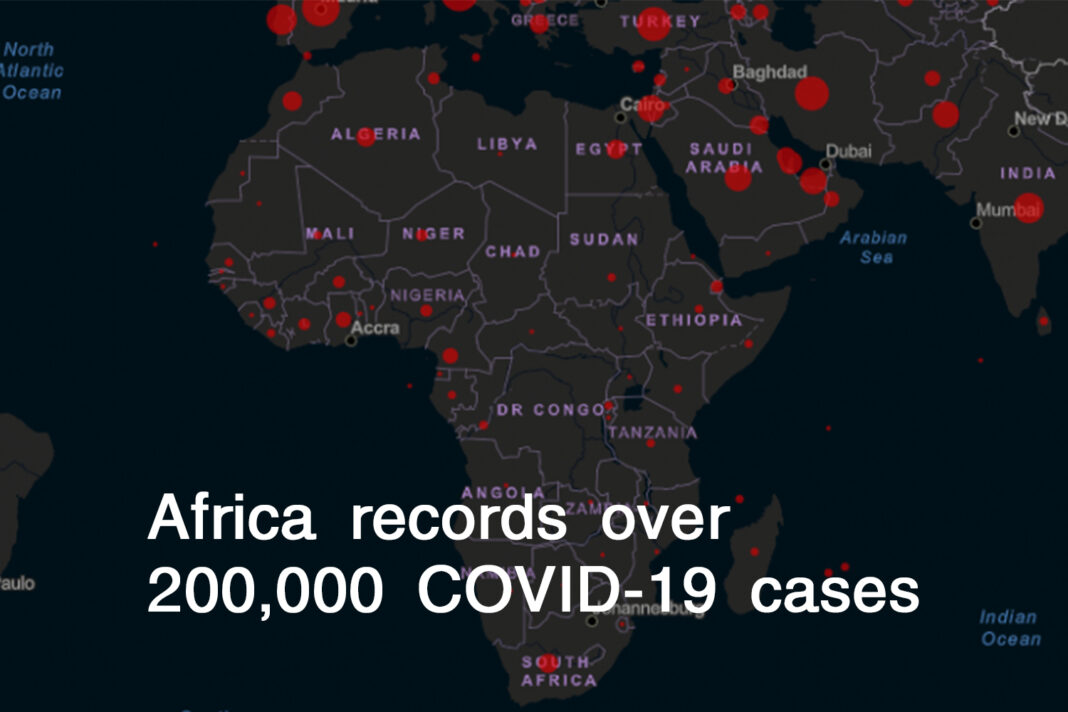
COVID-19 continues to spread in Africa since the virus was first detected on the continent in mid-February 2020. More than 200,000 cases have been confirmed so far, with more than 5,600 deaths. The pandemic is accelerating – it took 98 days to reach 100,000 cases and only 18 days to move to 200,000 cases.
Ten out of 54 countries are currently driving the rise in numbers, accounting for nearly 80% of all the cases. More than 70% of the deaths are taking place in only five countries: Algeria, Egypt, Nigeria, South Africa and Sudan.
South Africa is the most affected, accounting for 25% of the continent’s total cases, with the Western Cape and Eastern Cape provinces reporting high number of cases and deaths daily.
More than half of the countries in the continent are experiencing COVID-19 community transmission. In many cases this is concentrated in capital cities, but cases are spreading into the provinces.
“For now Africa still only accounts for a small fraction of cases worldwide,” said Dr Matshidiso Moeti, World Health Organization (WHO) Regional Director for Africa. “But the pace of the spread is quickening. Swift and early action by African countries has helped to keep numbers low but constant vigilance is needed to stop COVID-19 from overwhelming health facilities.”
Many countries were quick to make difficult decisions and put in place lockdowns and key public health measures such as promoting physical distancing, good hand hygiene and testing, tracing of contacts of people with COVID-19 and isolation of cases. With the support of WHO and other partners, governments also rapidly started to scale up health workforce and laboratory capacities, and to set up points-of-entry screening at airports and border crossings. These public health and social measures have been effective in slowing the spread of COVID-19 in Africa.
In recent weeks, countries began relaxing lockdowns to resume some economic and social activities. The shutdowns have come at considerable socioeconomic cost.
“Stay-at-home orders and closing of markets and businesses have taken a heavy toll, particularly on the most vulnerable and marginalized communities,” said Dr Moeti. “So, the need to balance between saving lives and protecting livelihoods is a key consideration in this response, particularly in Africa.
Easing restrictions should be a controlled process and needs to be coupled with ensuring that widespread testing capacities and mechanisms are in place. These steps need to be constantly adapted according to the trends in the data and maintained until the pandemic is contained or there is a vaccine or treatment for COVID-19 which is accessible to everyone.
As countries ease restrictions, health authorities will need to ensure continuity of essential health care services while also resuming the full gamut of routine health services.