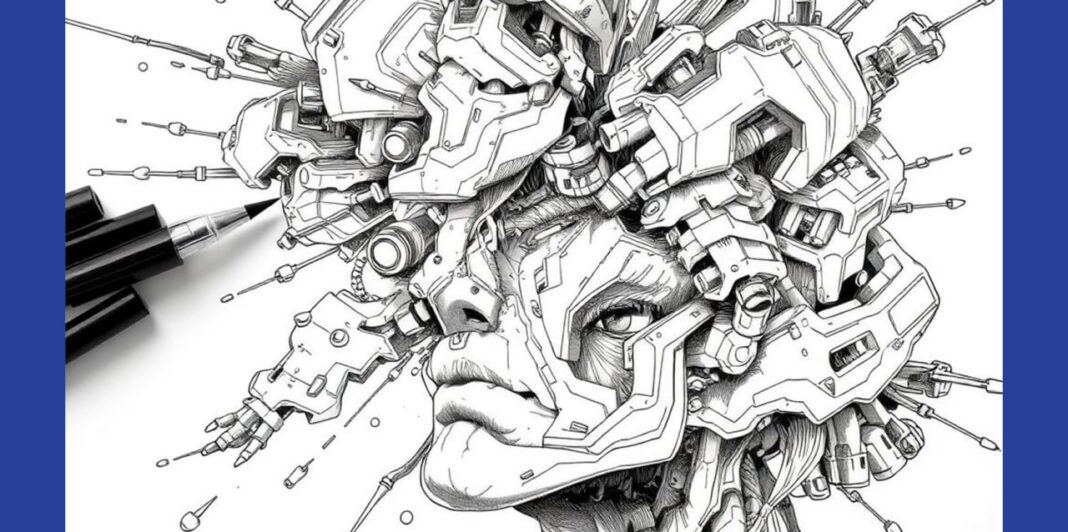
In an age defined by rapid change and complex challenges, it seems that humanity has increasingly fallen into the trap of linear thinking. This inclination, which has been exacerbated by rigid social structures and educational systems, limits our ability to address the multifaceted issues we face today. As we navigate the complexities of late modernity, it is crucial to rethink our approach and embrace non-linear thinking to foster innovation and adaptability.
From early childhood through adulthood, individuals are often conditioned to think linearly. This process begins in educational settings where rigid curricula prioritize memorization and standardized testing over critical thinking and creativity. As a result, many people develop a mindset that views problems in a straightforward, cause-and-effect manner, overlooking the intricate web of interconnections that define our world.
The current global order reinforces this linear perspective. Economic systems, political structures, and societal norms all promote a simplistic view of progress—one that assumes that past successes will guarantee future outcomes. This mindset can be particularly dangerous in a world where unpredictability reigns supreme. The belief that we can predict and control every variable leads to complacency and a false sense of security.
Historically, humanity has faced natural disasters like hurricanes and wildfires without the ability to predict their occurrence. However, advancements in technology have given us a sense of control over certain aspects of our environment. While early detection systems have improved our response to some calamities, they have inadvertently reinforced the notion that we can manage everything through linear thinking.
This “normalcy bias”—the assumption that because things worked yesterday, they will continue to work tomorrow—has become deeply ingrained in our collective psyche. It blinds us to the reality that not all challenges can be anticipated or solved through conventional means. As we confront issues like climate change, social inequality, and global health crises, it is imperative that we recognize the limitations of linear thinking.
Urbanization has further entrenched linear thinking into our daily lives. With over half of the world’s population now living in cities, the expectation of uninterrupted services—such as water supply, traffic flow, and electricity—has become the norm. Urban dwellers extrapolate from their experiences, believing that as cities grow, so too will their conveniences.
However, this perspective fails to account for the finite nature of resources. The assumption that if one million cubic meters of water are needed today, two million will suffice when the population doubles is fundamentally flawed. It ignores the reality that resources are not limitless and that sustainability must be at the forefront of our planning efforts.
At the heart of our economic narrative lies a monstrous fallacy: the belief that infinite growth is possible on a finite planet. This ludicrous assumption permeates every level of economic discourse and policy-making. Institutions like the World Bank and World Trade Organization propagate this ideology without shame, fostering an environment where unsustainable practices are normalized.
The consequences of this mindset are dire. As we prioritize short-term gains over long-term sustainability, we risk depleting vital resources and exacerbating social inequalities. The relentless pursuit of growth without regard for ecological limits is leading us toward an inevitable crisis—a crisis that could have been avoided had we embraced a more holistic approach to problem-solving.
As we confront these pressing challenges, it is essential to challenge the status quo and advocate for non-linear thinking. This shift requires us to recognize the interconnectedness of systems—social, economic, environmental—and understand that solutions must be multifaceted.
By fostering an environment where diverse perspectives are valued and encouraged, we can cultivate innovative approaches to problem-solving. This means embracing complexity rather than shying away from it; it means recognizing that sometimes there are no clear answers or straightforward paths forward.
Education plays a pivotal role in shaping how future generations approach problem-solving. By moving away from rigid curricula that prioritize rote memorization toward experiential learning that encourages critical thinking and creativity, we can equip young minds with the tools they need to navigate an increasingly complex world.
Furthermore, educational institutions must serve as incubators for non-linear thinking by promoting interdisciplinary collaboration and real-world problem-solving initiatives. By breaking down silos between disciplines—such as science, art, business, and social studies—we can foster a culture of innovation that transcends traditional boundaries.
The responsibility for fostering non-linear thinking extends beyond educational institutions; it encompasses all sectors of society—from government officials to business leaders to community members. Each stakeholder must recognize their role in shaping a more sustainable future.
Policymakers should prioritize holistic approaches to governance that consider social equity alongside economic growth. Business leaders must embrace corporate social responsibility as integral to their operations rather than an afterthought. And community members should engage in dialogue with one another to share ideas and collaborate on solutions.
To truly address the challenges facing our world today, we must embrace complexity rather than fear it. This means acknowledging that solutions may not always be clear-cut or easily implemented; they may require experimentation, iteration, and collaboration across various sectors.
By fostering a culture that values non-linear thinking—one that encourages curiosity, creativity, and collaboration—we can unlock new pathways toward resilience and sustainability. We must challenge ourselves to think beyond traditional paradigms and explore innovative solutions that reflect the intricacies of our interconnected world.
This call for change is not merely an academic exercise; it is a necessity for survival in an increasingly unpredictable world. Together, let us embrace non-linear thinking as a guiding principle for navigating the complexities ahead—transforming adversity into opportunity while ensuring a sustainable future for generations to come. The time for action is now; let us rise to meet this challenge with courage and creativity!