In our increasingly interconnected world, the digital landscape presents a double-edged sword. While it offers unprecedented opportunities for communication and knowledge sharing, it also serves as a breeding ground for disinformation and hate speech, casting a long shadow over our societies. This insidious issue reaches far beyond the glow of screens, affecting those who may never use a computer. It fuels real-world divisions, ignites conflicts, exacerbates existing tensions, perpetuates cycles of political polarization and tribalism, and deepens societal fractures. Additionally, it normalizes gender-based harassment, transforming what should be unthinkable into a grim reality. In Ethiopia, as in many nations, we witness the daily toll of this digital scourge: the erosion of trust, the fracturing of communities, the silencing of voices, and the undermining of our collective progress.
The urgent need for intervention is clear. We must act now to protect the very fabric of our society from this corrosive influence. Collective action is essential, involving government, civil society, educational institutions, and individuals. We must be prepared to respond to this call to arms with knowledge and determination.
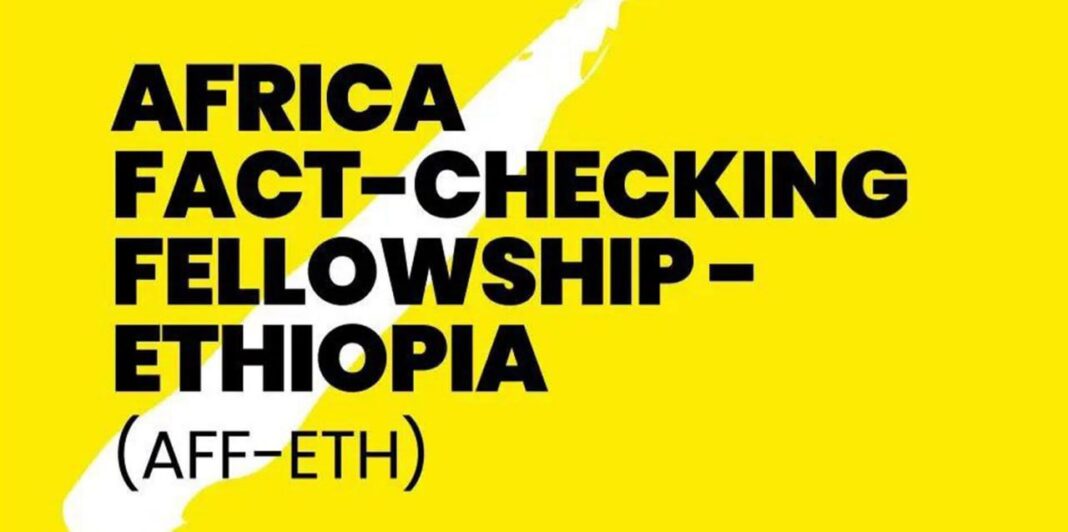
Amidst this alarming situation, there is movement and hope. One promising initiative is The Africa Fact-Checking Fellowship – Ethiopia (AFF-ETH), which aims to equip citizens with the skills to identify and counter false information on social media. This fellowship program, part of the #defyhatenow Ethiopia project, is coordinated by the rOg agency based in Germany in partnership with Positive Peace Ethiopia (PPE), with funding from the European Union. Its goal is to develop a network of scholars who are knowledgeable and willing to engage in fact-checking.
The program consists of a three-month training course where participants—including youth, women, content creators, journalists, and thought leaders—are trained in small groups (cohorts) through a blended format of online and offline sessions. The first cohort, which included 15 participants from diverse backgrounds in the Oromia region, completed 19 sessions in Shashemene city and online.
The program’s transformative impact is exemplified by Shewit Hirpho, an alumna with a background in education and women’s empowerment. “Before the fellowship, I was overwhelmed by the flood of fake news and misinformation,” she shared. “Now I have the ability to defend myself and help my community counteract this damaging information disorder.”
Encouraged by this success, the second cohort began on March 1, 2025, and is currently training 15 more disinformation fighters in the Tigray region. The initiative also features a radio show on Shashemene FM to reach even more listeners with accurate information.
“Education is a powerful weapon in this fight,” says Naol Getachew, a training coordinator and Lead Trainer. “It is the strongest tool we have to combat hate speech and misinformation. We have only just begun our journey, and while it will be long, our goal is to reach as many people as possible.”
Bruk Mezgebu, the country project manager for #defyhatenow Ethiopia, outlines the project’s objective: “We are committed to fostering a healthier online community by mobilizing civic and digital action against hate speech, bridging the knowledge gap between tech-savvy and non-tech-savvy citizens, and promoting responsible social media use.”
While the challenge of disinformation is significant, it is not insurmountable. By equipping citizens with the tools to distinguish fact from falsehood, initiatives like AFF-ETH are helping to create a more informed and resilient society. This is a call to action for all Ethiopians to become guardians of the truth, to critically examine information, and to contribute to a digital landscape that fosters harmony and peace.