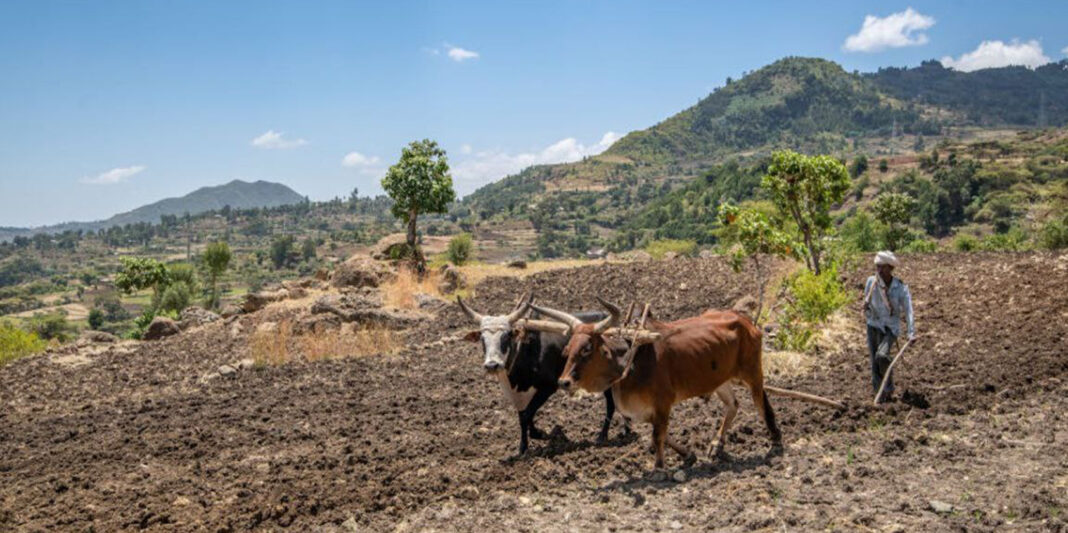
According to the Agriculture Bureau of the Tigray Regional Government, approximately 50 percent of the region’s fertile agricultural land remains uncultivated due to incomplete implementation of the 2022 peace agreement. Alembrhan Harifeyo, Head of the Tigray Agriculture Bureau, revealed that half of the critical farmland is currently inaccessible, severely impacting food production and worsening the economic crisis.
“The remaining half of the land is under the control of various armed groups and cannot be accessed by local communities and displaced populations,” Alembrhan told Capital newspaper. “This situation has led to increased hunger and deaths. It is a serious test for us.”
The failure to fully implement the Pretoria Peace Agreement means the region has not returned to pre-war normalcy. Alembrhan stressed that Tigray is divided in name only, with its land and people split between areas under different controls, severely limiting agricultural activities and humanitarian access.
Recent reports from international organizations like ACAPS confirm these grim realities, highlighting that conflict has devastated farms, destroyed livestock, and forced many to depend on humanitarian aid. Specifically, the presence of Eritrean troops in certain border zones has kept nearly half of Tigray’s arable land out of use.
A December 2024 harvest assessment predicts that 2.5 million people in the region will require food assistance in 2025, with around 500,000 facing severe food insecurity.
Alembrhan criticized both the federal government and the international community for insufficient attention to the full peace agreement implementation and the restoration of normal conditions in Tigray. He pointed out that western and southern zones, which were not war epicenters, should have returned to stability by now.
For fiscal year 2024/25 (2017 Ethiopian calendar), the Bureau of Agriculture initially planned to cultivate 1.3 million hectares and harvest 26 million quintals of crops, assuming full peace and recovery. However, access to only about 763,000 hectares is currently possible, leading to estimates that the harvest will be less than 50 percent of the original target.
Additionally, adverse weather conditions including unusual rainfall, crop pests, and diseases damaged approximately 328,000 hectares of farmland in some zones last October, further reducing expected yields by at least 25 percent.