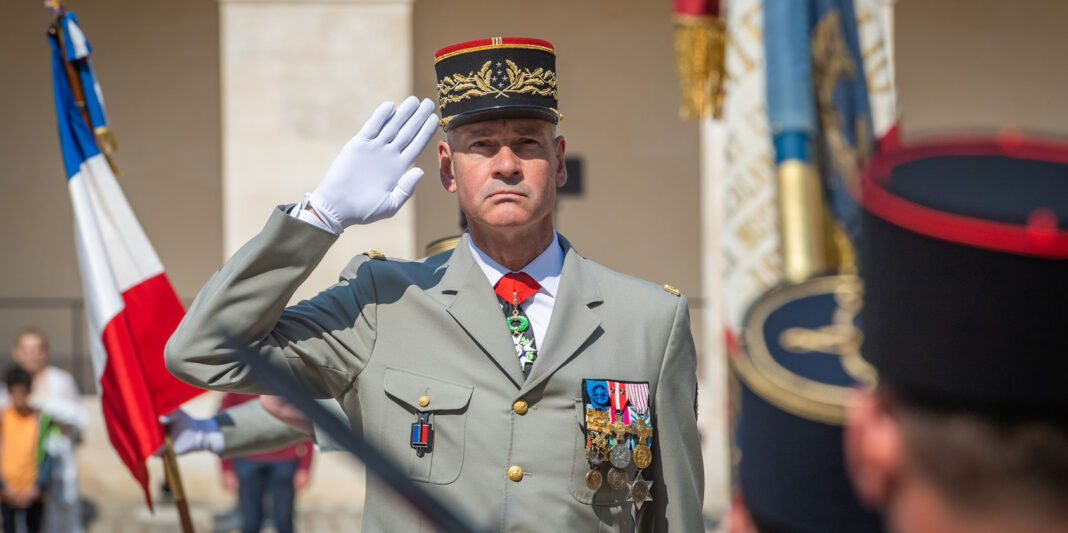
Following the 2024 visit of several African Chiefs of Staff of the Army to France, General Pierre Schill, Chief of Staff of the French Army (CEMAT), launched the inaugural Rencontre Capacitaires Afrique. Designed as a platform for dialogue and collaboration, the event brings together African land forces and the French defense industrial and technological base (BITD) to explore co-development opportunities that can support the ongoing transformation of armies across the continent.
This year’s seminar focuses on a central and timely question: “Facing the challenges of the 21st century—how can states strengthen their sovereignty through national security, border protection, and support to civilian populations?”
On the sidelines of the Addis Ababa meeting, held on 27–28 November at the Sheraton Addis Hotel, General Schill spoke exclusively with Capital’s Groum Abate. The Defense B2B Forum—organized by GICAT and COGES as part of the event—brought together African army chiefs, including from Benin, Ivory Coast and Cameroon while other countries were represented by high-level delegations, and Rwanda was represented by its Army Directorate, as well as 19 French defense companies. Their discussions centered on emerging opportunities in equipment, software solutions, and deeper strategic partnerships. Excerpts;
Capital: Could you share the primary objectives of this event and what France aims to achieve through it?
General Pierre Schill: This event brought together army chiefs of staff from African countries and representatives from the defense industry, most of whom are from France.
The goal was to foster dialogue between military leaders and industry professionals to discuss future opportunities for the armed forces.
Capital: What is the significance of meeting the evolving security needs of African countries?
General Pierre Schill: Every army worldwide is currently grappling with procurement and capacity challenges. The needs of land forces differ from those of air and naval forces. A military requires a variety of equipment—both large and small—to be prepared for combat. Therefore, procurement is crucial. Whether a country is in Europe or Africa, rapid technological innovation raises questions about what to prioritize in terms of purchases.
Capital: Were there specific categories of military equipment or software that garnered significant interest from the delegates?
General Pierre Schill: Yes, the delegates, including army chiefs of staff, are keenly interested in new technologies, including drones, anti-drone systems, command and control (C2) digital systems, and AI capabilities to support decision-making. They also focus on ammunition, main vehicles, and logistics. These areas are of global interest, including in Africa. Each African nation has unique needs based on its specific circumstances, military status, and threats, such as terrorism or border security.
Capital: Many African countries are heavily invested in human capital and technology.
General Pierre Schill: It’s often thought that new technologies or webinars are expensive. However, many new technologies allow for the procurement of cost-effective, rapidly deployable equipment with significant impact. For instance, command and control capabilities can be achieved at a relatively low cost, and inexpensive drones can provide valuable intelligence, protection, or even offensive capabilities. I believe it’s beneficial for African countries to focus on these effective and affordable solutions. Additionally, developing or industrializing these capabilities domestically is essential for many African nations, just as it is for my own country to have local manufacturers.
Capital: How does France balance the need to support African security forces with concerns related to the ethical use and transfer of military technology?
General Pierre Schill: France aims to establish partnerships that address both operational needs and reinforce collaboration through shared capabilities or joint procurement of military resources. These partnerships encompass political, military, and industrial dimensions.
Capital: Can you highlight any new technologies or innovations presented at the event that could be game changers for African forces?
General Pierre Schill: I previously mentioned command and control (C2) systems. These systems have the potential to revolutionize armies worldwide, including those in Africa. With advancements in AI and the ability to analyze vast amounts of intelligence from multiple sources, C2 systems can significantly aid military decision-making. Additionally, the increasing use of drones in warfare and defense is remarkable. Four years ago, we recognized the role of drones, but their evolution as both a threat and a vital tool for all armies—African forces included—has been transformative for intelligence gathering, protection, and offensive operations.
Capital: Did the event include discussions or initiatives focused on military training, capacity building, or joint exercises alongside equipment procurement?
General Pierre Schill: Yes, the discussions encompassed procurement, but as army chiefs know, the need extends beyond simply acquiring equipment. It’s about developing operational capacity, which requires not only the right tools but also trained personnel to operate and maintain that equipment. The conversations during this meeting addressed all these aspects, including the effective use of equipment and how it can be integrated with other capabilities.
Capital: Were any contracts signed or feasibility studies conducted?
General Pierre Schill: I don’t know if any contracts were signed, as the relationship between the armies and the industries is complex. However, I don’t believe the primary purpose of this meeting was to finalize contracts. Instead, it was an opportunity for mutual exchange. The industry representatives had the chance to inform the military leaders about what they could offer.
Conversely, the military chiefs were able to express their needs. I view this as an initial discussion that could potentially lead to commercial agreements in the future. The immediate goal was not to sign contracts. The next steps may involve one-on-one discussions; some military chiefs or their delegations who attended could have initiated contacts with industry representatives. Depending on the outcomes of these discussions, further conversations may arise, especially regarding the upcoming meeting of army chiefs of staff. I understand that a forum for the army chiefs of staff in Africa is planned for next year, following a similar event organized two months ago in Kigali by the Rwandan forces. This could serve as a next step in fostering dialogue among the army chiefs.
Capital: In your opinion, how important are partnerships and collaboration in technology development between French companies and African nations?
General Pierre Schill: I would say that the primary aim and most critical aspect is operational cooperation between the French army and various armies on the continent. This is not merely a question of cooperation between France and Africa; it involves collaboration between France and individual countries.
Operational cooperation is essential to address the growing threats. For instance, we are currently in Ethiopia, a country surrounded by regions facing significant threats, including terrorism and internal conflicts, as seen in Sudan.
Thus, it is vital to establish strong operational cooperation, which can be further enhanced through tactical and industrial collaboration.
Capital: What message do you want to convey to African military chiefs and the broader African public about France’s commitment to security collaboration?
General Pierre Schill: The key message is one of confidence. I want my counterparts in Africa to see me as a genuine partner. This partnership should be characterized by long-term cooperation rather than just transactional exchanges of buying and selling equipment. It should encompass a wide range of collaborative efforts, including joint operations when necessary, peacekeeping missions, training exchanges, discussions on military doctrine, and industrial cooperation. I have much to learn from many African armies, particularly the Ethiopian army, which is large, operational, and actively engaged in various peacekeeping missions both domestically and abroad.
While I believe the French army is strong and has much to contribute, true partnership hinges on dialogue—particularly discussions that focus on the needs of both sides. We must engage in tough conversations to pragmatically determine our collaborative goals and follow through on our plans. Today’s meeting exemplified this commitment, showcasing an industrial capacity that exceeded previous discussions and reinforcing our global partnership.
Capital: How can French companies compete with cheaper product manufacturers like China and Russia?
General Pierre Schill: I do not claim that French companies are always the most effective in every domain; effectiveness varies based on the unique needs and uses of each army.
However, I can confidently say that most of the equipment in the French army comes from French companies, and I believe it is quite efficient. If it meets our needs effectively, it is likely to meet the needs of other countries as well. I procure equipment from French industries at competitive prices, balancing cost, timing, and effectiveness. Therefore, I am confident that when comparing French equipment to others, some of it can provide the right price, at the right time, with the right effectiveness.