Ethiopia’s push to shift fresh-produce exports from air to sea freight is running into serious headwinds, with exporters warning that high documentation charges and cumbersome procedures for importing empty refrigerated containers are undermining the competitiveness of sea-based logistics.
Industry representatives say it has been technically proven that perishable goods such as fine beans and avocados can reach European markets in good condition by sea in reefer containers, but documentation costs of up to 9,000 birr per shipment are blocking large-scale uptake. They argue that these fees, especially on rail corridors, erode already tight margins and weaken the cost advantage sea freight should have over air.
The pivot to sea freight has been driven largely by European retailers’ climate policies, with several major supermarket chains pledging to phase out air-freighted fresh produce to cut carbon emissions. Ethiopian exporters now face pressure to offer “green logistics” solutions or risk losing shelf space as buyers prioritise lower‑emission supply chains.
According to sector experts, Ethiopian exporters face an onerous process when importing empty refrigerated containers from Djibouti for stuffing at farms or inland facilities. The clearance procedures are reportedly treated much like importing a full container, requiring shippers to be listed as consignees and to provide customs guarantees based on a notional container value of around 33,000 euros.
Soji Thomas Korah, general manager at MSC Ethiopia, notes that this structure slows the turnaround of equipment and lengthens transit times for perishable cargo, increasing spoilage risk and costs. He and others describe the current regime as inefficient, expensive and high-risk, arguing that it discourages the repositioning of empties that is essential to scaling sea-freight horticulture.
Exporters also point to gaps in cold-chain infrastructure and the absence of a clear standard operating procedure (SOP) for reefer exports. While many shippers have basic packing space, they say there is no fully equipped hub capable of preparing large volumes to export standard—a gap expected to remain until planned facilities at Mojo dry port come online within about two years.
Because there is no recognised SOP for farm-level container loading comparable to airport protocols, exporters say they struggle to obtain predictable inspection and clearance, which reduces transparency and planning certainty. Weekly sailing schedules from Djibouti add further pressure: missing one vessel can push produce beyond its shelf life, turning logistical glitches into outright losses.
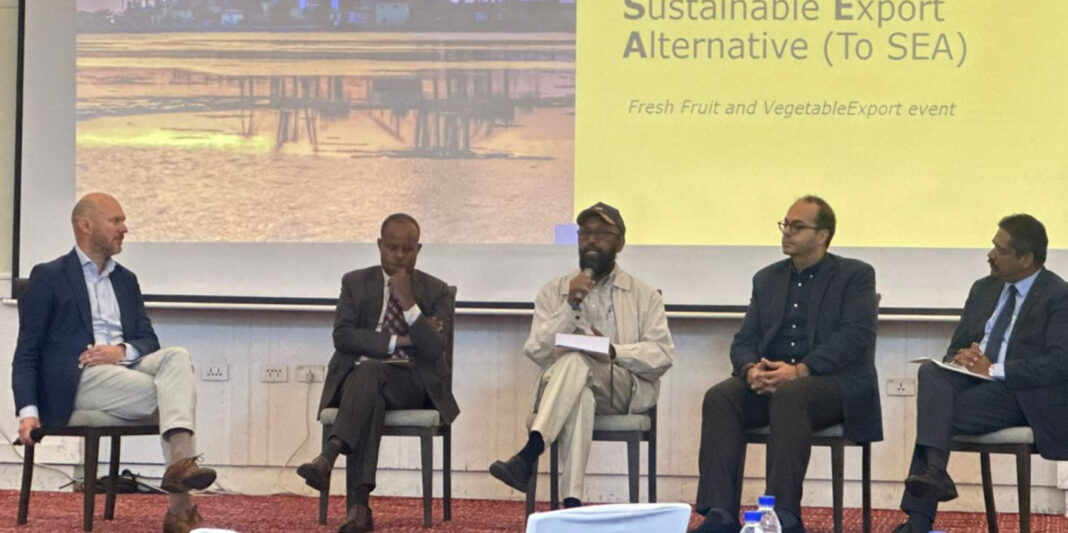
These concerns were aired at a recent discussion convened by Resilience Consultancy PLC, bringing together private operators, government agencies, financiers and development partners involved in fresh fruit and horticulture. Participants stressed that while technical capacity is improving—local reefer technicians are now being trained and certified by international manufacturers—regulatory agencies must move faster if sea freight is to scale.
Experts argue that reform priorities should include simplifying import and export procedures for empty reefer containers, introducing a transparent national SOP for reefers, and accelerating certification of local technicians to reduce dependence on foreign specialists. They also call for policies that encourage more firms to invest in quality and volume so Ethiopia can reliably fill the thousands of containers demanded by large European supermarket buyers.