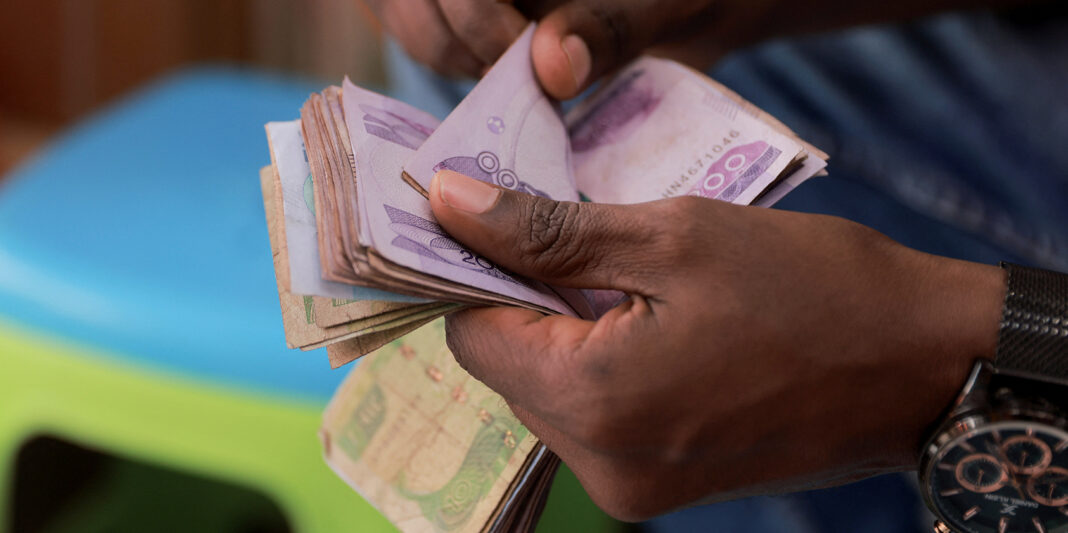
Birr is coming under renewed strain a year after the shift to a market‑based exchange rate, with fresh data pointing to accelerating depreciation, a fragmented interbank market and rising transaction costs despite repeated central bank interventions.
In the first quarter of the 2025/26 fiscal year (July–September 2025), the birr weakened by 8.1 percent against the US dollar, sliding from 135.5 to 146.4 birr per dollar, according to a new macroeconomic update by the Ethiopian Economic Association (EEA). The trend continued into the second quarter, with the rate passing 150 and reaching around 154 birr per dollar by mid‑December 2025—leaving the currency more than three times weaker than its pre‑float level of about 50 birr per dollar in mid‑2024.
The report, titled “Ethiopia’s Exchange Rate Reform After One Year: Assessing Stability, Competitiveness, and External Pressures,” notes that a record 150‑million‑dollar FX auction on 5 August 2025 briefly steadied the market before the birr resumed its slide and broke through the 140 mark later that month. Economists say the episode underlines how strong underlying demand for hard currency—driven by needs for fertiliser, medicines and capital goods—continues to outstrip limited supply, even when the central bank injects sizable amounts.
EEA’s analysis highlights growing fragmentation in the foreign exchange market, with wide differences emerging between banks’ quoted rates. By 30 September 2025, the spread between the lowest and highest interbank dollar buying rates exceeded 14 birr, ranging from about 129.0 to 143.5 birr per dollar, while retail rates showed gaps of nearly 15 birr between institutions.
The average daily bid–ask spread widened sharply—from 3.1 percent in the previous quarter to 6.8 percent—signalling a more imperfect market structure, higher transaction costs and limited arbitrage between banks. Analysts warn that such conditions raise risks for importers and exporters, encourage hoarding behaviour and may reflect capital flight or unrecorded FX flows that are hard to reverse through auctions alone.
One notable bright spot is a gradual narrowing of the gap between official and parallel market rates, a key objective of the July 2024 reforms. EEA estimates that the premium fell from about 25 birr (roughly 18.4 percent) in early July to around 20 birr (13.7 percent) by the end of September, suggesting the new regime and larger auctions are slowly drawing part of FX demand back into formal channels.
The sharp depreciation has also boosted Ethiopia’s measured price competitiveness. The Real Effective Exchange Rate Index fell by about 26.4 percent year‑on‑year, while the Nominal Effective Exchange Rate dropped 25.7 percent, reversing what many economists considered an overvalued currency. In principle, this should support exporters and import‑substituting industries, but the report cautions that gains will depend on how quickly firms can expand supply and on the authorities’ ability to contain inflation driven by more expensive imports.
The EEA paper situates Ethiopia’s experience within a “binary shock” in global commodity markets, where prices for key exports such as gold and coffee have climbed, while energy and grain prices have eased from recent peaks. It notes that gold and coffee export earnings rose by nearly 40 and 37 percent respectively, improving the terms of trade and providing some relief to the external balance.
Purchasing Managers’ Index (PMI) readings above 50 in major partner economies—including the US, India, China, the euro area and a rebounding Kenya—point to resilient external demand that could support Ethiopia’s exports if firms can exploit the weaker birr.
Looking ahead, the Association urges a more comprehensive policy response to stabilise the FX market and make the new regime sustainable. Recommended steps include deepening the interbank FX market to improve price discovery, rebuilding foreign exchange reserves to cushion shocks, and accelerating domestic fertiliser production to reduce pressure from critical imports.
Policymakers are also being advised to strengthen coordination between monetary, fiscal and trade policies, so that the benefits of improved competitiveness are not wiped out by runaway inflation or renewed instability in the parallel market.