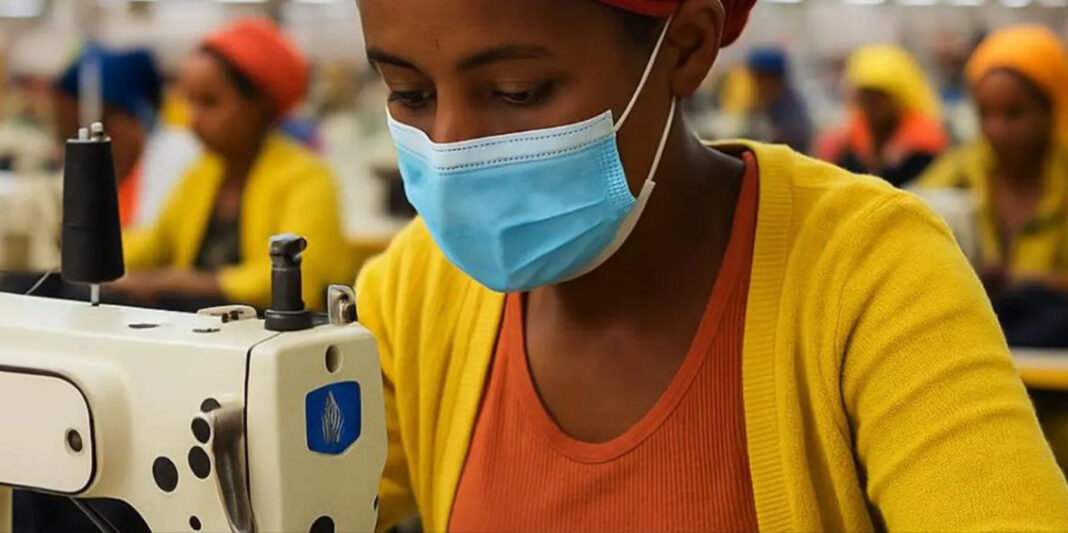
Ethiopia’s trade unions, especially in labour‑intensive sectors such as textiles and garments, are facing an acute risk of dissolution as legal loopholes and weak enforcement leave the constitutional right to organise largely unprotected, experts and union leaders warn.
At a recent stakeholder forum convened by the Forum for Social Studies (FSS), industry specialists, union representatives and factory owners highlighted how routine threats, dismissals and intimidation of organisers have eroded union density to below 10 percent of eligible workers. Participants said workers who attempt to form unions are often labelled “troublemakers” and either pressured into resigning or terminated outright, undermining solidarity and collective bargaining.
Although Ethiopia’s Labour Proclamation formally guarantees freedom of association, speakers stressed that there are almost no consequences for employers who block or dismantle unions, allowing anti‑union practices to spread unchecked. In some large firms, they noted, management has resisted unionisation even when a clear majority of workers have expressed interest in organising.
The forum also drew a direct link between weak organising rights, the absence of a national minimum wage and the sector’s deepening labour crisis. Experts warned that extremely low pay in textile and garment factories is driving high turnover and prompting some large plants to shut production lines or cut shifts, with potential for broader social instability.
Labour Proclamation No. 1156/2019 provides for the creation of a tripartite wage board to set and review minimum wages, but the body has yet to be established, despite repeated appeals from the Confederation of Ethiopian Trade Unions (CETU) to the Prime Minister. While the government has raised salaries and tax‑free thresholds for civil servants, panellists said these measures bypass millions of low‑paid industrial workers who remain without any statutory wage floor.
Trade union leaders and policy experts warned that unless enforcement of organising rights improves and a functioning wage board is put in place, Ethiopia risks undermining its own industrialisation agenda in export‑oriented manufacturing. They urged closer coordination between the Ministry of Labour and Skills, the Ministry of Industry and other agencies to improve labour inspections, simplify procedures and integrate reliable labour‑market data into policymaking.
Without such reforms, they cautioned, Ethiopia’s flagship industrial parks could face mounting unrest, skills shortages and declining productivity—problems that stronger unions and a credible minimum‑wage system were originally meant to help prevent.