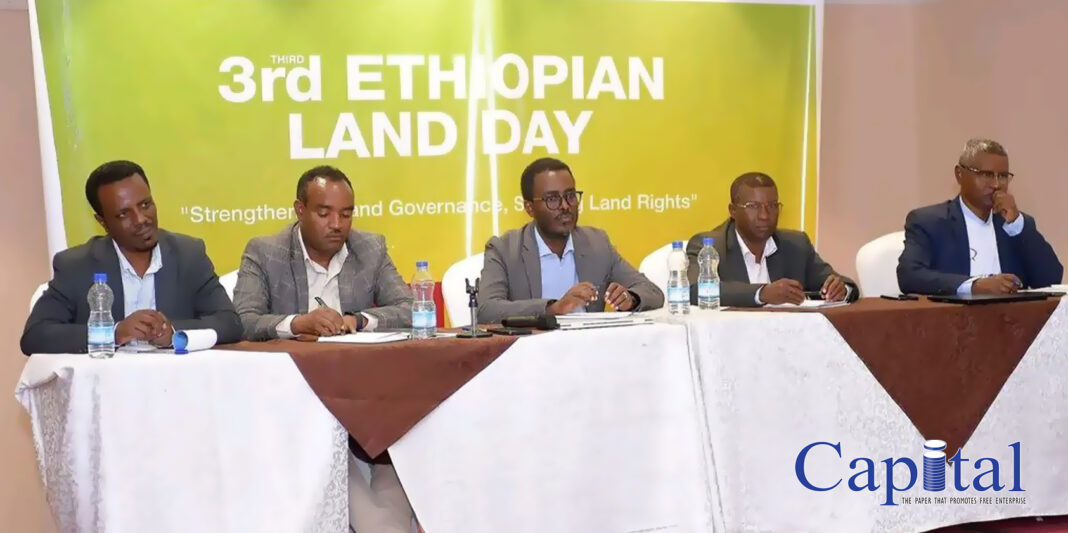
Experts are raising alarm over Ethiopia’s urban land governance practices, warning that the current system—where more than 90 percent of city land is allocated administratively—is creating a deep equity crisis that threatens access to land for low- and middle-income citizens.
Despite rapid city growth and large-scale infrastructure developments, researchers say the imbalance between administrative allocation and open auctions has frozen the land market and distorted affordability.
During the 3rd Ethiopian Land Day Forum organized by Land for Life Ethiopia, academics and policymakers warned that Ethiopia’s land leasing system is overly dominated by direct government allocation to large industrial, institutional, and housing projects.
“Between 90 and 95 percent of urban land is pre-booked for industrial or institutional use,” a representative from Bahir Dar University’s Institute of Land Policy and Governance said. “This leaves barely 5 to 10 percent for competitive auctions, inflating prices and shutting out ordinary citizens.”
Experts argue that this system fosters a speculative market dominated by brokers and politically connected investors while depriving civil servants and small business owners of viable access to affordable land.
Forum participants also highlighted the social cost of rapid urban expansion. When rural land is reclassified for urban use, farmers are often compensated based on agricultural value rather than urban market prices, deepening income inequality.
Musa, a representative from the Benishangul-Gumuz Land and Investment Bureau, described the scenario vividly, “An uneducated farmer who once managed two hectares suddenly receives 200 square meters of living space and is called a ‘city dweller,’” he said. “Without income or urban job skills, many end up selling their small plots and fall into poverty.”
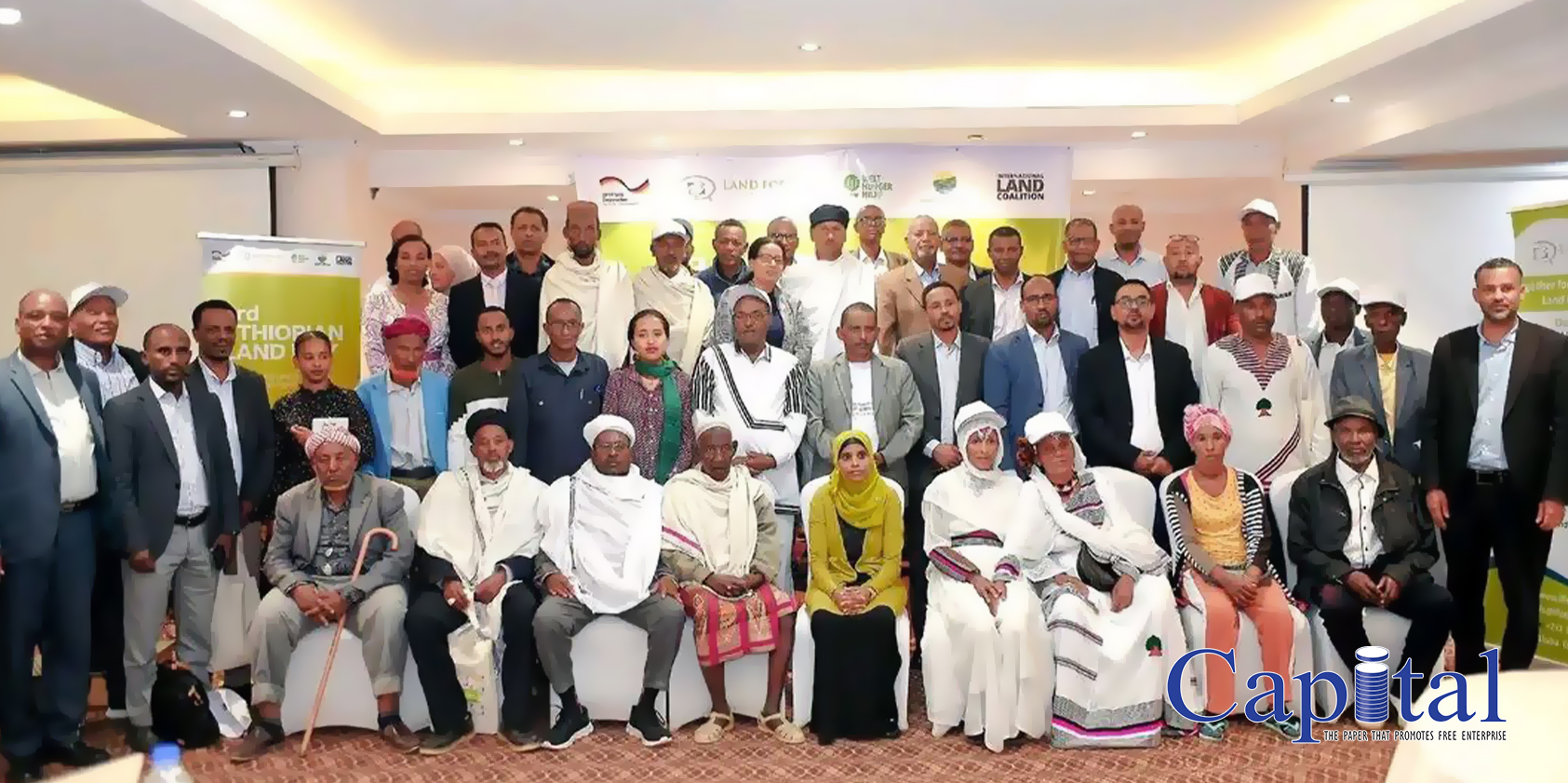
Scholars emphasized governance fragmentation as a core problem, noting the absence of a centralized body overseeing land administration nationwide. They urged the government to establish a National Land Commission or an independent Ministry of Land to harmonize rural and urban land management.
“Land is a shared national wealth,” one expert noted. “Allowing it to be administered by multiple bodies has hampered rural-urban connectivity and deepened inequality.”
Participants also questioned whether Ethiopia’s push for “smart city” development—especially through corridor transformation projects in Addis Ababa and regional capitals—adequately protects the rights of low-income residents in older and informal settlements.
“The pursuit of beauty and investment is displacing the poor,” a participant said. “We are creating glittering corridors where the poor cannot afford to live.”
Melesse Damtie, Chairperson of Land for Life Ethiopia, said the forum underscored the need for inclusive reform, “This event reaffirms our commitment to building sustainable and equitable land governance systems that safeguard community rights and improve livelihoods,” he stated.
Experts also linked effective land management to broader food system resilience, arguing that equitable land laws are central to agricultural productivity, sustainability, and food security.
According to Bizualem Admassie, CEO of Urban Land Administration at the Ministry of Urban Planning and Infrastructure, strategic investment in agriculture—through research, infrastructure, and private partnerships—can enhance productivity and stabilize food access.
Speakers further highlighted the plight of pastoralist communities, whose mobility and traditional grazing rights are under pressure from land privatization and commercialization. Although Ethiopia’s constitution recognizes pastoral land rights, experts said these protections are rarely implemented.
They urged a shift toward Participatory Rangeland Management, integrating community knowledge systems and legal frameworks to ensure sustainable land use and animal movement rights.