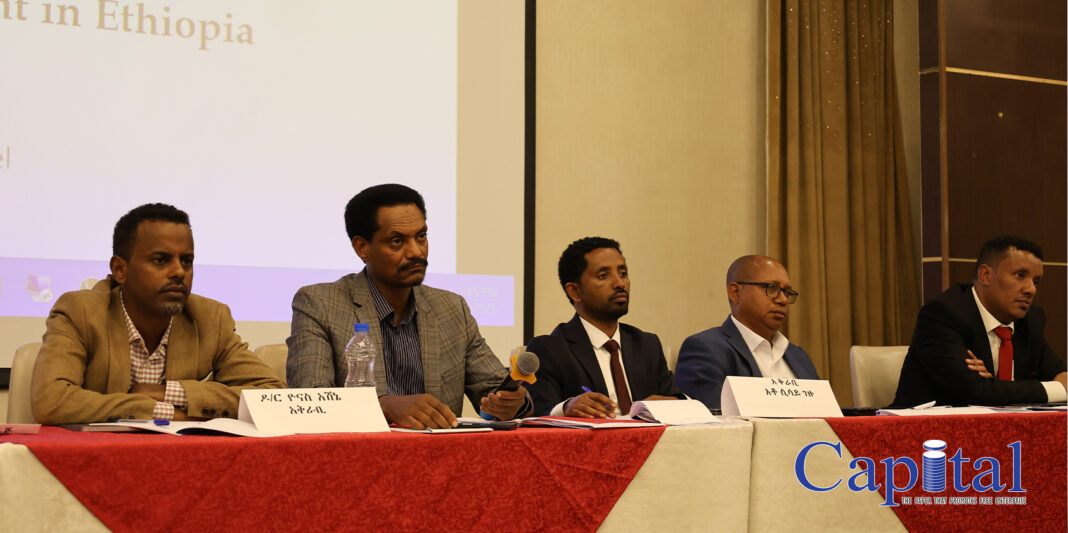
Addis Ababa, 2025, December- Ethiopia has gone through several phases in its pursuit of a digital economy, which started as a far-off dream, and has become the main focus of its national development agenda. This pivotal point was the center of the recent ARDA TALK Series, held by the Institute of Foreign Affairs (IFA), where government representatives, diplomats, regulators, and the heads of the private sector were gathered. However, the discussion, led by the Safaricom Telecommunications Ethiopia PLC CEO Mr. Wim Vanhelleputte, did not stop at discussing infrastructure but deconstructed the politics economy of digital transformation, highlighting that only by including policies, predictable regulation and long-term partnerships, can one truly move forward.
A Foundational Shift: From Luxury to Lifeline.
The discussion was put within the context of the ambitious Digital Ethiopia 2030 strategy, which proposes that technology can be used to drive inclusive development and better governance. There was an agreement that digital connectivity should be considered as a basic national infrastructure- just like roads, electricity and water. Respondents held that until there is fair access, the process of modernizing the economy and improving services to the people will still be held at the basic level, which will leave millions behind.
Liberalization: Not Just a Market Reform.
The core of this change is the historic liberalization of the telecommunications industry that has ended a state monopoly. This action is a radical change of governance, now the state is no longer the exclusive provider, but the regulator and strategic partner. Mr. Vanhelleputte admitted the favorable regulatory direction, but emphasized that the investor confidence in the long-run is based on predictability and consistency of the policy rather than incentives in the short-term. The argument presented Ethiopia opening telecom as a vital case study on a balance of public interest against the dynamics of the private-sector.
Safaricom Ethiopia: Embedding for the Long Haul
The actual result of this reform is the entry of Safaricom Ethiopia. Its commitment to invest USD 3 billion since October 2022 and intending to invest the same amount is a sign that it believes in the potential of Ethiopia. Its influence is not only on capital: it has created more than 20,000 indirect jobs, and it has focused on local capacity building by means of skills transfer. This makes Safaricom not a short-term player, but a deep, long-term investor in the digital ecosystem of Ethiopia.
Building Out the Network: Geography, Green Power, and Growth
Safaricom is operationally reporting a network cover of approximately half of its intended coverage with a promise of doubling the infrastructure and the availability. It is tremendous to cover a large and rough territory of Ethiopia. Nonetheless, the participants found one distinctive strategic strength, the renewable, green energy grid that is predominant in Ethiopia. This digitalization development and sustainable power fit is a way of ensuring climate-conscious telecom development, transforming an environmental promise into an operational resource.The
Seven Pillars of an Inclusive Digital Ecosystem
A key contribution of the forum was Mr. Vanhelleputte’s outline of seven interdependent building blocks for a resilient digital future:
1. Infrastructure: Nationwide network expansion is the bedrock, requiring extension beyond major cities to prevent entrenched regional disparities.
2. Device Access: Connectivity is meaningless without affordable smartphones and tools, necessitating initiatives like local assembly to bridge the access gap.
3. Reliable Power: The entire digital ecosystem rests on stable electricity; extending Ethiopia’s green energy reliability to underserved areas is crucial.
4. Digital ID: A secure, functional national identification system is a cornerstone for accessing services, building trust, and enabling scalability.
5. Platforms & Services: E-government, digital marketplaces, and health/education platforms must translate connectivity into tangible social and economic value.
6. Digital Finance: Inclusive payment systems are vital to unlock connectivity’s economic potential, enabling e-commerce and access to credit.
7. Digital Literacy: Ultimately, investment in human capital—from basic skills to advanced expertise—determines whether digital transformation empowers or excludes.
The 30-Year Horizon: Patience for Promise
Reflecting a deep commitment, Safaricom Ethiopia articulated a 30-year investment horizon, with profitability expected only after seven to eight years. This patient-capital model aligns with Ethiopia’s long-term development vision. With a population surpassing 120 million, Ethiopia is consistently viewed as one of Africa’s most promising digital markets, poised for a potential fivefold sector growth—if reforms stay the course.
Conclusion: The Crossroads of Transformation
The ARDA TALK Series underscored that Ethiopia’s digital transformation is less a technological challenge and more a test of policy, institution-building, and governance. Telecommunications sit at the nexus of reform, investment, and social inclusion.
Safaricom’s experience demonstrates how private investment, aligned with national strategy, can drive inclusive connectivity and skills development. Yet, the forum reaffirmed that sustained collaboration between government, private sector, and civil society is non-negotiable.
As Ethiopia stands at this pivotal juncture, today’s choices on regulation, investment, and partnership will determine whether its digital future becomes a powerful engine for inclusive growth or a new axis of inequality. Through such focused dialogue, the path forward is being charted, one reform at a time.
Tesfaye Bezabih, PhD works at the Institute of Foreign Affairs