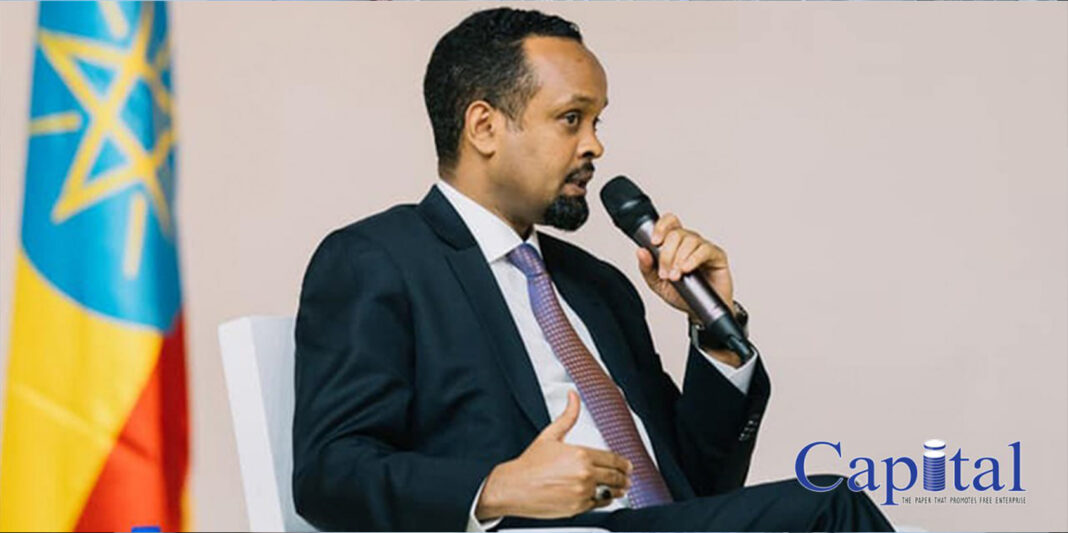
Minister of Finance Ahmed Shide announced that ongoing debt rescheduling negotiations are expected to lower the nation’s debt risk to a moderate level within the next two years. This announcement comes as the diaspora community shows interest in investing in the birr through the financial sector.
Speaking at the ‘Finance Forward Ethiopia’ conference, which reviewed the country’s economic reforms over the past seven years, Ahmed noted that progress is being made in debt restructuring efforts. Ethiopia has been in negotiations with both official and private creditors since it requested a restructuring in 2021.
While the process is not yet finalized, the government reports it is in its final stages. Earlier this year, authorities announced they had reached an agreement in principle with an Ad Hoc Committee of bondholders regarding the principal financial terms for restructuring the 2024 Notes.
Ahmed projected that the current high-risk debt burden will decline to a moderate level within the next two years.
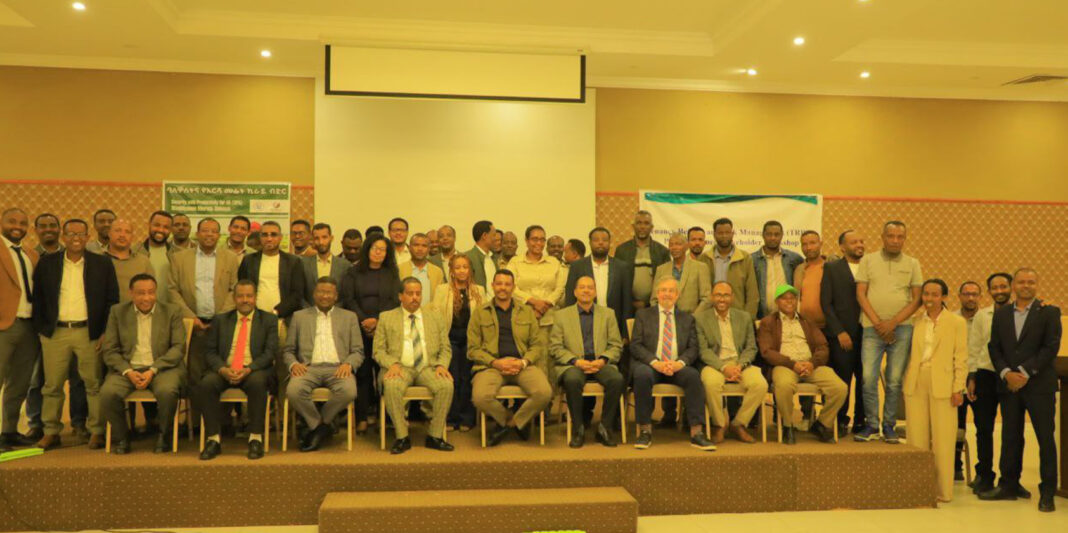
During the conference on Thursday, January 15, attended by Prime Minister Abiy Ahmed, the Finance Minister also highlighted significant growth in tax collection in recent years.
He stated that the tax-to-GDP ratio is expected to increase by four percent in the upcoming year, currently standing at about seven percent—one of the lowest among peer nations.
Ahmed assured that the government will continue to actively promote economic growth in the coming years. “Public investment will continue, while attracting private investment and expanding public-private partnerships will be key to economic prosperity,” he said.
In her presentation, Minister of Revenues Aynalem Niguse outlined successes in tax administration, reporting that electronic filing and e-payment of taxes have risen to 94% and 64%, respectively, up from nearly zero at the end of the previous fiscal year.
Electronic tax clearance now stands at 54%, significantly reducing illicit activities. “Electronic receipt transactions have reached 291 billion birr, facilitating seamless handling of indirect taxes,” she added.
Regarding short-term objectives, National Bank of Ethiopia Governor Eyob Tekalegn announced plans to establish an independent regulatory body for the insurance industry. “Our goals for financial sector development include designing a mortgage policy, establishing a roadmap for interest-free banking, integrating it with monetary policy, and advancing merger and acquisition activities,” he said, highlighting the central bank’s achievements, including a notable reduction of inflation to single digits.
Ethiopian Investment Holdings (EIH) showcased the successes of the sovereign wealth fund, established about four years ago to manage large and strategic public enterprises.
In a compelling presentation, CEO Brook Taye captivated the audience by sharing the turnaround of Ethiopian Electric Power (EEP), which recorded its first-ever profit following major reforms and a debt restructuring initiative.
The state-owned utility, once burdened by massive debt, has seen a turnaround following a government-led intervention that absorbed over half a trillion birr of its liabilities from the Commercial Bank of Ethiopia, alongside a recent tariff adjustment.
Brook announced that EEP generated a profit of 2.1 billion birr in the first half of the current fiscal year, marking a significant improvement in its operational and financial performance. The reforms implemented under EIH have successfully restructured the utility’s operations and addressed its long-standing debt crisis, putting it on a sustainable trajectory.
Brook further mentioned that EIH aims to increase its revenue from 704 billion birr to 6.1 trillion birr within four years. The organization currently manages assets worth 8.2 trillion birr and oversees 36 major projects. He projected that the value of the portfolio’s assets will rise from 12% to 20% of GDP in the coming years.
The conference also addressed the establishment of the Ethiopian Capital Market Authority (ECMA) to regulate the secondary market, as well as recent developments in the telecom sector under the Ethiopian Communications Authority.
During the conference, the Prime Minister fielded questions from attendees. A key question was posed by financial sector expert Brutawit Dawit, a former bank executive with extensive experience in both Ethiopia and international financial institutions.
Brutawit, who is currently the CEO of Wegagen Capital Investment Bank—a subsidiary of Wegagen Bank, where she served as CEO for seven years until 2004—noted that many members of the diaspora have been living in Ethiopia for several years.
She inquired when the government would allow Ethiopian-born foreign citizens, who are long-term residents in their country of origin, to invest in the financial sector using the local currency.
While the diaspora has been allowed to invest in Ethiopia’s financial sector as part of economic reforms introduced about seven years ago, Ethiopian-born foreign citizens can currently only acquire shares using foreign currency.
Brutawit emphasized that her request specifically concerns diaspora members residing in Ethiopia, who should be permitted to invest in birr.
In response, Prime Minister Abiy stated that the issue would be considered in the future.
He also noted that, although the diaspora is allowed to import goods using their foreign currency, “we have observed a trend where some obtain foreign currency illegally from local sources for their imports.”