Sunday, January 25, 2026

The “Board of Peace”: Trump’s path to monarchy in a new gilded age

In a lavish ceremony at Davos on 22 January 2026, President Donald Trump unveiled his “Board of Peace” — a self‑styled international body chaired by himself for life, ostensibly to mediate conflicts from Gaza to Ukraine. With early signatories like the UAE, Hungary and Azerbaijan, and invitations to 60 nations, Trump hailed it as “the most prestigious board ever formed,” hinting it could eclipse the UN. Elon Musk’s quip — “Peace or piece? Like a little piece of Greenland, a little piece of Venezuela?” — drew laughs, but beneath the jest lies a darker truth: this is no peace initiative. It’s the blueprint for a new world order where wealth reigns supreme, ordinary citizens are disenfranchised, and Trump crowns himself king.

Let’s be clear: the Board of Peace is Trump’s long‑cherished fantasy of unchecked power realised. Absent key allies like France, the UK, Germany and Canada, who cited conflicts with the UN Charter, the board reeks of selective legitimacy. Leaked drafts reveal Trump’s indefinite chairmanship, even post‑presidency, positioning him as a global arbiter above elected leaders. Critics, including Slovenia’s PM Robert Golob, call it a “dangerous interference” in the international order. Musk’s “piece” joke wasn’t just wordplay; it evoked Trump’s past obsessions with annexing Greenland and eyeing Venezuela’s oil — territorial grabs dressed as diplomacy.

This board accelerates a profound shift: from multilateralism to oligarchy. Trump’s second term, buoyed by billionaire backers like Musk (who donated over $250 million to his campaign), has already slashed regulations, gutted taxes on the ultra‑rich and weaponised tariffs. Global billionaire wealth exploded three times faster in 2025 post‑election, hitting records with Musk as the first half‑trillionaire. The board entrenches this, sidelining the UN and empowering a cabal where admission fees (rumoured at $1 billion, as Putin jested) favour the wealthy.

Wealth won’t just be “unfairly treated” — it will rule. Billionaires are already 4,000 times more likely to hold power than average citizens. Trump’s board amplifies this: imagine Musk, with his X platform amplifying propaganda, dictating ceasefires while BlackRock’s Larry Fink shapes investment flows. The poor? Repressed. Protests against austerity — from Kenya’s Finance Bill riots to Argentina’s union crackdowns — face tear gas, not tax hikes on yachts. Unequal nations are seven times more prone to democratic erosion, and Trump’s vision delivers exactly that: policy for plutocrats, crumbs for the masses.

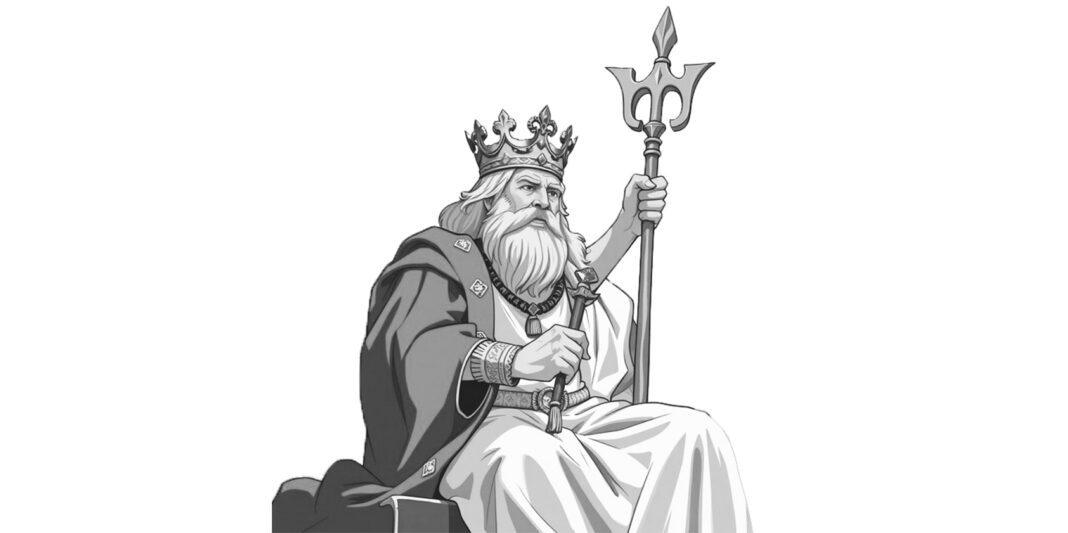
Trump as king? He’s always craved it. His “America First” rhetoric masked monarchic impulses — lifelong board chairmanship is the clincher. With the board eyeing UN functions, he positions himself as global sovereign, mediating via Mar‑a‑Lago summits flanked by oligarchs. Allies snub it because they see the endgame: a world order where US veto power trumps sovereignty, and wealth buys vetoes too. France balked at the charter’s Gaza omissions; the EU fears irrelevance.

This isn’t hyperbole. History warns us: unchecked wealth breeds tyranny. Louis Brandeis nailed it a century ago: “We may have democracy, or we may have wealth concentrated in the hands of a few, but we can’t have both.” Trump’s board chooses the latter, a gilded cage for the world.

Africa, our home, feels this acutely. Our growth hovers at 5 percent amid debt traps and aid cuts, while billionaires extract minerals for AI chips. Trump’s tariffs hit our apparel exports; his board ignores our conflicts unless they serve elite interests. Wealth concentration here — tycoons in construction and telecoms — already stifles competition. A global board amplifying that? Recipe for neocolonialism 2.0.

Yet resistance endures. Kenya’s Gen Z forced a cabinet sacking; Uruguay’s Mujica rose from prison to presidency on people’s power. Trade unions narrow wage gaps; civil society demands NIRPs (National Inequality Reduction Plans).

Trump’s board is a coronation, not conciliation — crowning wealth as the new deity in a world order where the rich feast and the rest fast. But history bends toward justice when the many unite. Demand wealth taxes, end billionaire buyouts, reclaim multilateralism. Peace isn’t pieced out to the highest bidder; it’s won by the world’s collective will.


There will be three centers of power in the new world

By Adamu B. Garba II

What analysts have speculated about for two decades is now codified policy: The post-Cold War epoch of unipolar American hegemony, draped in the language of liberal internationalism and universal values, has been formally terminated. The West’s ‘moral pretense’ – the insistence that its foreign policy was primarily driven by democracy promotion and human rights – has been exposed as an untenable fiction in the face of stark national interests.

In its place, a transactional Tripolar Order has been institutionalized. This structure, defined by the United States, China, and the Russian Federation, can now be called the finalized operational manual for 21st-century geopolitics.

For Africa, this represents the most significant geopolitical recalibration since the Berlin Conference of 1884, when the Western colonial powers converged in Germany to formalize the Scramble for Africa and the ‘effective occupation’ of its territories. The difference now is that the continent is not a blank slate for European division, but a managed space under new, non-Western actors.

The US in Africa: What’s different now?

Contrary to the myth of a globally engaged superpower, the United States has executed a deliberate and historic retrenchment. Its latest National Security Strategy paper is a document of strategic contraction. The primary focus is unambiguous: the consolidation of the American hemisphere. This ‘Fortress America’ doctrine prioritizes economic and security integration from Canada to Chile, turning the Western Hemisphere into an impregnable zone of influence. Secondary interests are reserved exclusively for the Anglosphere – the United Kingdom, Canada, Australia, and New Zealand – culturally and institutionally aligned nations that serve as force multipliers.

The critical passage for Africa and Asia is what the document omits: a strategy for direct engagement. The US has officially disengaged from strategic competition on the African continent. It will close remaining bases, cease military aid designed for influence, and end its democracy and governance programs. Washington’s approach is now one of efficient outsourcing. Its insatiable need for cobalt, lithium, and rare earth elements – the lifeblood of its digital and green economies – will no longer be sourced through messy dealings with individual African states. Instead, the US will procure these resources via bulk, state-to-state transactions with the continent’s recognized managers: China and Russia. Africa, to Washington, is now a wholesale warehouse, not a diplomatic playground.

The Eastern and Southern hegemon, master of the supply chain

China’s sphere, recognized in the tripartite understanding, is vast and economically coherent. It encompasses South Asia, East Asia, and the mineral-strategic spine of Africa: Central Africa (notably the Democratic Republic of the Congo), East Africa (with its ports and belts), and Southern Africa. A confidential but binding US-China trade pact has cemented this.

The terms are a masterpiece of realpolitik: China, through its state-owned enterprises and Belt and Road Initiative (BRI) infrastructure, guarantees the secure, uninterrupted extraction and transit of critical minerals from its African zones to global markets. In return, the US has consented to transfer key advanced technologies (as exemplified by the Nvidia chips deal) and, more significantly, has ceded strategic control of regional security surveillance and satellite dominance in these territories to Beijing. China no longer merely invests in Africa; it administers its resource nodes and information domains. It is the undisputed, vertical monopolist of the green and digital transition’s supply chain.

Russia: The Northern and Western European security guarantor

Russia’s domain, formalized by the impending ‘Putrump’ accord (the strategic understanding between the Putin and Trump administrations on the general conditions for the Russia-Ukrainian Peace deal and the future of Europe), is one of hard security and political patronage. It stretches from a Finlandized Europe across the Mediterranean to North Africa, West Africa, and key Central African states.

The US decision to withdraw support for Ukraine was not an isolationist whim but a calculated move to remove the final military hurdle to Russia’s pacification of Europe. With Ukraine neutralized, European nations, lacking credible autonomous defense, will gradually accommodate themselves to Moscow’s security and energy dictates.

In Africa, Russia’s offering is not economic miracles but political survivability and security. Through vehicles like the Africa Corps, Russia provides a service no other power can match: security in the face of internal rebellion and Western-instigated instability. It trades in the currency of sovereignty, making it the paramount power across the Sahel and into the coastal states.

Africa remapped: The collapse of Francafrique

The colonial ghosts of Europe are being exorcised. The influence of France, the United Kingdom, Belgium, Portugal, and Spain – maintained through the CFA franc, military bases, and paternalistic diplomacy – is in terminal decline. By 2028, it will be a historical footnote. Any African leader still orchestrating their security or economic policy through Paris or London is piloting their nation towards irrelevance and poverty in the new order.

Africa now exists under a collaborative duopoly: Russian security stewardship and Chinese economic administration, and this is a synergistic partnership.

The Economic Community of West African States (ECOWAS), long viewed as a vehicle for Franco-Nigerian influence, is fracturing. The principle of collective security has been shattered by the defiance of the Alliance of Sahel States (AES) – Mali, Burkina Faso, and Niger. The AES is the prototype for Russia’s African sphere: a military-political compact underwritten by Moscow’s security guarantee. Its appeal is gravitational. I would project that Guinea-Bissau, Togo, Ghana, Senegal, and Mauritania might seek membership by 2026, drawn by the promise of regime security outside Western condemnation. Chad and the Central African Republic will likely pivot from their regional bodies to this more potent alliance. What could remain of ECOWAS will be a geopolitically insignificant rump of coastal states – Nigeria, Ivory Coast, Sierra Leone, Liberia – technically intact but stripped of its strategic purpose.

My homeland, Nigeria, exemplifies the new managerial logic. The nation is not being torn apart but is being efficiently managed according to zonal competencies. The Northwestern and Southwestern regions, facing acute internal security challenges, naturally fall under Russia’s security purview. Simultaneously, the Central, Eastern, and Northeastern zones, rich in minerals and requiring massive infrastructure, align with China’s economic and developmental framework. This is not a conspiracy but a rational division of labor by the resident powers, ensuring stability and resource flow without destructive competition.

What’s in it for Africa?

African elites should internalize these foundational truths to navigate the coming decades. The Westphalian myth of equal sovereignty is dead. In the Tripolar Order, sovereignty is stratified. Nuclear capability grants absolute sovereignty. All other nations possess only a conditional, delegated sovereignty, exercised within the boundaries and interests of their managing superpower.

Institutions like the United Nations, WHO, and NATO are becoming artifacts of a bygone order which will likely be repurposed as administrative tools for the Tripolar directors.

The era of aid, grants, and moralistic conditionalities is over. The only remaining ‘-ism’ is transactionalism. Foreign policy is now pure quid pro quo. China seeks resources and strategic alignment; Russia seeks political loyalty and economic concessions; the US seeks secure resource flows. African leaders should become master dealers, offering clear assets (minerals, ports, votes in defunct international bodies) in exchange for tangible returns (infrastructure, weapons, regime security).

Fantasies of US military intervention – to save democracy, to fight terrorism, to stop genocide – must be abandoned. The United States will not deploy troops to Africa; its entire African policy is now subcontracted. Africa’s peace and conflict are solely the domain of the Russian security apparatus and, where its investments are threatened, the Chinese.

For Africa, the philosophical debate seems closed. The question is no longer ”Who should we partner with?” but ”How do we optimize our position within the existing framework?” The path forward demands unflinching pragmatism, transactional brilliance, and a clear-eyed alignment with the relevant power structure.

Hot this week

Production up, but the ‘cost’ variable weighs heavily

Production is up in 2021 for the Italian agricultural...

Luminos Fund’s catch-up education programs in Ethiopia recognized

The Luminos Fund has been named a top 10...

Well-planned cities essential for a resilient future in Africa concludes the World Urban Forum

The World Urban Forum (WUF) concluded today with a...

Private sector deemed key to unlocking AfCFTA potential

The private sector’s role is vital to fully unlock...

Beyond the Blueprint and unto the Human Algorithm

In the financial districts of the world, from London...

From Harar Streets to American Empire

With the privilege of speaking with a remarkable figure...

Ethiopia’s Corporate Governance Code Reform: An Idea Whose Time Has Come

Ethiopia stands at a crossroads. The Ethiopian Capital Market...

Name: Beza Mengistu

2. Education: Master’s candidates 3. Company name: ZERAF DESIGN 4. Title:...

The socioeconomic pain from macro reforms needs remedial intervention at source

Back in May 2024 several high-caliber economists and practitioners...

Africa’s FDI falls one-third as capital rushes to data and tech hubs

Foreign direct investment (FDI) flows to Africa fell by...

Africa’s poverty rises as billionaire power grows: Oxfam

A hard-hitting Oxfam report has spotlighted Africa’s alarming slide...
spot_img

Related Articles

Popular Categories

spot_imgspot_img