As the first light of 2026 breaks over the Ethiopian highlands, it does more than just illuminate a landscape; it powers a nation. For decades, Ethiopia was defined by its “untapped potential,” a phrase that became a cliché for a country with vast resources but limited reach. Today, that narrative has shifted. With the full integration of the Grand Ethiopian Renaissance Dam (GERD) and the recent inauguration of the Aysha II wind farm, the national grid has surged to an unprecedented 9.7 Gigawatts (GW) of installed capacity. Ethiopia is no longer just dreaming of development; it is officially morphing into the “Power House of Africa.”
The true significance of this milestone lies in strategic diversification. While water has long been our primary asset, the Great Rift Valley is being transformed into a high-yield renewable energy corridor for wind, solar, and geothermal excellence. This is the story of a nation harnessing the elements to secure its economic sovereignty and industrial future.
Energy Capacity and Grid Stability
As of February 2026, the Ethiopian energy sector has entered a significant phase of capacity expansion. Total installed capacity has reached approximately 9.7 GW, a figure that represents a substantial increase over the past decade. This growth is primarily attributed to the systematic integration of the Grand Ethiopian Renaissance Dam (GERD) and the recent commissioning of the first phase of the 120 MW Aysha II Wind Farm.
While hydropower continues to serve as the pillar of the national system—comprising approximately 95% of current generation—the expansion of non-hydro assets is a calculated move toward grid stabilization. The addition of the Aysha II facility, located in the wind-rich Somali Regional State, is a technical hedge against the seasonal hydrology risks that have historically impacted the reliability of the Ethiopian Electric Power (EEP) system.
From a demographic and industrial perspective, national electricity access is now estimated at 55%. While this indicates steady progress in domestic electrification, the disparity between generation potential and distribution infrastructure remains a focal point for policy intervention. Reaching the government’s 2030 universal access goal will require a transition from generating bulk power to solving the logistical complexities of “last-mile” connectivity.
The 60,000 MW Frontier: Diversification Strategies
While recent grid expansions are significant, they represent only a fraction of the nation’s total geological wealth. Experts currently estimate Ethiopia’s theoretical renewable potential at approximately 60,000 MW. Although hydropower remains the most developed resource with a potential of 45,000 MW, the government is increasingly looking toward other renewable vectors to ensure year-round grid stability.
The wind sector, for instance, boasts a technical potential of 1,350 GW. This resource is no longer theoretical; it is actively being integrated into the national energy mix through established sites at Adama I and II, Ashegoda, and the recent additions at Aysha II and Asela. By scaling wind capacity, the Ethiopian Electric Power (EEP) aims to provide a vital seasonal balance to hydropower, which can be affected by fluctuating rainfall patterns.
Simultaneously, Ethiopia’s solar sector is beginning to gain traction, supported by an average daily irradiance of 5.2 kWh/m². Through new Public-Private Partnership (PPP) frameworks, solar is transitioning from small-scale off-grid solutions to utility-scale contributions. However, the most anticipated shift lies in the geothermal sector. With a potential exceeding 10,000 MW along the Main Ethiopian Rift, projects at Aluto Langano, Tulu Moye, and Corbeti are currently under various stages of exploration and development. Unlike wind and solar, geothermal energy provides a constant “baseload” supply, offering a reliable thermal “cushion” that could prove essential for the country’s industrial parks and long-term energy security.
Exporting Prosperity: The Regional Hub
Ethiopia’s energy strategy has successfully evolved into a trans-border economic driver. Through the Eastern Africa Power Pool (EAPP), the nation has transitioned from a domestic generator to a central supplier for Kenya, Djibouti, Sudan, and most recently, Tanzania. In the 2024/25 fiscal year, these electricity exports generated over 118 million USD in revenue, accounting for approximately 20% of Ethiopian Electric Power’s (EEP) total income.
A significant milestone in this “energy diplomacy” is the recently signed 400 million USD Hurso–Aysha transmission line agreements. Developed in partnership with the UK-based investment platform Grid works, this 198-kilometer, 400 kV line is historic as Ethiopia’s first privately financed power transmission project. By utilizing a Public-Private Partnership (PPP) model, the project aims to unlock the wind and solar potential of the Somali Regional State while strengthening the interconnection with Djibouti.
Furthermore, the successful pilot of “wheeling” electricity to Tanzania via Kenya’s high-voltage network marks a technical breakthrough for the region. As Ethiopia doubles its export capacity to Kenya to 400 MW by late 2026, these interconnections are creating a web of strategic interdependence. This regional energy market is not merely a source of foreign exchange; it is an instrument for regional stability, anchoring the Horn of Africa through shared infrastructure and economic interests.
Navigating the Bottlenecks: Structural Challenges
The path toward Ethiopia’s 2030 middle-income aspirations is met with several structural challenges that require sustained policy intervention. Chief among these is the management of foreign exchange. While the July 2024 transition to a market-based exchange rate system was a major step, the energy sector remains sensitive to forex availability for the maintenance of existing plants and the repatriation of profits for Independent Power Producers (IPPs). Recent interventions by the National Bank of Ethiopia (NBE), including the January 2026 injection of 500 million USD into the banking system, highlight the ongoing effort to stabilize the currency environment for large-scale infrastructure investors.
Infrastructure gaps also remain a critical focal point. While generation capacity has surged, the transmission and distribution networks require significant modernization to translate this bulk power into household access. The Ethiopian Electric Utility (EEU) has outlined a target to expand the grid by approximately 8,700 kilometers in the 2026 fiscal year alone, part of a broader 30,000-kilometer expansion goal. Reducing technical and commercial losses—currently estimated at 22% for distribution—is essential to making the sector financially self-sustaining.
Finally, climate resilience has moved from a secondary concern to a core economic priority. Ethiopia’s current 95% reliance on hydropower makes the national economy sensitive to hydrological variability. As noted in the 2025 National Drought Resilience Plan, diversifying the energy mix is no longer a luxury but a “climate hedge.” By accelerating the integration of solar and geothermal assets, Ethiopia aims to create a “weather-proof” grid where thermal and wind sources provide a reliable cushion during periods of low rainfall.
A New Era of Leadership: Powering the Regional Future
Ethiopia’s clean energy sector is no longer a dream of the distant future; it is the engine of the present. As the country prepares to host the COP-32 Summit, a status officially confirmed following the consensus of the African Group of Negotiators, the message to the global community is clear and resolute. The Horn of Africa is open for green business, regulatory frameworks are maturing, and the grid is expanding at a record pace.
The national narrative has fundamentally shifted. Ethiopia is no longer defined merely by its geographical position at the head of major river basins, but by its active role as the continent’s premier Renewable Energy Hub. This transition from a source of raw resources to a provider of high-value, processed energy is already yielding dividends. In the 2024/25 fiscal year, Ethiopian Electric Power (EEP) reported a record 75.4 billion Birr in revenue, driven largely by the Grand Ethiopian Renaissance Dam (GERD), which now accounts for roughly one-third of the national supply. Beyond our borders, energy exports to Kenya, Djibouti, and Tanzania generated 118 million USD, proving that Ethiopia’s sovereign development of its resources is the most potent tool for regional integration.
In the global race toward a carbon-neutral future, Ethiopia is not just a participant – it is a leader. The lights are staying on, the industrial parks are humming, and as the world looks toward Addis Ababa for COP-32, Ethiopia stands ready to prove that its energy ascent is the bedrock of the region’s industrial revolution.
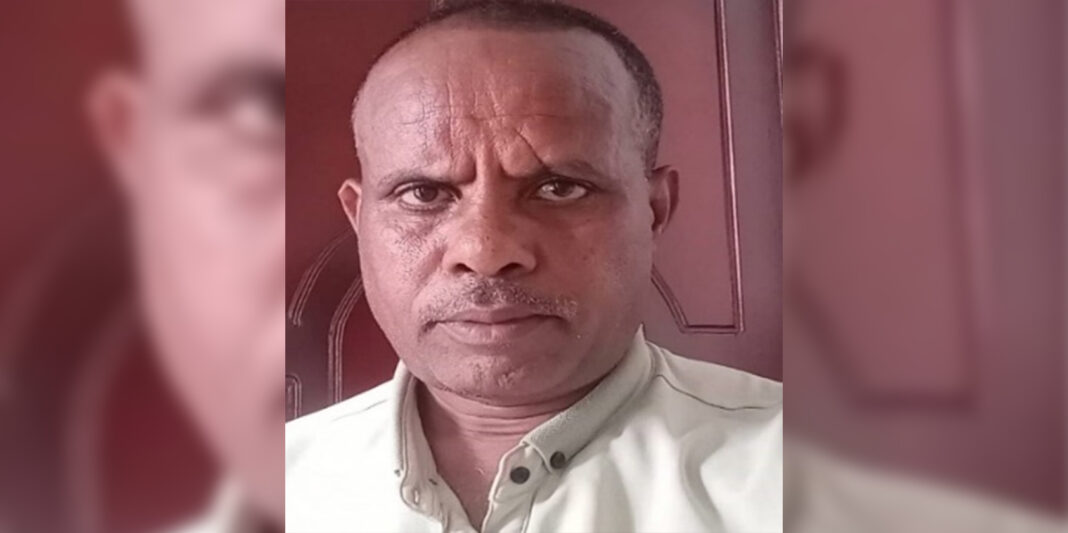
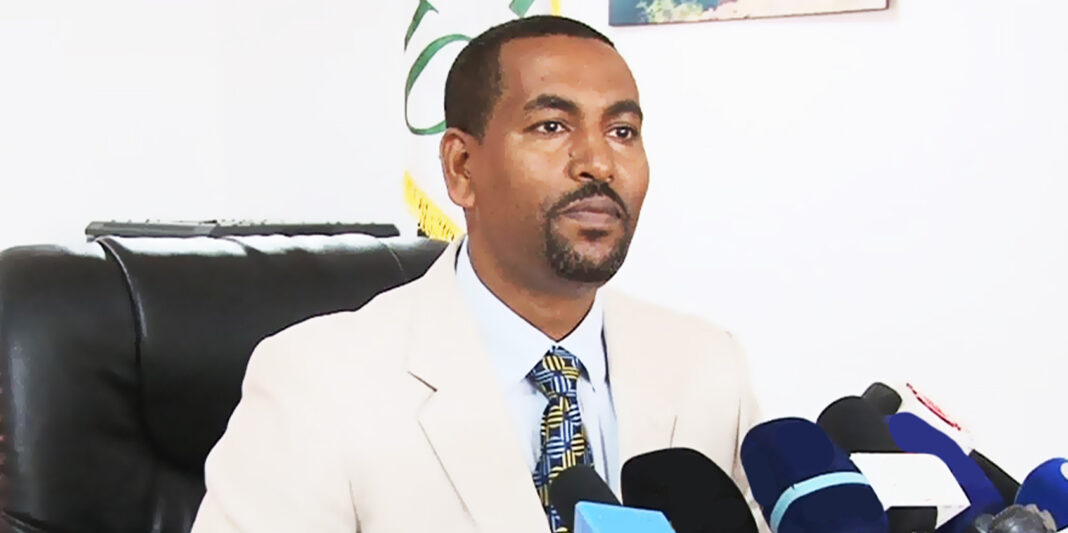
Moges Mekonnen is a media expert with over 25 years of experience, including 18 years at the Ethiopian Broadcasting Corporation (EBC) as a senior editor, investigative journalist, and program host. Currently the Corporate Communication Director and Spokesperson for Ethiopian Electric Power (EEP), he leverages his deep editorial background to lead the narrative on Ethiopia’s energy sovereignty. A specialist in content development and strategic communication, he serves as the primary voice connecting the nation’s landmark power projects to the global stage.