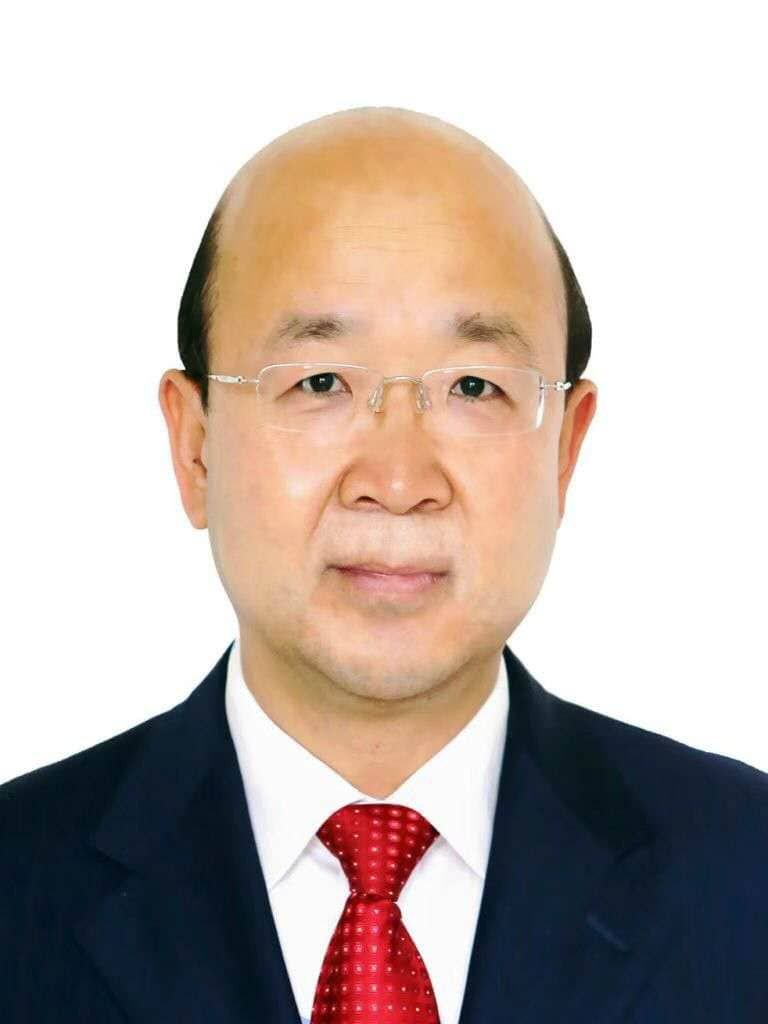
As Beijing deepens its diplomatic and economic engagement with Africa, veteran diplomat Liu Xianfa has been appointed the Special Representative of the Chinese Government on African Affairs—a post reflecting China’s growing strategic focus on the continent. In an exclusive interview with Capital, Liu outlines the vision behind President Xi Jinping’s 14 consecutive congratulatory messages to the African Union Summit, elaborates on China’s expanding zero-tariff policy for African exports, and discusses the evolving partnership between China and Africa as the two sides mark 70 years of diplomatic ties. Confident in the future of what Beijing now calls an “all-weather China-Africa community with a shared future,” Liu emphasizes continuity, trust, and shared modernization as the foundation of this next chapter in China-Africa relations. Excerpts;
Capital: We have noted that President Xi Jinping has sent congratulatory messages to the African Union (AU) Summit for the 14th consecutive year. How does the Chinese side interpret the message conveyed by this long-standing and significant political gesture?
Liu Xianfa: On February 14, President Xi Jinping sent a congratulatory message to H.E. João Lourenço, Chairperson of the AU and President of the Republic of Angola and H.E. Mahmoud Youssouf, Chairperson of the AU Commission on the opening of the 39th Ordinary Session of the AU Assembly. In his congratulatory message, President Xi Jinping highly commends the progress African countries have made in seeking strength through unity, and emphasizes China’s readiness to work with its African partners to carry forward the long-standing friendship, deepen mutually beneficial cooperation, enhance mutual understanding and amity, and write a new chapter in building an all-weather China-Africa community with a shared future for the new era. The congratulatory message, filled with heartfelt sincerity, underscores China’s strong and sustained commitment to deepening ties with Africa. It is widely and warmly received across both China and the African continent.
This is the 14th consecutive year that President Xi Jinping has sent congratulatory messages to the AU Summit. I think the consistency for 14 years clearly sends out three important messages:
First, it shows President Xi Jinping attaches great importance to the development of China-Africa relations. Not long after taking office in 2013, President Xi Jinping visited Africa on his first overseas trip. Over the past 13 years, he has traveled to the African continent five times, presided over multiple important events including summits of the Forum on China-Africa Cooperation (FOCAC), and maintained close interactions with African leaders. The head-of-state diplomacy has steered the in-depth development of China-Africa relations. President Xi put forward the principles of sincerity, real results, amity, and good faith, the right approach to friendship and interests, and summarized the spirit of China-Africa friendship and cooperation, offering important guidance for advancing China-Africa relations in the new era.
Second, it shows China has always put Africa in a prominent and important position in its overall diplomatic agenda. China-Africa friendship grew from strength to strength through the shared struggles against imperialism and colonialism, and has continued to deepen amid the contemporary tide of development and rejuvenation. During the 2024 FOCAC Summit in Beijing, President Xi Jinping and African leaders jointly agreed to elevate China-Africa relations to an “all-weather community with a shared future for the new era.” This marks the first time the vision of a community with a shared future for humanity has been elevated to an “all-weather” level with an entire continent, opening a new chapter in China-Africa friendship.
Third, it shows the remarkable continuity and stability of China’s Africa policy. In today’s turbulent world, Africa faces especially formidable challenges. Amidst this complex and severe international situation, the congratulatory message of President Xi Jinping carries exceptional significance: it not only reflects China’s consistency in its Africa policy and its firm confidence in Africa’s development prospects, but also sends a clear signal to the world that, no matter how the international or regional landscape may change, China will always be Africa’s most trustworthy friend, African countries’ most reliable partner on the path to modernization, and Africa’s strongest supporter on the global stage.
Capital: In 2024, China announced that it would grant 33 LDCs in Africa zero-tariff treatment on 100 percent tariff lines. What progress has been made since, and what outcomes does China hope to achieve? What are China’s considerations for the next phase?
Liu Xianfa: Since the 2024 FOCAC Beijing Summit, China has steadily expanded and strengthened its zero-tariff measures for African countries, giving a strong boost to the high-quality development of China-Africa cooperation. On December 1, 2024, China started implementing zero-tariff policy on 100 tariff lines for LDCs that have diplomatic ties with China, including 33 in Africa. Following that, in June 2025, President Xi Jinping announced that China is ready to extend the policy to 53 African countries that have diplomatic ties with China, through the signing of agreements on economic partnership for shared development (CADEPA). Yesterday in his congratulatory message to the AU Summit, President Xi Jinping announced that China will unilaterally extend comprehensive zero-tariff treatment to the 53 African countries having diplomatic ties with China starting from May 1, 2026, and China will continue to encourage the conclusion of agreements on economic partnership for shared development, and further expand the access of African exports to China through upgrading the existing “green lanes”.
Zero-tariff policy is an important part of China’s voluntary push to expand unilateral opening up. In mathematical terms, it is a subtraction in tariffs, an addition for development, a multiplication for livelihoods, and a division that reduces the impact of tariff abuse. Already, the policy is delivering results. Marketable African specialty products—coffee, nuts, fruits—are increasingly finding their way onto Chinese tables, bringing Chinese and African people ever closer.
Going forward, China will work with Africa to further unlock the potential of zero-tariff access. The policy will be conducive to Africa’s drive to boost exports, attract investment and create jobs, and to China-Africa cooperation in green industries, e-commerce and digital payment, technology and AI. The huge Chinese market will truly become a huge opportunity for Africa. China welcomes other economies to take their measures to support Africa’s development and modernization.
Capital: Last month, Chinese Foreign Minister Wang Yi made his annual trip to Africa, upholding a 36-year tradition in which the Chinese foreign minister begins the year’s diplomatic engagements with a trip to Africa. How would you describe China-Africa relations today?
Liu Xianfa: Africa has been a partner of the People’s Republic of China since the very early years of its founding. Every year for 36 consecutive years, Africa has been the destination of Chinese foreign minister’s first overseas trip. This is China’s signature diplomatic practice, and a distinctive arrangement in international engagement. As Foreign Minister Wang Yi put it at the end of his recent trip, 36 years of continuity says something. It speaks to Chinese people’s profound goodwill toward the African people. And more than that, it speaks to commitment and the strength of convictions. China and Africa are good partners who can rely on and trust each other.
Under the strategic guidance of President Xi Jinping and African leaders, China-Africa relations are at an all-time high. Our political trust is deepening, and exchanges across levels and sectors have grown stronger. We firmly support each other on issues of core interest and major concerns. China has been Africa’s largest trading partner for 17 consecutive years and our joint pursuit of modernization is delivering real results. In September 2025, President Xi put forward the Global Governance Initiative (GGI)—China’s vision for a more just and equitable global governance system. This initiative has been warmly received across Africa. Many African friends have since expressed their desire to work with China under the GGI framework—to stand firmly on the side of historical progress and the common interests of humanity, and to serve as a stabilizing force in a changing and turbulent world.
This year marks the 70th anniversary of the establishment of diplomatic relations between China and Africa and the China-Africa Year of People-to-People Exchanges. Over the past 70 years, China and Africa have stood together through thick and thin and forged ahead hand in hand. We have carried forward a millennial legacy of mutual engagement, witnessed the flourishing fruits of cooperation across diverse fields, and achieved a historic milestone in elevating bilateral relations into an all-weather China-Africa community with a shared future for the new era. China will organize, together with African brothers and sisters, about 600 events under the China-Africa Year of People-to-People Exchanges to further deepen exchanges and mutual learning between the two civilizations, gather stronger forces for unity and cooperation in the Global South, and send out a powerful message of building a community with a shared future for humanity.
Capital: This is your first visit to Africa since assuming the role of Special Representative of the Chinese Government on African Affairs. How do you view the prospects for the development of China-Africa relations ?
Liu Xianfa: Africa has a special place in my diplomatic career. I have worked in Nigeria and Kenya, and made many African friends. Not long ago, I was appointed as the Special Representative of the Chinese Government on African Affairs, which I took as a real honor. Returning to Africa after so many years, I am struck once again by the energy and vibrancy of this promising land.
China is the world’s largest developing country, while Africa is the continent with the largest number of developing countries. China-Africa cooperation is an important part of South-South cooperation. At the moment, China is making relentless efforts to build a great modern country and achieve national rejuvenation through Chinese modernization. In 2025, China’s GDP exceeded RMB 140 trillion yuan, with a year-on-year growth of five percent. The Chinese economy is advancing toward innovation-driven, higher-quality development. The economic and social development goals set in the 14th Five-Year Plan have been successfully accomplished. The 15th Five-Year Plan charts a new blueprint for China’s future development. Africa, on its part, is steadily moving toward the modernization goals outlined in the AU’s Agenda 2063, and making encouraging progress in its effort to build strength through unity. African countries are speaking with one voice at the United Nations and other multilateral forums, and Africa’s international influence continues to rise. China welcomes African countries to get on board the express train of China’s development. We stand ready to align China’s 15th Five-Year Plan with the AU’s Agenda 2063 and the development strategies of African countries, expand the areas of China-Africa cooperation, deliver more substantial outcomes through high-quality China-Africa cooperation, and jointly advance modernization with African countries.
As the new Special Representative of the Chinese Government on African Affairs, I have full confidence in the bright prospects of China and Africa jointly advancing modernization. I will take it as my mission to carry forward the China-Africa traditional friendship and advance China-Africa cooperation, and work with my African friends to make our contributions to the building of an all-weather China-Africa community with a shared future for the new era. In two days, we will usher in the Year of the Horse. The horse symbolizes courage, wisdom and resilience. I sincerely wish that in the coming year, African countries will make new strides on their journey toward development and rejuvenation.