Ethiopian Shipping and Logistics (ESL) has re-launched its tender to acquire six vessels, introducing notable changes to both its procurement model and financing structure as it accelerates fleet expansion plans.
The state-owned logistics operator revised its acquisition strategy after encountering delays in securing medium-sized vessels, including container ships. Under the new approach, ESL will procure second-hand vessels through international shipbrokers, while new-build vessels will be sourced through a separate competitive tender with shipyards.
ESL Chief Executive Officer Abdulber Shemsu told Capital that the company’s board approved the revised strategy to expedite the process.
“We have floated a bid to secure brokerage services,” Abdulber said. “The board recognizes that second-hand vessel procurement is best handled through professional shipbrokers, so we have invited qualified brokers to identify suitable ships. For brand-new vessels, we will proceed through a distinct tender process directly with shipbuilders.”
Alongside the procurement adjustment, ESL is restructuring its financing plan. The company is in discussions with the state-owned Commercial Bank of Ethiopia (CBE) to finance half of the total acquisition cost.
“We are under discussion with CBE to secure 50 percent of the financing,” Abdulber confirmed, adding that earlier talks with two private banks have been deprioritized. The remaining portion is expected to be covered through internal resources and credit arrangements.
Previously, ESL had planned to finance 30 percent of the cost of five vessels through bank loans, with the balance funded internally. The revised plan signals a broader recalibration of the company’s financial strategy.
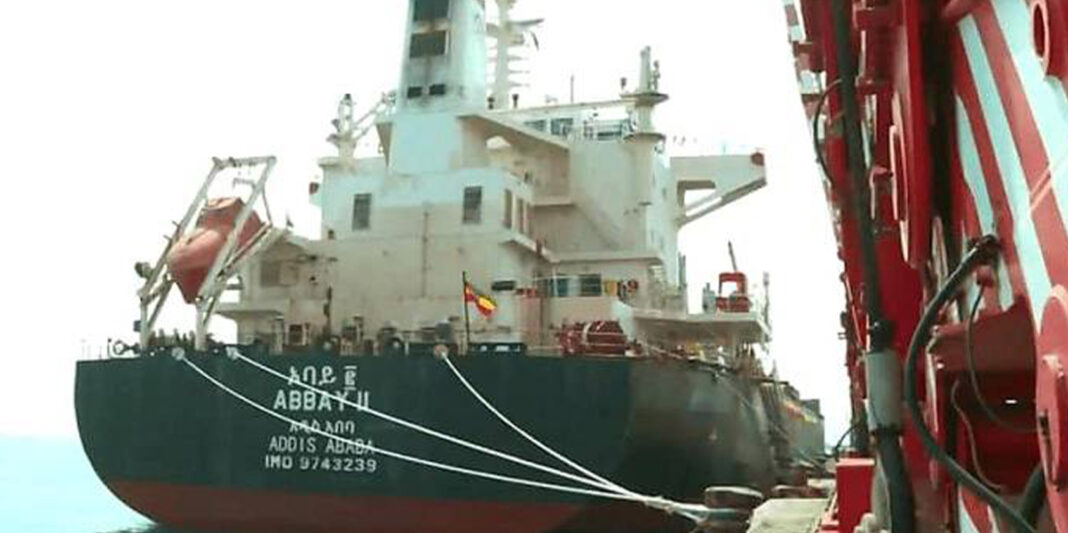
ESL currently operates ten international vessels, including the Ultramax carrier Abay II. Under its five-year strategic plan, the company aims to expand its fleet to 16 vessels. The new acquisition package includes two new heavy-lift Ultramax multipurpose (MPP) vessels, one medium-sized second-hand container vessel, and three second-hand Ultramax bulk carriers.
In its Expression of Interest for brokerage services, ESL specified that the container vessel should have a capacity of 3,000 to 5,000 TEU and be no more than ten years old.
The company also adjusted its earlier plan to acquire two container ships, opting instead to increase the number of second-hand Ultramax MPP vessels to three. The bulk carriers sought must have a deadweight tonnage of 60,000 to 65,000 and be no older than eight years.
For the construction of the two new heavy-lift MPP Ultramax vessels — each with a capacity of 60,000 to 65,000 metric tons — ESL has introduced a two-stage bidding process.
Shipbuilders will first submit detailed technical proposals and specifications. ESL will then shortlist candidates and proceed with final selection. Construction of the new vessels is expected to take at least two years following contract award.
Delivery of the four second-hand vessels, however, is anticipated in the near term once brokers identify ships meeting ESL’s criteria.
Payment structures will also differ: new-build vessels will be financed through milestone-based installment payments, while second-hand acquisitions will be settled upon completion of each transaction.
The revised procurement and financing framework reflects ESL’s effort to modernize its fleet more efficiently while navigating capital constraints and market conditions. If executed as planned, the strategy will significantly enhance the national carrier’s capacity and competitiveness in international shipping.