
As developing nations increasingly reassess their reliance on traditional Western financial frameworks, a high-level summit in Addis Ababa placed both the BRICS bloc and Africa–Asia trade relations at the heart of discussions on the continent’s economic future.
Held on the margins of the February summit of the African Union, the gathering brought together policymakers, business leaders and development experts to examine alternatives to Western-led financial models and explore new trade partnerships. The event was co-organized by the UN Sustainable Development Solutions Network and the Pan-African Chamber of Commerce and Industry.
Participants argued that the “conditionalities” attached to Western financial institutions—often centered on sharp tax increases, fiscal austerity and rapid market liberalization—have become increasingly unsustainable. Critics at the summit said such measures have frequently failed to generate inclusive growth in vulnerable economies, instead contributing to rising debt burdens and constrained industrial expansion.
Kebour Ghenna, Executive Director of the Pan-African Chamber of Commerce and Industry, noted that Africa has long operated under a “let the market decide” philosophy promoted by Western institutions. While deregulation and fiscal tightening were intended to spur efficiency and growth, he argued that the results have often fallen short of expectations for fragile economies.
In contrast, the emerging BRICS model was presented as an alternative approach that prioritizes infrastructure development, technology transfer, national sovereignty and South–South cooperation. Many participants described it as more closely aligned with Africa’s long-term development aspirations, though they acknowledged that the bloc’s financial architecture remains a work in progress.
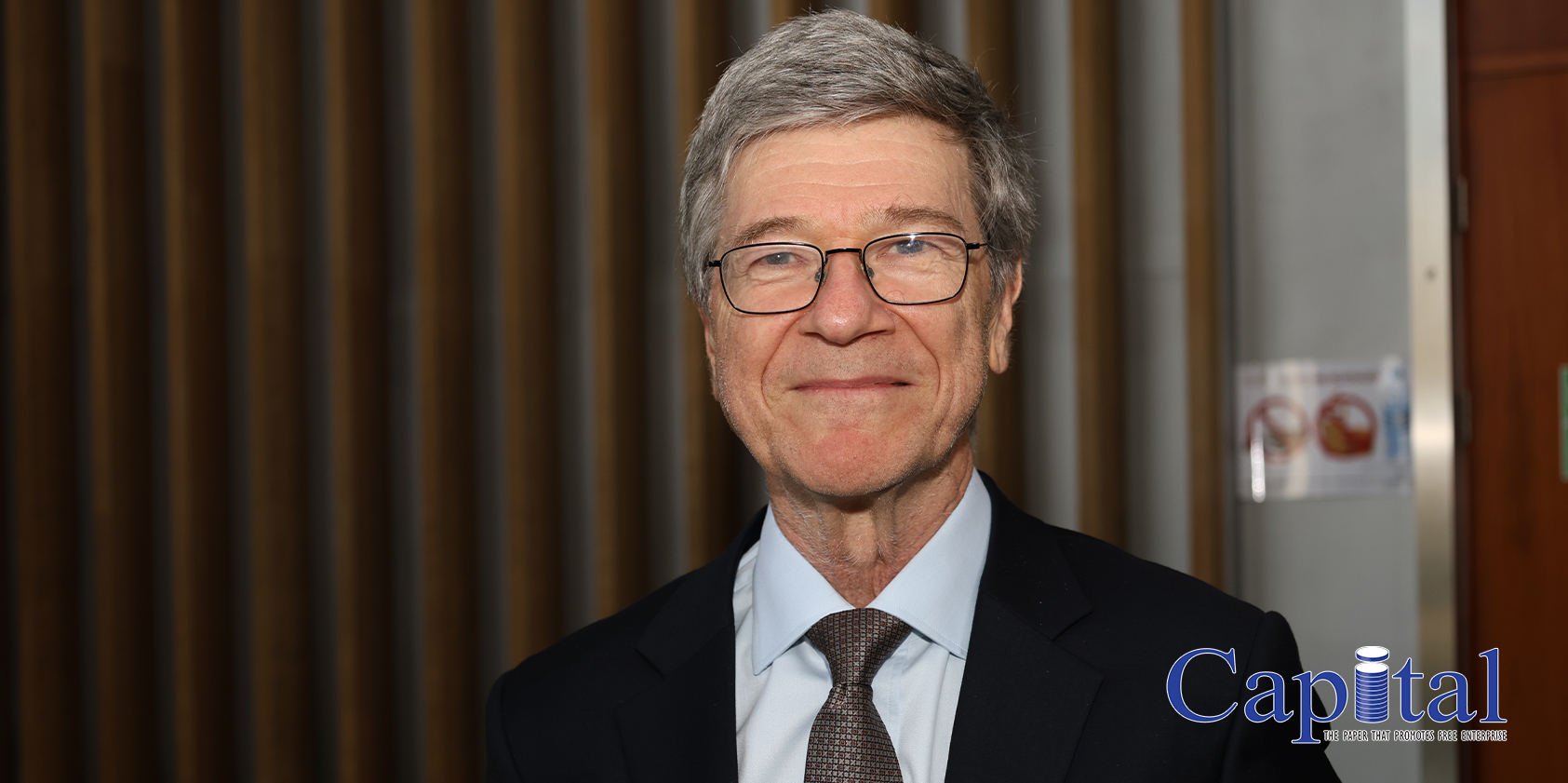
Jeffrey D. Sachs, professor at Columbia University and president of the UN Sustainable Development Solutions Network, struck an optimistic tone. “Africa’s era of rapid growth has arrived,” he said, outlining what he described as the continent’s next development phase.
According to Sachs, that future will rest on three pillars: the African Continental Free Trade Area, a large-scale shift to renewable energy, and expanded investment in science and education. If fully implemented, he argued, the African Union’s strategy—anchored in solar power, quality education and integrated continental trade—could position Africa as a key driver of global sustainable development.
The session examined how deeper commercial engagement with China and South Asian economies could accelerate industrialization, infrastructure development and technology transfer across Africa, particularly as global supply chains undergo significant reconfiguration.
Sachs encouraged African businesses to expand trade and investment ties with Asian partners, describing South–South cooperation as an increasingly important complement to Africa’s broader global trade strategy.
However, speakers stressed that diversification must be accompanied by strategic negotiation. Kebour underscored that trade agreements with Asian economies should be built on fairness, reciprocity and value addition. He cautioned against arrangements that risk reinforcing raw material dependency or locking African economies into unequal terms.
“Africa’s engagement with Asia must be anchored in industrial development and equitable partnership,” he said, emphasizing that expanded trade should strengthen local enterprises, boost manufacturing capacity and align with the objectives of the African Continental Free Trade Area.
Data presented during the broader summit underscored the scale of the challenge. Despite the promise of continental integration, intra-African trade currently stands at just 15 percent—far below levels recorded in Europe or Asia. Participants agreed that deepening regional value chains and strengthening industrial linkages remain urgent priorities.
As the meetings concluded, a common theme emerged: while new partnerships—whether through BRICS or expanded Africa–Asia trade—offer significant opportunities, sustainable transformation must ultimately be driven from within the continent. Without structural economic reform, private-sector revitalization and decisive action to address energy shortages through green technology, speakers warned, shifts in global financial alignments alone will not deliver lasting prosperity.