Ethiopian households are facing renewed pressure as the cost of essential animal products surged sharply between December 2025 and January 2026, offsetting modest relief seen in other food categories.
The January 2026 Joint Market Monitoring Initiative (JMMI) report shows that meat and dairy prices rose between 14 percent and 20 percent within a single month, placing additional strain on family budgets already stretched by inflation and market disruptions.
According to the report, the national median cost of the Minimum Expenditure Basket (MEB) for a six-person household declined by 1 percent, largely due to seasonal harvests that pushed down vegetable prices. Onion prices fell by 25 percent, while tomatoes dropped by 20 percent, offering short-term relief for consumers.
However, the drop in vegetable prices was outweighed by steep increases in protein-rich foods, which are essential for a balanced household diet.
Nationally, cow milk prices surged by 20 percent, while raw fish prices also climbed by 20 percent. Goat meat increased by 14 percent, and egg prices rose by 5 percent over the same period.
“Contrary to the overall decline in food prices, most meat and animal products showed price increases during the specified period,” the report stated.
The data suggests that while seasonal supply improvements have stabilized crop prices, animal-product supply chains remain under significant strain.
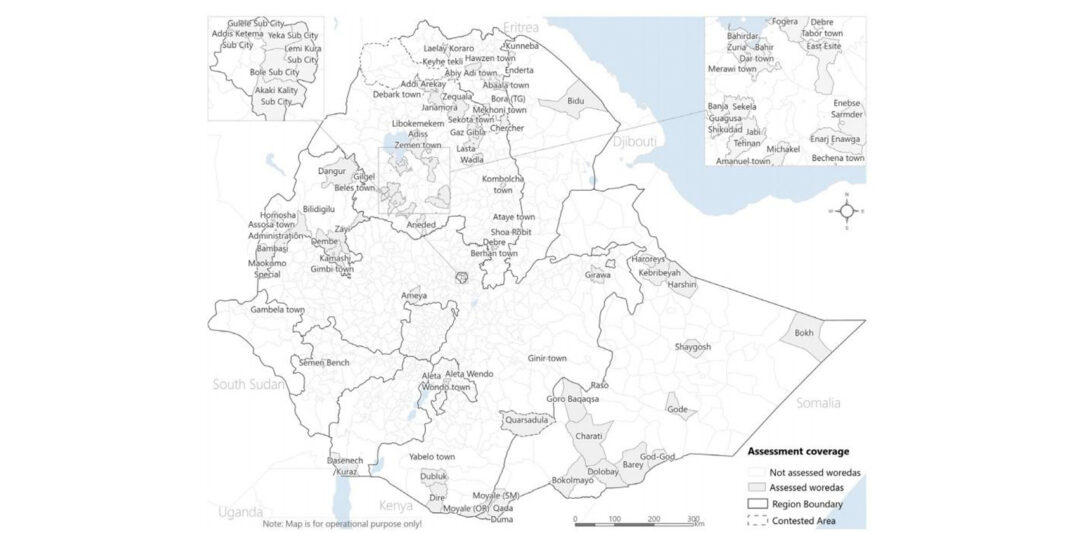
The impact of rising prices has not been uniform across the country. While Tigray and Amhara experienced slight declines in overall consumer basket costs due to harvest-related supply improvements, other regions recorded notable inflation.
Benishangul-Gumuz registered the highest monthly price increase at 11 percent, followed by Somali at 9 percent and Oromia at 6 percent. These increases are linked to weak market functionality, with 52 percent of markets assessed nationwide described as operating poorly.
Gambella recorded a market functionality rate of 0 percent, indicating severe disruption. Amhara (74 percent) and Afar (67 percent) also reported significant market challenges.
The surge in animal-product prices is closely tied to supply-side constraints. Nearly 30 percent of meat and fish vendors reported serious difficulties sourcing sufficient products to meet demand. The main causes cited were domestic transport constraints (33 percent), vendor capital shortages (28 percent), and reduced production levels (22 percent).
Access to markets is also becoming increasingly difficult for consumers. Vendors reported that vulnerable households are struggling to reach marketplaces due to movement restrictions and security concerns.
Despite the spike in animal-product prices, the report recorded a slight nationwide decline in non-food item (NFI) costs, general household expenditure, and overall food prices during the one-month period. Non-food item prices dropped by 3 percent, overall national expenditure fell by 1 percent, and food costs declined marginally by 0.4 percent.
This modest easing was most evident in Tigray, Amhara, South Ethiopia, Gambella, Addis Ababa, and Southwest Ethiopia, where harvest season dynamics improved the availability of vegetables and staple grains.
Market monitors caution, however, that the relief may be temporary. While harvest cycles support crop supply, animal-product supply chains remain vulnerable to transport bottlenecks, financing constraints, and broader market instability.
Looking ahead, 68 percent of food vendors expect prices to rise again next month, citing currency fluctuations and continued market uncertainty as key drivers.
Humanitarian organizations are calling for continuous market monitoring to track price volatility and adjust assistance programs to ensure vulnerable households maintain access to essential food items.