Ethiopia and Djibouti have agreed to connect key strategic ports to the Ethio-Djibouti Railway (EDR) line by the end of 2026, marking a significant step toward strengthening the corridor that underpins Ethiopia’s external trade.
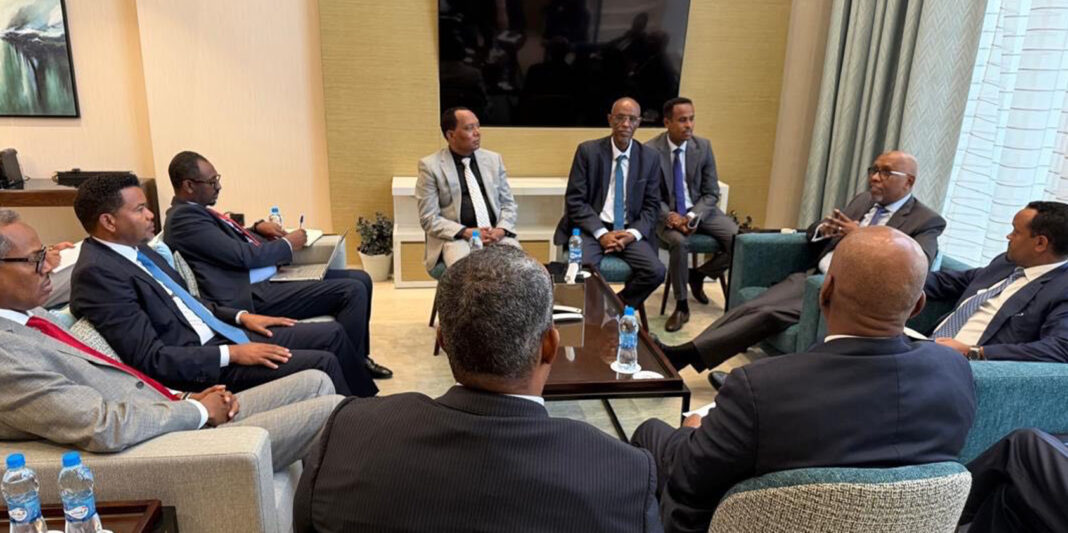
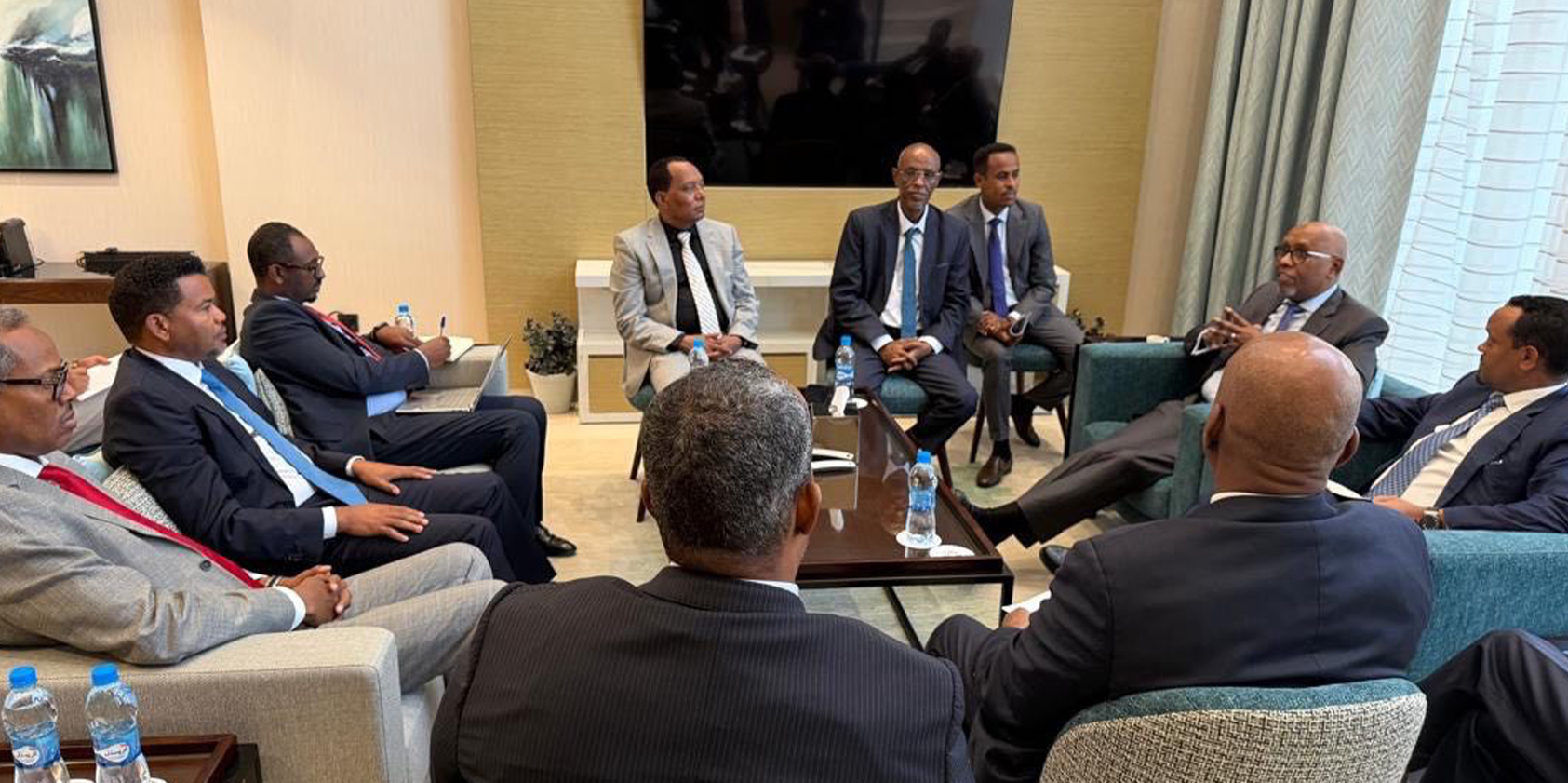
The decision was endorsed this week by the Ethio-Djibouti Joint Railway Commission (JRC), a ministerial platform established under the 2016 bilateral railway agreement. The commission met in Djibouti on February 17, 2026, co-chaired by Alemu Sime, Ethiopia’s Minister of Transport and Logistics, and Hassan Houmed Ibrahim, Djibouti’s Minister of Infrastructure and Equipment.
According to sources familiar with the discussions, the commission agreed to expedite rail connectivity to the Doraleh Multipurpose Port (DMP) and the oil terminal operated by Horizon Djibouti Terminals Limited (HDTL), with completion targeted by November 2026. Currently, only the SGTD container terminal at Doraleh is directly linked to the railway.
The move follows Prime Minister Abiy Ahmed’s recent visit to Djibouti, where he emphasized the cost-effectiveness of rail transport and pushed for greater cargo volumes to shift from road to rail. During his mid-January talks with President Ismail Omar Guelleh, discussions reportedly centered on positioning the railway as the backbone of bilateral trade. The JRC is now expected to translate that political commitment into operational results.
Government officials say the administration is prioritizing rail-based transport to handle a larger share of petroleum and fertilizer shipments. Swift connectivity to DMP is considered critical, particularly for fertilizer imports, which are strategic for Ethiopia’s agricultural productivity.
Sources said the commission also agreed to conduct joint technical studies and facilitate the smooth cross-border movement of EDR personnel, equipment, and machinery to ensure efficient implementation of the port linkages. In addition to finalizing the railway connection to HDTL, the two sides pledged to fast-track the necessary technical and operational work to integrate DMP into the main rail line.
The discussions extended to the Djibouti Damerjog Industrial Development (DDID) project, a major port and industrial complex located about 16 kilometers south of Djibouti City near the Somaliland border. As part of the development, Djibouti is finalizing construction of the Damerjog Liquid Bulk Port (DLBP), which Ethiopian officials view as vital to meeting the country’s growing fuel demand.
During a site visit on Monday, Alemu conveyed Ethiopia’s interest in utilizing DLBP to expand storage and handling capacity. Currently, the Ethiopian Petroleum Supply Enterprise relies on the Horizon depot at Doraleh, from which roughly 350 trucks transport fuel daily to Ethiopia. Rising consumption, fully utilized storage capacity, and mounting demurrage costs have driven Ethiopia to seek alternative facilities capable of handling larger volumes.
According to the Djibouti Ports and Free Zones Authority, DLBP’s oil jetty will have an annual capacity of 25 million tonnes and support up to 12 vessel rotations. The port will serve multiple storage terminals with a combined static storage capacity of around two million cubic meters, offering the scale required to support Ethiopia’s expanding energy logistics.
As part of the rail expansion, EDR plans to construct a 17-kilometer line linking the Damerjog oil terminal to Nagad Railway Station in Djibouti, enabling direct fuel transport to Ethiopia. A feasibility study conducted by Great Horn Investment Holding, a subsidiary of the Djibouti Ports and Free Zones Authority, estimates the project’s capital expenditure at USD 90 million, or roughly USD 5 million per kilometer.
EDR has also expressed interest in acquiring a 49 percent stake in the Damerjog fuel storage project, including infrastructure for jet fuel handling, signaling its ambition to deepen its role beyond rail operations.
Following the JRC meeting, EDR CEO Takele Uma described the outcome as the beginning of a new chapter in bilateral railway cooperation. He said the commission had endorsed a strategic roadmap aimed at ensuring seamless railway operations while positioning EDR as the central artery of trade between the two countries. He also highlighted ongoing logistics reforms along the Djibouti Corridor and efforts to increase capacity and streamline supply chains.
Earlier in January, Prime Minister Abiy toured both HDTL and DMP during his visit to Djibouti. Although DMP handles a substantial portion of Ethiopia’s imports, including fertilizer, it currently relies on a 1.9-kilometer trucking link to connect with the railway—an arrangement estimated to cost about USD 10 million annually. Establishing a direct rail connection is therefore seen as a priority to reduce costs and improve efficiency.
The HDTL terminal, operated by the UAE’s ENOC Group, is also slated for rail integration. Under the proposed arrangement, EDR would construct the approximately three-kilometer extension, while the terminal operator would develop the necessary loading infrastructure.
EDR is concurrently expanding its domestic project portfolio. The company is rehabilitating sections of the existing railway and completing a three-kilometer spur line linking the AMG Industrial Park to Gelan Station. It has also signaled interest in a future 40-kilometer dual-track line connecting Bole International Airport to a planned airport city in Bishoftu, supported by technical cooperation with China Civil Engineering Construction Corporation.
Industry sources indicate that EDR is expected to lead both the DMP and HDTL rail connection projects. If delivered on schedule, the new links are anticipated to significantly lower transport costs, ease congestion along the corridor, and reinforce the railway’s role as the backbone of Ethiopia’s trade through Djibouti.