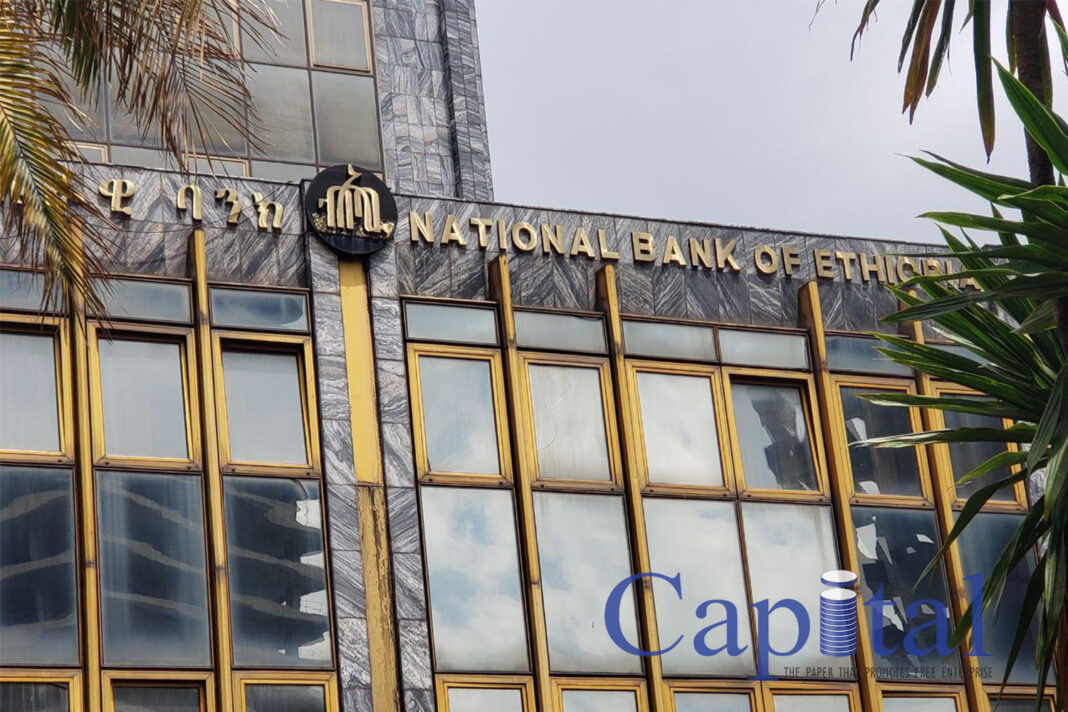
As part of its ongoing macroeconomic and foreign exchange reforms, the National Bank of Ethiopia (NBE) plans to establish an interdealer trading platform and relax surrender requirements for commodity exporters by the end of the current fiscal year.
The interbank foreign exchange market was officially launched on January 28 through a technology-backed system operating on the trading infrastructure of the Ethiopian Securities Exchange (ESX), which features a dedicated FX segment. While the platform is designed to ensure transparency, competitive pricing, and real-time execution, its performance so far remains unclear.
Building on this launch, the central bank is preparing a roadmap to deepen the interbank FX market. According to commitments made to development partners, the roadmap will include the creation of an interdealer trading platform—an electronic system enabling anonymous, real-time trading among major financial institutions.
This initiative is a key structural benchmark under the reform program introduced at the start of the 2024/25 fiscal year. The NBE aims to operationalize the new platform by the first quarter of 2026/27.
Officials say a well-functioning interbank market will strengthen banks’ foreign exchange risk management and enhance transparency. Work is also underway to upgrade the settlement system so that interbank FX transactions can be settled domestically.
Interdealer platforms serve as the backbone of modern interbank FX markets. By aggregating liquidity from multiple banks into a single high-volume marketplace, they improve pricing efficiency, liquidity, and operational stability. Banks can also hedge inventory imbalances from customer transactions more quickly, reducing market risk exposure.
Experts note that continuous, real-time streaming quotes on such platforms help establish a more accurate, market-determined exchange rate. Increased competition typically narrows bid-ask spreads, lowering transaction costs for institutional participants.
According to the latest review by the International Monetary Fund (IMF), the NBE will develop indicators and benchmarks to assess the development of the FX market. These metrics—including the size and persistence of the parallel market premium, interbank trading activity, unmet FX demand, and banks’ net open positions—will guide decisions on gradually reducing and ultimately eliminating surrender requirements by the end of the IMF program.
The IMF review also indicates that the NBE will ease rules governing how exporters use foreign currency held in retention accounts to meet surrender obligations, giving them greater flexibility to secure favorable exchange rates. Implementation is expected by end-June 2026, when a new bank data reporting system will enable direct monitoring of compliance.
Under Sub-Article 6.2 of Foreign Exchange Directive No. FXD/01/2024—issued at the outset of reforms on July 29, 2024—exporters were required to convert 50 percent of their proceeds into birr at a freely negotiated rate, while retaining the remaining 50 percent in foreign currency accounts.
However, a major amendment issued on February 11 significantly altered the framework. Service exporters are now exempt from surrender requirements and may retain 100 percent of their earnings indefinitely. Exporters operating in Special Economic Zones (SEZs) are also allowed full retention.
The revised Directive No. FXD/04/2026 represents one of the most sweeping overhauls of Ethiopia’s foreign exchange regime in decades, incorporating core recommendations under the IMF’s Article VIII framework.
Key reforms include the removal of long-standing exchange restrictions, authorization for banks to issue internationally recognized foreign currency cards for outbound retail payments—including e-commerce—subject to sufficient balances, and expanded rights for foreign currency account holders to directly cover education, medical, and travel expenses for immediate family members.
The previous minimum balance requirement of 100 US dollars to open foreign exchange savings accounts has also been scrapped. Additionally, profit-making institutions may now open foreign currency accounts funded by grants or other non-export sources, while outbound investment by Ethiopian nationals will be permitted on a case-by-case basis with NBE approval.
Together, the measures signal a decisive shift toward a more market-based and flexible foreign exchange system.