I remember sitting in my office in 2019 with a foreign investor in floriculture who was ready to invest in Ethiopia. The feasibility study was done. The land was identified. The bank guarantees were in place. Then came the question that killed the deal. “And when we make profit, how do we get our money out?”
I gave him the honest answer. The process existed on paper. But in practice, dividends repatriation required NBE approval, which required layers of clearance, which required patience most investors never have. He walked. Ethiopia lost a USD 25 million investment that day. Not because the economics didn’t work. Because the exit wasn’t believable.
That was six years ago. Today, I read the National Bank of Ethiopia’s latest Foreign Exchange Directive – FXD/04/2026 – and thought of that Dutch exporter. I wondered if he knows that the exact bottleneck that killed his deal no longer exists.
For decades, Ethiopia operated a foreign exchange regime built on scarcity and suspicion. The underlying assumption was that if you gave businesses and individuals freedom to hold, use, or move foreign currency, they would abuse it. So the system was designed to gate-keep, to approve, to delay. Every dollar was treated as though it were trying to escape. The result was not discipline. It was distortion. A parallel market flourished not because Ethiopians are dishonest, but because the official system was unusable. When you cannot pay for imports, education, or medical care through the bank, you find another way. That other way became a multi-billion dollar shadow economy operating outside the central bank’s visibility, setting exchange rates the official market could not ignore.
What the NBE has done with this new directive is not incremental reform. It is a fundamental shift in philosophy. The underlying assumption has flipped from “how do we prevent leakage?” to “how do we facilitate legitimate flow?” That single shift changes everything.
Consider an exporter. Under the old regime, exporters were required to surrender a portion of their earnings to the central bank within a fixed period. This was framed as patriotic. In practice, it created an incentive to keep money outside the system entirely. Why bring dollars home if a significant percentage will be converted at an unfavorable rate and the remainder subject to withdrawal limits? The rational actor moved money offshore and kept it there. Now, an exporter can retain one hundred percent of earnings indefinitely. That dollar can sit in an Ethiopian bank account, available for future imports, transfers, or investment. The incentive to park money abroad has not been reduced – it has been eliminated. Money that would have remained in Dubai, Nairobi, or Shanghai can now return to Addis and actually work.
This is where the parallel market begins to lose oxygen. The parallel market exists because demand for foreign currency exceeds supply at the official rate, and because the official process is too slow and unpredictable for urgent needs – medical treatment abroad, school fees, and time-sensitive imports. People do not prefer the parallel market. They tolerate it because it delivers when the banks cannot. Every provision in this directive that speeds up, simplifies, or decentralizes access to foreign exchange through formal channels is a direct drain on the parallel market’s customer base.
The mandate for banks to issue internationally recognized cards against forex account holdings, including for e-commerce, means Ethiopian professionals no longer need to beg friends abroad to pay for software subscriptions or online courses. The ability to pay for spouse and children’s education and medical expenses directly from a forex account removes one of the most common justifications for parallel market purchases. The right to send USD 20,000 in advance payment for medical or education services without visa and ticket requirements eliminates the delay that drives families toward informal channels. Every transaction that can be completed in ten minutes at a commercial bank is a transaction that does not feed the parallel market.
Then there is the question of investment. Foreign direct investment is not just about capital. It is about confidence. Investors need to believe that when they generate profit, they can access it. For years, Ethiopia asked investors to accept this on faith while retaining NBE’s final sign-off on every dividend repatriation. Faith is not a scalable model. This directive removes NBE from the repatriation approval chain entirely. Commercial banks, which are regulated, supervised, and accountable, now handle dividend outflows based on submitted documents. No central bank queue. No political risk. No ambiguity. This single provision will do more to attract institutional capital than a dozen investment summits.
But the benefits are not only for multinationals. This reform quietly opens the door for Ethiopian companies to invest abroad. This is how economies mature. Ethiopian firms can now acquire technology, expand regionally, and build global footprints while remaining headquartered in Addis. The profit those foreign subsidiaries generate can be repatriated. This is not capital flight. This is Ethiopian capital learning to compete internationally. Every thriving economy has companies that operate across borders. That door is now open.
The reforms to forex bureaus are technical but telling. Releasing Birr 30 million in security deposits to operational bureaus and increasing cash holding limits to 25 percent of capital is an explicit recognition that a functional foreign exchange market requires private liquidity. Bureaus cannot narrow spreads if they cannot hold meaningful inventory. They cannot compete with the parallel market if they run out of dollars by midday. These changes are not about enforcement. They are about competition. A well-capitalized, competitive formal market will naturally attract volume away from informal channels.
I have spent nearly twenty years watching Ethiopian economic policy move in stops and starts. There have been moments of genuine reform followed by long plateaus of caution. This feels different. Not because the provisions are radical – other countries have had these policies for decades – but because they are internally consistent. They share a thesis: that Ethiopian businesses and individuals, when trusted with their own foreign currency, will act rationally. That thesis has never been tested here, because we have never extended that trust. This directive is the test.
The parallel market will not disappear overnight. Habits are sticky. Some users will remain out of inertia or because they operate in entirely informal economies that cannot access banks. But the trajectory is now clear. Every month that these provisions are in effect, more transactions migrate from the shadow system to the formal one. Every exporter who brings dollars home instead of parking them abroad adds liquidity to the official market. Every professional who pays for a subscription with a bank-issued card learns that the formal system can work. Every investor who repatriates dividends without NBE approval tells five other investors that Ethiopia is open for business.
That floriculture investor I mentioned? He built his greenhouse elsewhere in Africa instead. But the next one – the one evaluating Ethiopia today – will read this directive and ask a different set of questions. Not “Can I get my money out?” but “Which bank has the best corporate forex service?” That is not a small shift. That is the sound of a parallel market losing its reason to exist.
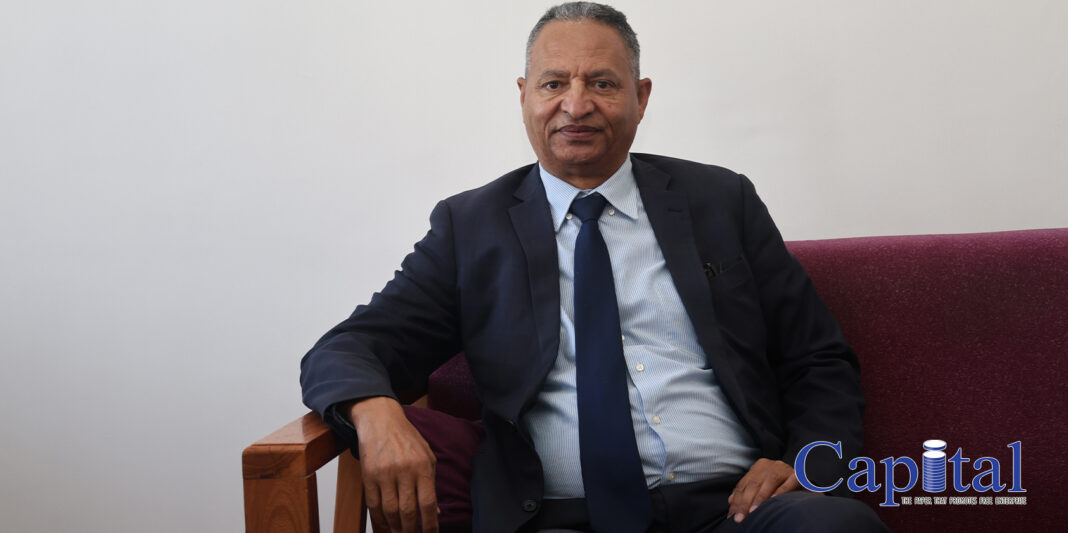
Befikadu Eba is Founder and Managing Director of Erudite Africa Investments, a former Banker with strong interests in Economics, Private Sector Development, Public Finance and Financial Inclusion. He is reachable at befikadu.eba@eruditeafrica.com.
DISCLAIMER ….