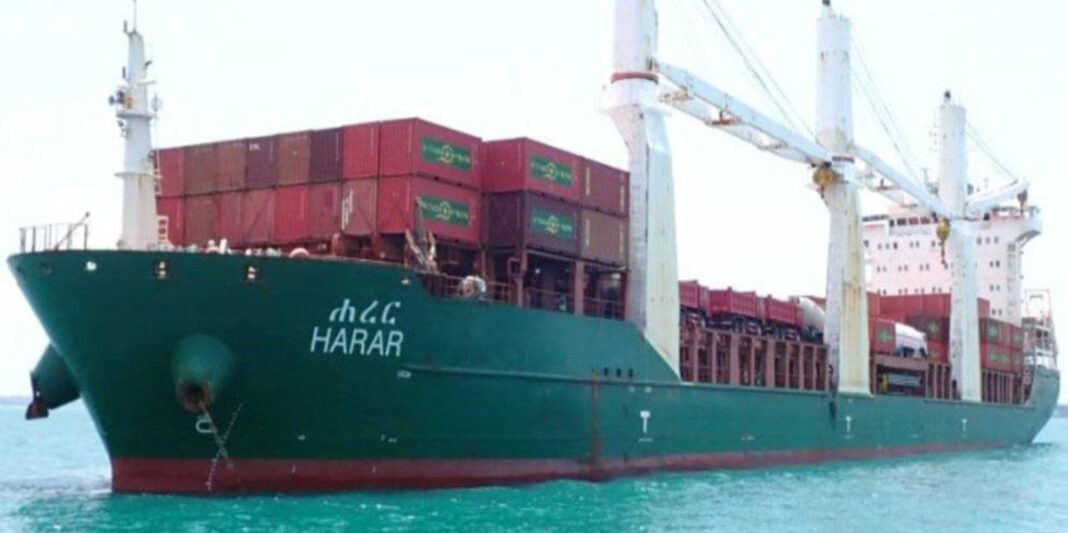
Amid escalating conflicts in the Middle East and the Red Sea region—disruptions that have severely affected global maritime transport corridors—Ethiopian Shipping and Logistics (ESL) says its fleet continues to operate at full capacity.
While many international shipping companies have resorted to cancelling routes and sharply increasing freight rates, Ethiopia’s national carrier is maintaining services by leveraging diplomatic relations and its strategic position to ensure the continuity of the country’s import and export trade.
A senior ESL official told Capital that while several global shipping giants have diverted vessels—leading to extended transit times of several months—Ethiopian vessels continue to navigate key trade routes, effectively filling the logistics gap created by the crisis.
The Red Sea and the Gulf of Aden have become high-risk zones, placing significant pressure on the maritime industry. Following the outbreak of conflict in the Middle East, major carriers such as Maersk have rerouted vessels around the Cape of Good Hope in South Africa—a detour that adds weeks to voyages and millions of dollars in additional costs.
For Ethiopia—which conducts more than 95 percent of its international trade through the Port of Djibouti—such disruptions pose significant risks. Yet ESL says it has adopted a different strategy.
“As a matter of policy, we do not operate in zones of direct active conflict,” the ESL source explained. “However, while many international carriers have suspended services on certain routes, we have not closed any. Our vessels remain operational, and there has been no interruption.”
The official added that the company is stepping into routes and markets vacated by other carriers to support Ethiopian exports. “Our objective is to bridge the gap, not to withdraw,” he said.
Ethiopia’s longstanding diplomatic ties have also helped safeguard its maritime operations. “Thanks to the strength of our diplomatic engagement, there is no direct threat of attack on our vessels,” the source said. “We are using this advantage to help fill the void in the market.”
According to the official, the company is also introducing new procedures to ensure the timely delivery of essential imports. As international shipping lines withdraw from regional routes, freight rates have surged globally while delivery times have lengthened considerably.
“Many Ethiopian importers continue to rely on other carriers largely due to a lack of information,” the official noted. “If they were fully aware of our services, many would opt for the national carrier.”
Under Ethiopia’s multimodal transport framework, most imports are required to be processed through the national system operated by ESL unless the Ministry of Transport and Logistics (Ethiopia) grants a waiver. Recently, however, six public and private enterprises received licenses to participate in multimodal transport operations, handling cargo from ports of entry to warehouses across the country.
“In the current environment, we are not only more cost-competitive but also significantly faster,” the official said. “While some carriers are taking three to four months due to rerouting, we are delivering cargo within 30 to 31 days.”
According to the International Monetary Fund, Ethiopia’s economy is projected to grow by around 7.2 percent in 2026. Efficient and reliable cargo movement plays a critical role in sustaining that growth by helping contain inflation, streamline supply chains, and strengthen export competitiveness.
ESL officials say the company is prioritizing domestic cargo despite rising global operational costs.
“This is not the time to turn customers away,” the source said. “Ethiopian cargo remains our top priority.” He added that the company is absorbing higher fuel and operating expenses internally in order to avoid passing steep price increases on to local traders.
Meanwhile, developments on land are also strengthening Ethiopia’s logistics network. In February 2026, Ethiopia and regional partners signed an agreement to establish the DESSU (Djibouti–Ethiopia–South Sudan–Uganda) Corridor Management Authority, a multilateral initiative backed by the African Development Bank. The project aims to connect the Red Sea to the Great Lakes region, reduce transport costs, and streamline trade procedures.
At the same time, Ethiopia is expanding the use of the Ethio‑Djibouti Railway to ease pressure on road transport and maritime logistics. In February, a pilot project launched by Abiy Ahmed saw 120,000 liters of diesel transported by rail for the first time.
The 753-kilometer railway corridor is increasingly viewed not only as transport infrastructure but also as a strategic backbone for Ethiopia’s economic growth.
By shifting fuel and other bulk cargo from road to rail, officials say the country is gradually reducing logistics costs while easing congestion at ports and border crossings.