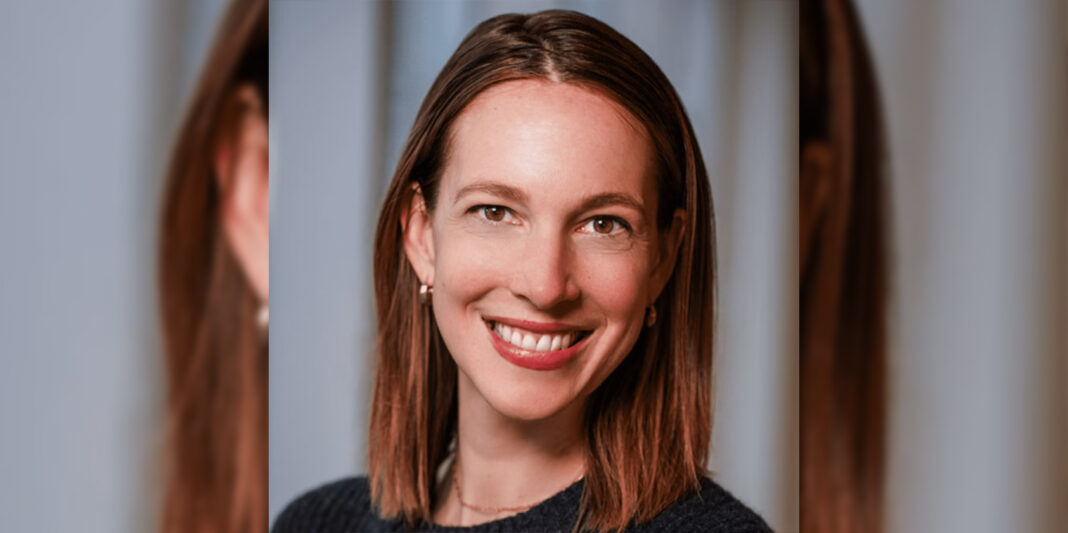
As Africa races toward the 2030 sustainable energy targets, the challenge of connecting hundreds of millions to electricity remains immense. Cassady Walters, Vice President for Power at The Rockefeller Foundation, is spearheading one of the continent’s most ambitious initiatives: Mission 300.
In this exclusive Capital interview, Walters explains how strategic “seed capital” and strengthened Compact Delivery and Monitoring Units (CDMUs) are transforming political commitments into implementable energy projects, bridging the gap between financing, policy, and delivery—and aiming to bring power to 300 million people across Africa. Excerpts:
Capital: Ethiopia’s Energy Compact carries a price tag of over USD9 billion. How does a USD10 million investment in a Compact Delivery and Monitoring Unit (CDMU) strategically act as “seed capital” to unlock such massive financial requirements?
Cassady: The USD10 million is not intended to fund infrastructure directly but to create the conditions for greater investment by providing technical assistance to support Compact implementation and move from plans to delivery, through supporting project preparation, procurement and coordination. Compact Delivery and Monitoring Units (CDMUs) are the delivery engines that turn Compact commitments into bankable, implementable pipelines.
During Mission 300 Day at the 2026 Africa Energy Indaba, The Rockefeller Foundation announced it is Investing an additional USD 10 million to accelerate electricity connections in Africa by 2030. The Rockefeller Foundation along with the Global Energy Alliance for People and Planet are supporting fast-track electrification efforts involving technical assistance to National Energy CDMUs in at least 15 African countries to help improve coordination, monitoring, reporting, and implementation capacity.
We also announced that we are actively providing technical assistance to CDMUs in five countries with more on the way. As part of this new collaboration with the Global Energy Alliance for People and Planet, technical assistance is already being provided to CDMUs in Malawi and Liberia. In parallel, The Rockefeller Foundation announced that the support for the Mission 300 Accelerator is helping improve coordination, monitoring, reporting, and implementation capacity within CDMUs in Côte d’Ivoire, Nigeria, and Senegal with previously announced funding with RFCC.
This investment expands technical capacity, improves coordination, and accelerates reform sequencing and project development. In practical terms, it shortens procurement timelines, strengthens investor confidence, and ensures that National Energy Compacts translate into real connections and transformative economic growth. Today, more than 730 million people still lack access to basic electricity, with an estimated 600 million living in Africa.
Capital: What specific innovations does this new support bring to bridge the wide gap between generation capacity and actual consumer access?
Cassady: Mission 300 is innovative in its scale and pace of delivery. To achieve the 300 million target by 2030, we know electrification must rapidly accelerate – and that requires crowding in partners, building pipelines, and improving the regulatory environment.
This is not just 44 million people but also new connections that power schools, hospitals and supermarkets – electrifying communities and transforming economies. This is the concept that underpins Mission 300 – energy access is the first step to more
Capital: To achieve 75–80% electricity access by 2030, which two or three primary institutional bottlenecks will GEAPP’s technical assistance prioritize first?
Cassady: Over the past year, the key bottleneck has not been political commitment or financing—it has been execution capacity inside government systems. Across many countries, ministries, utilities, and regulators face limited technical bandwidth to advance reforms, structure transactions, and prepare projects at the speed required.
Coordination between energy and finance institutions can also be uneven, which slows approvals and reform sequencing. As a result, project pipelines may be strong on paper but not always execution-ready, limiting the flow of capital to priority grid and off-grid investments.
The additional CDMU funding is designed to address these delivery constraints directly and strengthen coordination across institutions, track reform milestones, and accelerate the preparation of bankable projects. In practical terms, this turns existing political commitment and financing into implementable pipelines—helping countries move faster from plans to connections.
Capital: What is the current operational status of Ethiopia’s CDMU? What is its actual capacity to lead and coordinate the planned 15 million new household electricity connections by 2030?
Cassady: Ethiopia has set forth ambitious targets, but we’ve also seen a real track record of delivery. Indeed, Ethiopia is already experiencing electrification rates of 2-3 million per year and we hope to see even faster progress in the next four years, as they focus on building regional interconnections, expanding their transmission network, and diversifying the energy mix, including pursuing off-grid solutions.
Capital: What is the current status of Ethiopia’s involvement in the global Mission 300 program? Is Ethiopia included in the list of countries receiving a Mission 300 Fellow? If not, what steps must be taken to secure one?
Cassady: Ethiopia does not yet have a Mission 300 Fellow in place. Our partners, Co-Impact Global and the Global Energy Alliance, are in active discussions to understand Ethiopia’s priorities and how technical assistance or a Mission 300 Fellow could support delivery and implementation targets.
By improving transparency, tracking reforms, and helping align development partners around key investments, the CDMU can reduce uncertainty and accelerate the pipeline of bankable projects—creating the conditions for greater private sector participation, including in underserved and rural areas.
Capital: How will strengthening the national CDMU contribute to Ethiopia’s goals for cross-border energy trade and the broader Mission 300 regional roadmap?
Cassady: CDMUs are the vehicle through which countries can bring ambitious national energy strategies to life. They align partners, strengthen institutions and ensure reforms translate into connections and economic opportunity. Therefore, CDMUs can strengthen national energy markets in countries like Ethiopia, making them a more attractive prospect for cross-border energy trade.
Capital: Amidst shifting geopolitical dynamics, what mechanisms are being put in place to ensure that support from international partners—such as Power Africa, the World Bank, and GEAPP—remains consistent and uninterrupted?
Cassady: Ethiopia has been a leader in leveraging innovative mechanisms to raise public finance. Development partners are critical to Mission 300 and we are pleased to see the organization of the Mission 300 Donor and Partners Coordination Group (DPCG), a collaborative platform convened by the WBG and the African Development Bank to align and coordinate partner contributions in support of Mission 300.
The DPCG brings together roughly 35 bilateral and multilateral donors, development finance institutions, philanthropic partners, and technical organizations to ensure resources reach the countries and communities that need them most, mobilizing around $7 billion in commitments from the Asian Infrastructure Bank, the French Development Agency, the Islamic Development Bank, and the OPEC Fund.
Capital: With the 2030 deadline rapidly approaching, what quarterly or annual milestones have been set for the CDMU to track progress toward the goal of providing electricity to 300 million citizens (globally/regionally)?
Cassady: With 44 million connections made to date, partners are pleased with the progress of Mission 300. The first phase of the project involved building the foundations for the project which will enable it to succeed. The next phase will be all about accelerating the number of connections we can make. Connections are being closely monitored by the World Bank through its Mission 300 progress portal and partners will be giving updates regularly to track progress. The African Development Bank is similarly tracking its projects and connections.
Compact commitments are rooted in data, endorsed at the highest political level, and monitored by Compact Delivery and Monitoring Units (CDMUs). CDMUs track progress using standardized monitoring tools developed jointly by the World Bank Group, African Development Bank, SEforALL, the Rockefeller Foundation, and the Global Energy Alliance. Ultimately, Mission 300 has one core indicator: increasing electricity connections. As reforms advance and projects move into implementation, the pace of electrification accelerates—reflected in both achieved and forecasted connections toward the 2030 target.
Transparency is central to this approach. Countries publish National Energy Compacts outlining reforms, investment priorities, and timelines, creating clear public benchmarks for delivery. Progress is also reported through platforms such as the Mission 300 Progress Portal launched by the World Bank Group in 2025, which provides regular reporting on connections, project pipelines, and financing flows, with plans to expand toward a joint reporting platform across Mission 300 partners. Together, these tools ensure that progress is visible, measurable, and tied directly to the ultimate outcome: faster electrification at scale.
Capital: How do the energy projects included in the Compact align with Ethiopia’s Green Legacy Initiative and its broader climate change mitigation goals?
Cassady: Ethiopia’s Energy Compact is closely aligned with the country’s green industrial strategy. Ethiopia already operates one of the cleanest power systems in the world, and has the highest level of renewable energy in the region.
The Compact builds on that foundation by expanding renewable generation, strengthening the grid, and accelerating electricity access—leveraging its hydro, wind, and solar resources to drive economic transformation.
Capital: If the targets and timelines set in the Compact are not met, what corrective measures or “Plan B” strategies have been developed to get the process back on track?
Cassady: The National Energy Compact is designed as an implementation framework, not a static plan. It includes clear milestones, monitoring mechanisms, and regular coordination among government, development partners, and the private sector to track progress and address challenges as they arise.
The beauty of the Mission 300 partnership is that its designed to proactively identify and solve for bottlenecks, mobilize additional technical support, and accelerate progress across partners achieve our 300 million target.
Mission 300 was designed precisely to support this kind of adaptive implementation—bringing together governments, development banks, philanthropy, and private investors to solve problems quickly and maintain momentum toward electrification goals.
Capital: As the Mission 300 Fellowship program expands to 22 experts across 18 countries, what are the specific criteria and qualifications that determine the selection and roles of the fellows assigned to Ethiopia?
Cassady: Mission 300 Fellows are selected based on their technical expertise, leadership potential, and experience working at the intersection of policy, project development, and implementation. They are recruited and selected by our implementing partner, Co-Impact Global. The goal is to place highly skilled professionals where they can directly support governments as they deliver on their Energy Compact commitments.
Fellows work alongside government counterparts to help strengthen coordination, support project preparation, and track progress on reforms and investments. The program is designed to complement the work of government institutions and development partners by providing additional capacity focused on turning Compact commitments into concrete results.