Seven years after the Ethiopian Airlines Flight 302 crash, the scarred crash site has become a place of reflection and healing. Behind that transformation is a complex, emotionally charged journey.
In this interview, Yasser Bagersh, founder of Prologue Communications, reflects on navigating grief, conflict, and responsibility to help create a memorial shaped by the voices of victims’ families—and the weight of a global tragedy. Excerpts;
Capital: How and when did you become involved in the initiatives surrounding Ethiopian Airlines flight ET 302 memorial?
Yasser: I was brought in by Boeing in 2020 to help organize their first memorial for the victims. When I arrived, I felt overwhelmed by the situation. The remains had already been sent to the families months earlier, but there was still a lot of anger, despair, and sadness from the families regarding the loss of their loved ones and the circumstances of their deaths. At that time, there were significant issues among the stakeholders, including Boeing, Ethiopian Airlines, and the families, leading to a strained relationship. I felt like I had been thrown into a pit of fire, as emotions were understandably high.
I had to work quickly to familiarize myself with everyone and organize an event that would honor the victims. However, when we visited the site, it was not ready for anything; there was a large, gaping hole in the ground and no infrastructure in place. We worked around the clock to set up tents and structures so that people could walk around and honor their loved ones. Over a thousand, in fact, about 1,500 people came to the memorial, which required careful coordination, especially since the road from Addis was extremely rough.
Despite these challenges, I was focused on my role, which was to handle the memorial.
Capital: How did you help connect the victims’ families with the stakeholders?
Yasser: My main responsibility was to manage the event logistics and coordinate with the various stakeholders involved, including the victims’ families, Boeing, Ethiopian Airlines, and many others, to organize the first memorial in a setting that was far from ready.
The key entity responsible for liaising between the families and us was an organization called Blake Emergency Services. They handled the collection of the remains, DNA testing, and preparation of the coffins, starting just two or three days after the crash. I worked closely with Blake, as they are an exceptional organization.
Capital: What challenges did you face in connecting the families with the different stakeholders, particularly Boeing, given the families’ anger?
Yasser: Every aspect was challenging. From the moment I arrived, I realized it was not just a roller coaster ride; it felt more like a downward spiral. Our struggle was to escape that spiral because everything was so difficult. After the first memorial, we were tasked with building a monument to honor the victims. First, we needed to align all the stakeholders to agree on building a monument, the design, the selection process for contractors, and more. Each of these steps took a considerable amount of time, and securing the necessary permits from the government to build was also a significant challenge.
Everything came together for me, and I feel truly blessed and privileged to have an amazing team working with and for me. I cannot emphasize enough the support that Blake Emergency provided; they were exceptional and my primary support system. From day one, Boeing was committed to ensuring that a monument was built—a monument approved by the families.
Capital: Given the conflicting interests—the families’ grief, Ethiopian Airlines’ defense, Boeing’s reputation, and the technical requirements—how did you balance these competing priorities to successfully complete such a daunting task?
Yasser: Yes, everyone had their own agenda. However, something unified us that made the situation manageable: our shared goal of addressing the needs of the victims’ families. That was the aim of Ethiopian Airlines, Boeing, Blake Emergency, my team, and myself. As long as we maintained this singular vision, it became more feasible.
Despite the various agendas, reputations, and ongoing lawsuits, when we converged, we focused on doing something for the families, which made the process less overwhelming.
Capital: Would you say that’s what motivated you personally to support the families?
Yasser: When I was first contracted, it was solely to create the memorial. I had no intention of extending my contract with Boeing or anyone else. It was a dark and emotionally intense time. I promised myself that once the memorial was completed, I would not engage with any of those people again.
Capital: Why? Because you found it too dark, too emotional?
Yasser: Yes, I promised myself that after it was done, I would walk away. It was a dark chapter, and at that point in my life, I was seeking light. I didn’t want anything to hinder my quest for that light, and the project felt overwhelmingly somber.
However, after completing the initial work, we realized that a memorial needed to be built—it was something the families wanted, Boeing wanted, and everyone involved desired.
Eventually, it became a spiritual calling for me to take part in this. I had to set aside my personal needs and desires to make it happen, and I knew that I was the right person for the families being in Ethiopia. It would have been challenging for them to find someone who understood the dynamics of the situation, the country, and could assemble the right team to make it happen. Initially, I sought others to take on this task, but I soon recognized that I was that person.
I extended my agreement for a couple of years to oversee the construction, which ultimately took an astonishing six years to complete.
Capital: So, seven years later, what does the memorial mean to you and to the families who lost their loved ones?
Yasser: I feel irrelevant in this context; it’s all about the families now, and I seem to have faded from the picture. Our work is done. We put in a lot of effort. Alebel, the architect, (Alebel Desta Consulting Architects and Engineers) designed and supervised the construction of this stunning monument. Elmi (Elmi Olindo Contractors) came in and made it a reality. We had a company called ZIAS that oversaw the construction, playing a crucial role in the process. Additionally, there was Turner and Townsend, which Boeing hired to manage the financials and ensure that what was promised was actually built. And of course, Blake, was a pillar throughout the journey. All of us worked hard, and now that the monument is done, we all step back, allowing the families to take over. Boeing financed the whole project from A to Z, ensuring that no expense was spared, no compromises.
Capital: Were you involved in the lengthy and complex selection process that ultimately led to Alebel being chosen as the architect after numerous design revisions?
Yasser: I facilitated the creation of the right platforms for the selection process, but I was not on the decision-making panel. The selection of the architect was handled by the Addis Ababa Architecture Association in collaboration with Ethiopian Airlines and the victims’ families Committee. They even brought in one or two architects from abroad to ensure we had both local and global perspectives in the process.
They selected the top three designs, which were then presented to the Boeing, Ethiopian Airlines, and myself for us to share with the families so they could choose their favorite. After they made their selection, we moved to phase two, which involved choosing the construction company. Ethiopian Airlines, Boeing, and I selected three top construction firms, but I wasn’t involved in that decision either. Ethiopian Airlines and ZIAS, the monitoring company, chose the top construction company, which ended up being Elmi, a company I hold in high regard and know well.
Capital: Following the March 10th commemorative event and panel discussion involving victims’ families and various stakeholders, what was the primary objective of organizing that specific gathering?
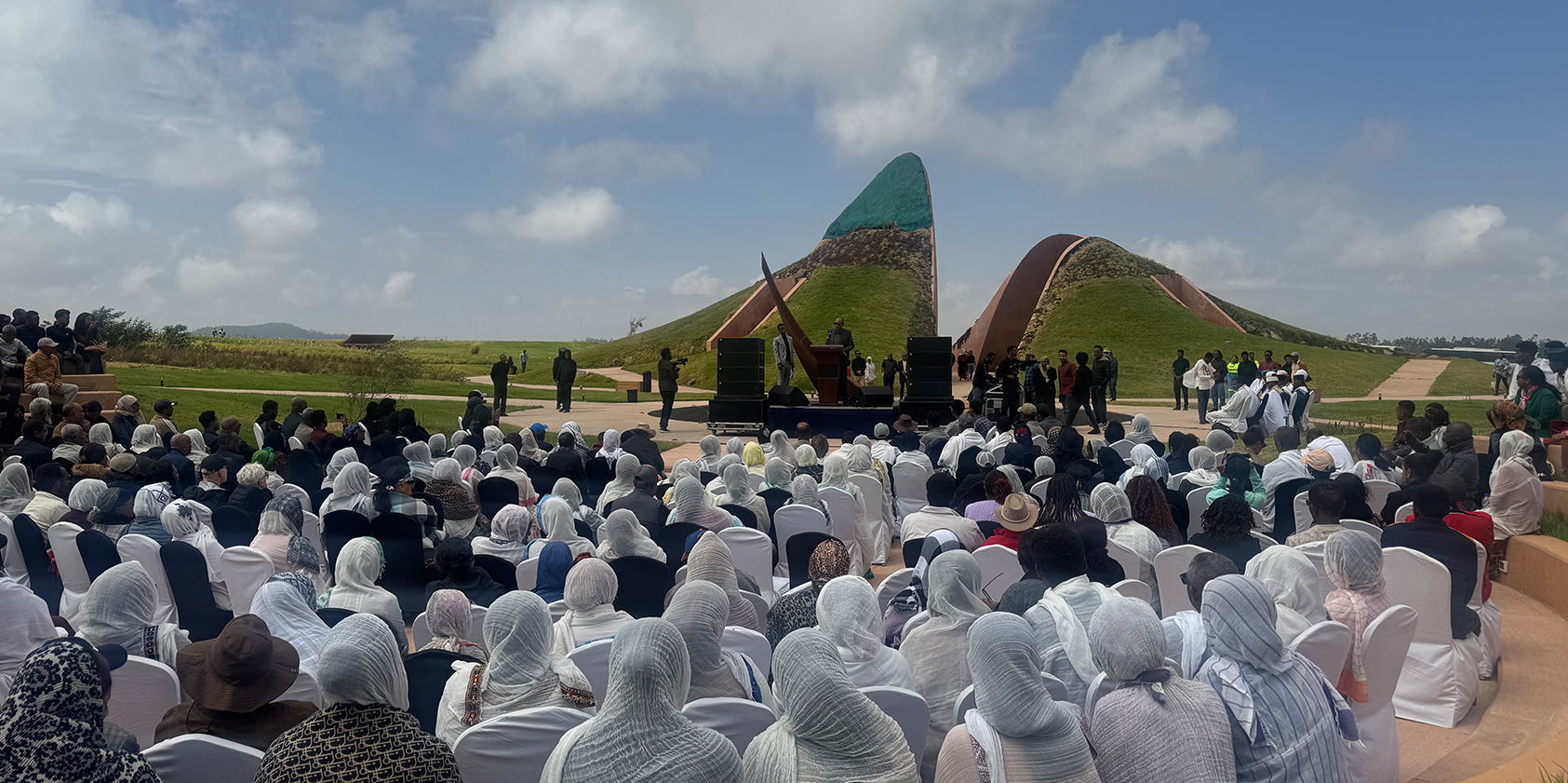
Yasser: We had two events: March 10th and 11th. March 10th was our annual memorial, but this year was particularly special as it marked our seventh anniversary. The seventh year is significant for local Ethiopian Orthodox Christians, as it symbolizes the beginning of finding peace with the loss of a loved one. Coincidentally, this day also marked the inauguration of the church built right across from the memorial park.
This church was constructed by several families in honor of their lost loved ones, making it a meaningful occasion.
On March 11th, we decided to hold a discussion about the creation of this memorial for the first time. We had a fantastic panel that included the architect Alebel, family member Samira Eissa, myself, and representatives from the construction company Elmi and Blake the emergency services company. We all shared our journey leading to this moment. Those were the two main events.
Capital: Reflecting on the tragedy, what lessons do you think the aviation industry and all involved partners can learn from this event?
Yasser: While I can’t speak on behalf of the entire aviation industry, one clear lesson is that safety comes first, followed by profits. This is a crucial takeaway from the crash, and I’ve observed that Boeing has undertaken significant efforts since then to ensure such an incident never occurs again.
Capital: What message do you believe visitors will take away from the ET302 Memorial Park? Additionally, how do you envision the victims’ legacy being honored in the future?
Yasser: In my view, no memorial, commemoration, or park can truly encapsulate the legacy of those we’ve lost. Their true legacy lives on in the hearts and minds of those who knew them. It endures through the work they accomplished, the families they nurtured, the stories they shared, the love they spread, and the challenges they faced. These are the memories that remain alive through those who are left behind.
Nonetheless, a memorial serves as an important symbol. This particular memorial stands as a reminder of the tragedy that occurred on that site and honors those who were taken too soon. When people visit this park, I anticipate they will experience a variety of emotions.
Some may be moved by the stunning architectural design and its visual appeal—an image that could linger in their memories. Others may find solace in the space to grieve their own losses. We have all experienced the pain of losing loved ones, and this park invites that reflection.
For me, during the construction, my focus was solely on the 157 victims. Yet upon its completion, I found myself reflecting on my own loved ones and mourning personal losses. Ultimately, different individuals will connect with the space through their own emotional experiences.
Capital: Even after seven years, you appear deeply affected by this project. Among all the initiatives you’ve led, why does this one resonate with you so strongly?
Yasser: I’ve formed connections with many people, witnessing firsthand the suffering they endure. There is pain everywhere in the world. Tens of thousands of innocent lives have been lost in Gaza, and countless others perish across the globe—innocent lives taken in Africa, Sudan, and beyond. While we may read about these tragedies in the news or hear them on the radio, experiencing it firsthand is profoundly different.
I have vivid memories of the first anniversary; it was deeply jarring to my senses, my mind, my heart, and my soul. The experience connected me with extraordinary individuals who had remarkable stories about their loved ones.
Capital: You mentioned that you feel you ‘don’t exist’ in this process and that your role is solely to serve the families. How does this deep, personal commitment and ‘soul’ you invest in your work reflect who you are as a person?
Yasser: I didn’t realize how difficult it was until much later, when the pressure I was holding onto led to spinal surgery about a year ago. Over the last six years, I’ve experienced profound grief. My soul feels older, and my life is divided into pre-memorial and post-memorial phases. I struggle to articulate it because so much has happened. I had to compartmentalize my feelings to go to the office, attend events and host dinner parties, all while a part of me was burning inside. But I must emphasize, if this is what I endured, can you imagine what the victims’ families are experiencing?
Capital: This commemorative event offers a sense of closure. Seven years is a significant milestone to begin the journey of healing and moving forward.
Yasser: I come from an Islamic tradition where we don’t wear black. We bury the deceased within 24 hours, and the funeral process lasts less than half an hour. After three days of mourning, life resumes—there’s no wailing, just controlled crying. We find our comfort that our loved ones are handed to their creator. We pray and move on. This raises a whole discussion in my mind about the concept of mourning.
I’ve always believed that Islam provides a healthy way to cope with death, embracing the idea of “dust to dust.” The soul continues, while the body is of no relevance. In some cases, we don’t even use names on gravestones; they might just have numbers for identification. That’s my background. Then I entered a world where, seven years later, people are still very emotional. This led me to reflect on my own losses. I lost my father when he was only 49 or 50, and his passing was abrupt. It took me many years to recover.
I began to wonder: if I had more time to mourn, more rituals surrounding death, would I have recovered sooner? There is not “right” or “wrong” way as to how different cultures handle death. Meeting the family members, I see some who have reached a healthy place of acceptance and are moving on, while others remain in deep mourning. There is no right or wrong way to grieve, no good or bad approach, no healthier versus less healthy method—it’s all different. I sincerely hope that, whenever they are ready, the families find their peace.