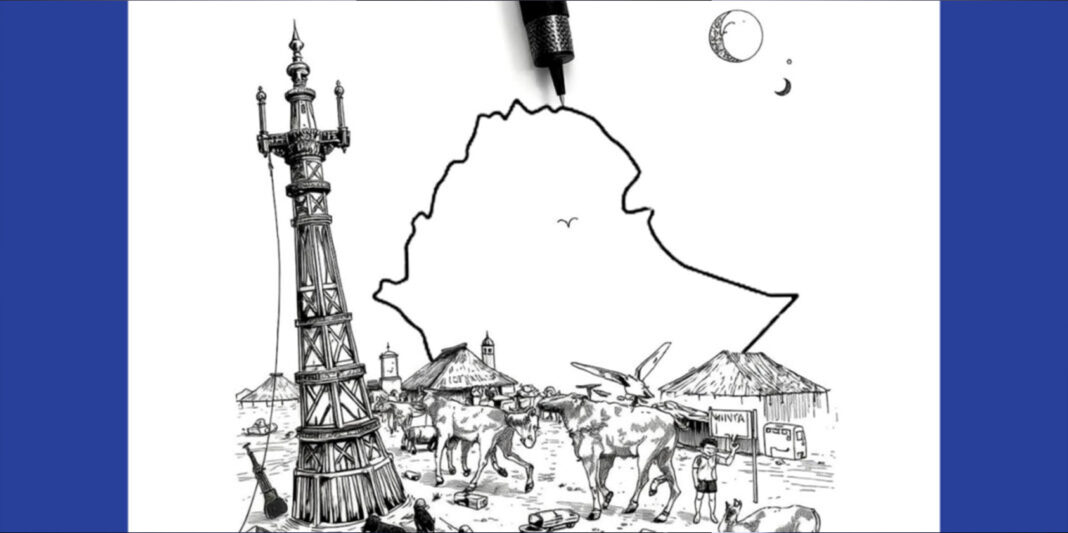
Ethiopia’s long-anticipated accession to the World Trade Organization now appears increasingly inevitable. After years of negotiation, recent efforts signal a determined push by government to finalize the process.
At this stage, the question is no longer whether Ethiopia should join. It is far more urgent—and far more consequential: Does Ethiopia fully understand the structural implications of the system it is entering?
Because accession is not merely a technical exercise. It is a long-term commitment that will shape the country’s development path for decades.
The promise of WTO membership is well known: access to global markets, increased investor confidence, and integration into the rules-based trading system. These are not insignificant gains. But they come with obligations that are often understated, and whose consequences are rarely reversible.
WTO rules are not neutral. They reflect a global economic order shaped by unequal levels of development. For countries that have already built strong industrial bases, liberalization reinforces competitiveness. For late industrializers, it can constrain the very policies needed to build that capacity.
This is the central risk Ethiopia now faces.
By committing to tariff reductions, limiting subsidies, and opening domestic markets, Ethiopia may find its policy space narrowed at precisely the moment it needs it most. Domestic industries, still emerging, will be exposed to competition from far more advanced economies. Without adequate preparation, the result may not be transformation, but stagnation or even deindustrialization.
History offers a clear lesson: no country has successfully industrialized by fully liberalizing too early. Strategic protection, gradual integration, and active industrial policy have been essential ingredients in every successful development story.
Yet Ethiopia appears to be moving toward integration under conditions that may limit these very tools.
This concern is amplified by the evolving nature of the global trading system itself. The WTO is no longer the central, cohesive institution it once was. Its dispute settlement mechanism is weakened, and major powers increasingly act outside its framework. To enter such a system today, without securing sufficient flexibility, raises legitimate questions about long-term positioning.
In contrast, the African Continental Free Trade Area (AfCFTA) offers a different, and perhaps more development-friendly, pathway. It provides a regional space in which African economies can build productive capacity, develop value chains, and expand markets under more balanced conditions.
This is not an argument against WTO membership. At this stage, that debate is largely settled. Rather, it is a call for strategic awareness and careful management of what lies ahead.
Ethiopia must enter the WTO with clarity about its objectives, and with safeguards to protect its development trajectory. This means:
- Preserving as much policy space as possible in final negotiations
- Aligning trade commitments with a coherent industrial strategy
- Strengthening domestic institutions to manage increased competition
- Leveraging AfCFTA as a complementary platform for regional growth
Above all, it requires a shift in mindset: from viewing accession as an end goal, to treating it as one instrument among many in a broader development strategy.
The danger is not in joining the WTO. The danger lies in joining without a clear plan for navigating its constraints.
Ethiopia stands at a critical juncture. The decisions made today will define not only how the country trades, but how it develops. Integration into the global economy can be a powerful tool, but only if it is undertaken on terms that serve national priorities, rather than undermine them.
At this late stage, the process may be difficult to reverse. But it is not too late to ensure that Ethiopia enters the global trading system with its eyes wide open, and its strategy firmly in place.