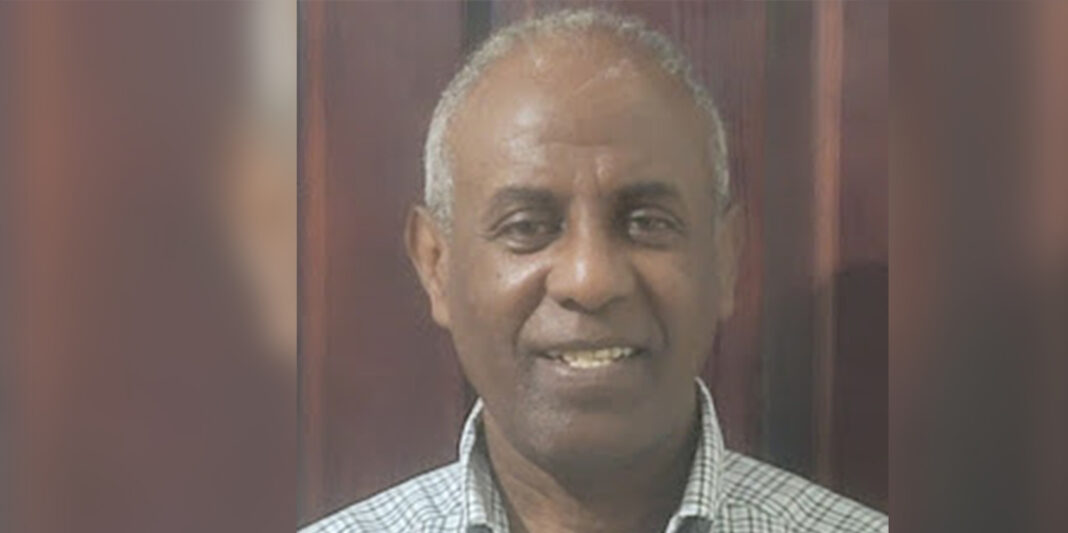
Capital interviewed Dr. Ruth Diriba of Last Mile Health on how digital technology and artificial intelligence could reshape Ethiopia’s Health Extension Program, improve supervision and training, and help frontline workers deliver better care.
Dr. Ruth said the country’s next health-policy shift should move beyond expanding access and focus more on quality, with AI designed to give health extension workers stronger clinical support, faster guidance and greater confidence in handling complicated cases at the community level. She said the goal is to preserve the gains of the past two decades while adapting the system for a more complex disease environment.
A major concern around AI reliability was also addressed in the interview. Dr. Ruth said Last Mile Health has built several safeguards into its “Last Mile” project, including ministry-approved medical content, expert validation, model testing, and human review before any answer reaches a health worker. She added that the system is being rolled out in phases to reduce the risk of medical errors and ensure the technology is used as an aid, not a replacement, for professional judgment.
The conversation also covered patient privacy, offline functionality in areas with poor connectivity, and the long-term sustainability of the project. Dr. Ruth said the program uses secure infrastructure, encrypted systems and supervised workflows, while efforts are underway to build offline capability and local ownership so the system can be scaled sustainably across Ethiopia’s health network. Excerpts;
Capital: How will the application of digital technology and Artificial Intelligence (AI) fundamentally shift Ethiopia’s health policy to ensure the achievements of the Health Extension Program over the past 20 years are transferred to the next generation?
Dr. Ruth Diriba: To grasp this strategic shift, we must first reflect on the significant accomplishments of the Health Extension Program over the last two decades. This government-funded initiative has reliably provided essential healthcare services to remote communities through a workforce of over 40,000 professionals, predominantly women.
These dedicated workers, many of whom began their service at a young age, have devoted their lives to improving their communities. They act as vital links to the formal healthcare system. Our current fundamental transition focuses on passing this success to the next generation by shifting our emphasis from “access” to “quality.”
The Ministry of Health’s integration of digital technology and AI aims not only to streamline workflows but also to fundamentally enhance the capabilities of our health professionals. In an age where diseases are increasingly complex, we want our health extension workers to go beyond routine tasks and simple referrals to higher-level facilities.
By equipping them with AI-driven tools, we empower them with the confidence, knowledge, and clinical skills needed to manage intricate medical cases on-site. This technology allows our workers to make a direct, meaningful impact on the lives of those they serve, helping to restore the deep community trust established at the program’s inception while enhancing their professional motivation.
We acknowledge that the tech world faces challenges like “AI hallucination,” where unverified information may be generated. However, adhering to a “safety-first” principle, we have implemented stringent quality control systems in projects such as the “Last Mile.” This ensures that the AI support each professional receives is devoid of medical errors, enabling Ethiopia’s health policy to utilize modern technology to save and improve lives on an unprecedented scale.
Capital: Given that AI can sometimes exhibit hallucination, what does the quality control system look like in the Last Mile Project, currently being implemented in seven regions, to ensure health extension workers receive error-free answers?
Ruth: We prioritized the safety of our AI system from its initial development through to its full implementation. We have meticulously managed this project, fully aware that “hallucination,” or the generation of false information, poses a significant challenge that is unacceptable in the medical field.
To combat this, we have established several critical safety measures. First, we employed a Retrieval-Augmented Generation (RAG) system that limits the AI to retrieving answers exclusively from a database of ministry-approved documents, clinical guidelines, and protocols designed specifically for health extension workers.
Second, we conducted a comprehensive selection and validation process for the tools involved. This included a landscape analysis focused on safety, functionality, language support, offline capabilities, and multimodal features. An expert group from the ministry, regional health authorities, and health colleges that train health extension workers validated these tools using a blinded comparison matrix.
Third, we implemented a “model-as-a-judge” approach, complemented by rigorous human validation. Experts from the Ministry of Health and Saint Paul’s Hospital developed a standardized set of questions and answers. The model regularly self-evaluates its generated responses against these expert-validated benchmarks to identify any deviations or hallucinations. Any discrepancies are reported, and necessary adjustments are made immediately.
Finally, we implemented a human-in-the-loop strategy and a phased rollout to create a safe platform for health extension workers. During the initial 18-month testing period, call agents—recruited from health worker catchment areas and possessing advanced medical qualifications (such as health officers, nurses, and midwives)—personally evaluate the AI’s responses before providing guidance to the health extension workers (HEWs). HEWs can access these validated answers via a toll-free line.
This process is supported by supervisors and implementation protocols developed by the Ministry of Health and regional bureaus, ensuring that users have a guideline for personal evaluation and do not follow the AI’s suggestions blindly.
Capital: When health extension workers share patient data with the AI system, what technological safeguards and legal frameworks have been established to prevent patient privacy from being disclosed to third parties or exposed to cyber-attacks?
Ruth: To protect all data, we utilize high-security paid servers. Specifically, we leverage Amazon Web Services (AWS) along with encrypted API keys to reduce the risk of cyberattacks. While chat logs are not stored within the AI model, they are kept on a server in a secure, encrypted database; however, external LLM histories are not retained. For translation services, we avoid open-source systems in favor of purchased, secure platforms that align with our organization’s data security protocols.
Additionally, we have established an implementation protocol to guide the training and deployment for health extension workers. This includes systematic follow-ups on prompts and the provision of constructive feedback during routine supervision to ensure personal identification information is not used improperly.
Capital: In the rural districts where the project is implemented, internet and power outages are common challenges. What alternative solutions (e.g., offline capability) have been designed to ensure this AI technology provides uninterrupted service under these difficult conditions?
Ruth: During the model selection phase, we prioritized offline capabilities to address potential connectivity issues. We are currently developing this feature and will initiate formal testing once the necessary technical enhancements are complete.
By embedding offline functionality directly into the models, we aim to ensure that the tool remains functional even in low-bandwidth or no-internet environments.
In the event of a system interruption, our contingency plan includes a supervisor-led call center service. This allows health extension workers to directly contact supervisors, who can then provide the necessary AI-driven guidance over the phone. Beyond these immediate technical and operational workarounds, we are actively advocating with the Ministry of Health and other key stakeholders to secure more sustainable, long-term infrastructure solutions.
Capital: What is the significance of this technology in reducing the workload of health extension workers? Specifically, what awareness-building efforts have been made to ensure it doesn’t create extra pressure on workers with digital literacy gaps, and that they view the technology as an assistant rather than a replacement?
Ruth: The design follows a human-centered approach, ensuring that all solutions are tailored to address specific problems while remaining acceptable, relevant, and usable for the end-user. To achieve this, we thoroughly studied the existing workflows of health extension workers, allowing us to identify and prioritize key areas for support. We are currently monitoring and evaluating worker attitudes, specifically assessing whether the system is perceived as an additional burden or “extra work.” These insights will ultimately guide improvements in both service delivery and system presentation. Furthermore, comprehensive training has been provided to health extension workers to ensure they fully understand the system’s operation and practical benefits.

Capital: What was the reason for Last Mile’s strategic entry into this health sector? Furthermore, what is the long-term sustainability of these projects?
Ruth: The program employs an iterative methodology that enables us to tackle complex challenges by creating targeted solutions. As we implement each prototype, we identify new needs and adapt our approach accordingly.
At Last Mile Health, we are dedicated to achieving outstanding results through initiatives such as digitization, which is a fundamental principle of our organization. To fully empower and support community health workers, we work diligently to strengthen the healthcare system. We remain committed to advocating for this essential work, securing the resources needed for ongoing implementation, scaling up efforts, and providing steadfast support to the Ministry.
Capital: How will health supervisors’ access to real-time data on their staff’s learning progress and knowledge gaps transform the longstanding culture of reporting and monitoring within the Ethiopian health system?
Ruth: Health extension worker supervisors receive continuous data analysis to better support their staff within their catchment areas. This system facilitates easy tracking and completion of referrals, enabling health workers to be well-prepared for consultations, as decisions and outcomes are shared with the support team. Ultimately, this AI system integrates clinical support with proactive supervision and mentorship.
In addition to immediate clinical decision-making, this data is used to analyze questions and answers from health extension workers, helping to identify knowledge gaps and community needs. These insights inform the design of localized guidelines and the redesign of training programs to address specific skill shortages.
Furthermore, the system improves reporting and monitoring by identifying common regional illnesses, which can be cross-checked against submitted reports to drive continuous improvement in healthcare delivery.
Capital: Given that the majority of health extension workers are women, what positive impacts are expected from these digital tools and flexible training conditions on their professional competence, decision-making authority, and work-life balance?
Ruth: I am excited that women are now digitally empowered to use tools like AI in their work. This shift presents a significant opportunity to enhance digital literacy while improving their knowledge and skills. As a result, this strengthens their leadership roles and fosters greater community acceptance.
Capital: Beyond the initial pilot phase, how is the long-term economic benefit of scaling this AI and blended learning model to all 40,000+ health extension workers evaluated in terms of the national health budget and human resource development?
Ruth: By integrating blended learning and digital systems into the healthcare framework, we achieve a 40% reduction in costs along with a 20% increase in skill acquisition. These digital platforms not only enhance clinical knowledge but also create a ripple effect of financial benefits that extend from institutions to individual patients. With the integration of AI support and improved provider expertise at local health posts, the need for referrals is minimized, allowing proper treatment to be delivered at the primary point of care.
This transition significantly reduces direct patient expenses, such as transportation, redundant tests, and out-of-pocket costs, while alleviating the overall logistical burden on families. Consequently, higher-level facilities can focus on providing more targeted, high-quality care for complex medical conditions.
Capital: How is the collaboration between the government and international organizations like Last Mile Health facilitated to ensure that technology is sustainably led by local experts, allowing Ethiopia to manage its own digital health platforms independently?
Ruth: To ensure long-term sustainability, Last Mile Health emphasizes local ownership throughout the development process by empowering the local workforce. We work closely with the Ministry of Health to facilitate knowledge transfer and build regional capacity. Our multidisciplinary team, composed of local software engineers, digital health specialists, and technical experts, leads the design, development, and implementation of the system, ensuring it meets the highest standards of impact and efficiency.