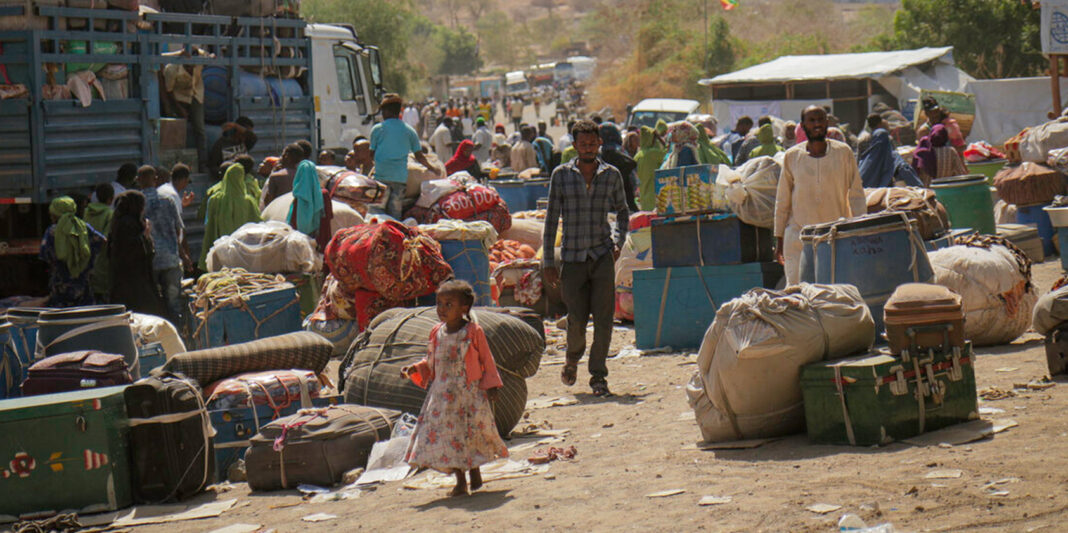
Ethiopia has unveiled a $577.8 million plan to support 1.68 million refugees and host community members in 2026, marking a strategic shift toward integrating displaced people into national systems rather than relying solely on emergency aid.
The 2026 Country Refugee Response Plan (CRRP), launched by the government alongside 38 humanitarian and development partners, targets Ethiopia’s population of about 1.12 million refugees and asylum-seekers as of late 2025. The majority come from South Sudan (520,896), Somalia (390,603), Eritrea (183,967) and Sudan (106,259), with growing numbers of Ethiopian returnees also straining resources.
The strategy follows the “Makatet” (Inclusion) Roadmap, which aims to move beyond short-term relief toward sustainable development. Officials said humanitarian assistance alone cannot address the crisis, and the focus now is on bridging emergency response with long-term economic integration.
A core element involves including refugees in national services. The plan builds on the 2024 “Right to Work Directive,” which allows refugees to seek formal jobs and start businesses. More than 138,000 have already been registered in the FAYDA national digital ID system, giving them access to banking, mobile SIM cards, health and education services.
“Humanitarian assistance alone is not a sustainable solution,” the plan states. “A fundamental change is needed to bridge the gap between emergency relief and long-term development.”
Despite these advances, funding shortfalls pose a major threat. Global humanitarian budgets shrank in 2025, forcing cuts to food rations and worsening conditions in refugee settlements. The CRRP warns that distributions will cover only 60 per cent of dietary needs next year unless more support arrives.
Protection risks and climate pressures add to the challenges. About 72 per cent of refugee children face high stress levels, while child marriage and gender-based violence remain prevalent. In regions like Gambella and Somali, floods and droughts threaten water supplies and livelihoods for both refugees and hosts.
The budget breaks down across key sectors: $184.4 million for food security, $124.1 million for protection, $63.6 million for climate-resilient housing to replace temporary tents, and $102.6 million for health and water, sanitation and hygiene services.
Where local markets function, the plan prioritizes cash-based interventions over in-kind aid. This approach gives refugees spending choices while boosting Ethiopia’s economy through local purchases. Officials say it promotes dignity and self-reliance over dependency.
The Refugees and Returnees Service (RRS) and UN Refugee Agency (UNHCR) emphasized Ethiopia’s “open-door” policy, which has made it one of Africa’s top refugee-hosting nations. But they warned that progressive policies like job access and digital inclusion depend on steady international funding.