Ethiopia has put in place a strong legal framework and ratified key international environmental conventions to regulate hazardous waste, but weak enforcement continues to undermine efforts to curb the growing threat, experts said.
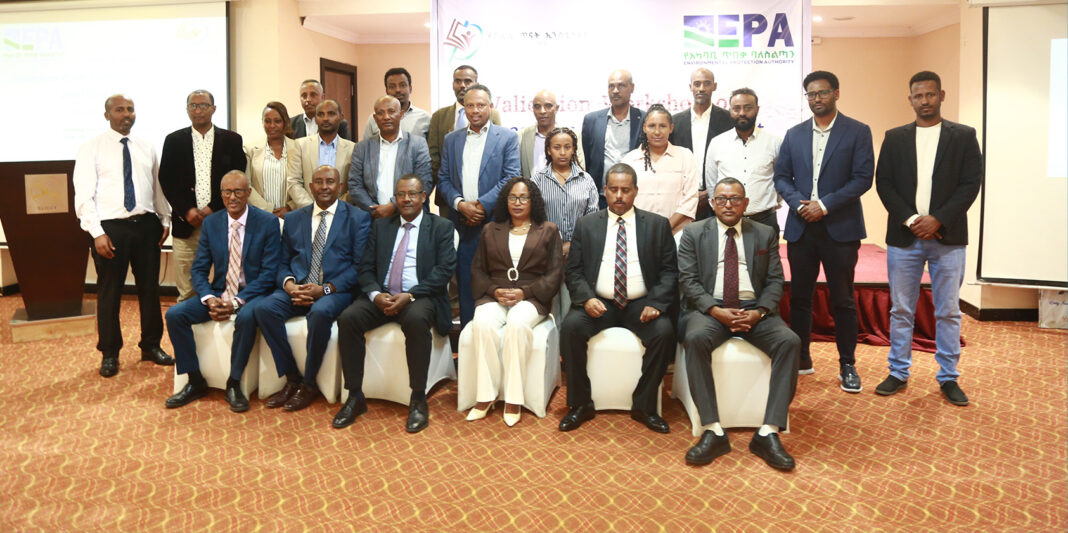
The challenge was highlighted during a review of the study and design work for the country’s first central Hazardous Waste Treatment and Disposal Facility, attended by senior government officials, researchers and environmental experts.
Over the past two decades, Ethiopia has adopted several laws intended to protect human health and the environment from toxic substances. These include the Environmental Pollution Control Proclamation, the Environmental Impact Assessment Proclamation, the Solid Waste Management Proclamation and the Hazardous Waste Management and Disposal Control Proclamation. The country has also ratified the Basel, Rotterdam and Stockholm conventions, which govern the movement and management of hazardous chemicals and persistent organic pollutants.
Despite those measures, implementation remains weak, according to Amare Matebu, a lead researcher who presented an investigative report prepared by the Policy Studies Institute. He said the gap between policy and practice has turned hazardous waste management from an environmental issue into a governance problem.
Communities affected by pollution have submitted petitions seeking action, but the country’s limited monitoring capacity and lack of specialized domestic infrastructure have made it difficult for authorities to respond effectively. As a result, hazardous waste continues to accumulate in sectors ranging from agriculture and manufacturing to health care and education.
According to Firenesh Mekuria, deputy director general of the FDRE Environmental Protection Authority, Ethiopia imported 1.3 million tons of industrial chemicals in one recent fiscal year, nearly 4,200 tons of which had less than 18 months of shelf life remaining. Without strict inventory tracking and disposal controls, such chemicals quickly expire and become hazardous waste.
The country is also grappling with a legacy of obsolete and banned pesticides that have accumulated since the 1960s. Since 2008, Ethiopia has exported 6,787 tons of high-risk waste for safe destruction, at a cost of $35.14 million. However, at least 52 tons of expired pesticides are still being stored in poor conditions, including at the Kality warehouse.
The problem is not limited to chemicals. In the health sector, the absence of centralized treatment facilities has forced some large hospitals to burn hazardous medical waste in low-temperature incinerators or open pits, releasing toxic fumes into the air. In manufacturing, some factories discharge hazardous by-products into rivers or municipal landfills because they lack treatment systems. In the education sector, electronic waste and expired laboratory chemicals are also being stored unsafely.
To address the gap between legislation and reality, the Environmental Protection Authority and the Policy Studies Institute have spent the past 18 months developing the design for Ethiopia’s first fully engineered Hazardous Waste Treatment and Disposal Facility. The facility is planned for Gumbi Bordede woreda in West Hararghe Zone of Oromia and is expected to be developed in phases between 2019 and 2037 Ethiopian Calendar, with an estimated investment of between $105 million and $155 million.
The planned project is intended to give Ethiopia a centralized system for handling toxic waste and reduce the environmental and health risks created by the country’s current fragmented approach.