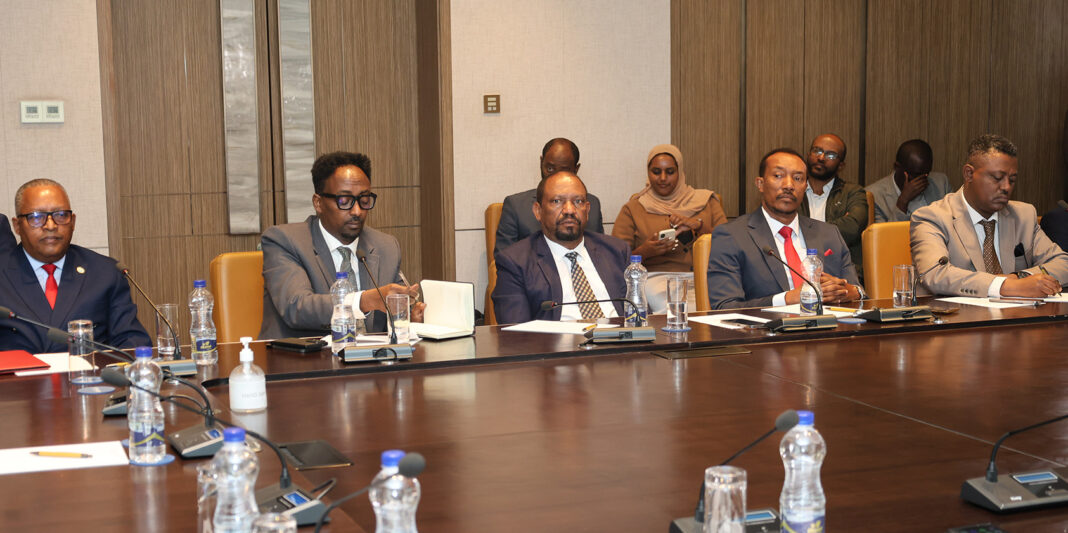
Regional business leaders and chamber executives have issued a stark warning that a constantly changing and unpredictable legal and regulatory framework has made long-term business planning virtually impossible. They expressed deep concern over sudden policies introduced or amended overnight without consulting the business community. This approach is severely eroding confidence in the private sector and forcing enterprises to focus only on short-term exit strategies rather than strategic investment.
The primary threat to sustainable economic growth stems directly from this legal instability, which leaves both local businesses and potential foreign joint-venture investors unable to plan their future operations. According to corporate representatives, new proclamations and directives are frequently introduced or amended overnight, creating policy volatility that disrupts supply chains, destabilizes financial projections and halts capital projects.
These statements were made during a panel discussion themed “Private Sector Participation in the National Dialogue Process,” organized by the Ethiopian Chamber of Commerce and Sectoral Associations (ECCSA) in collaboration with the Ethiopian National Dialogue Commission.
Speaking at the forum, Bogale Bitane, president of the South Ethiopia Chamber of Commerce and Sectoral Associations, said a deep culture of fear has emerged, making business owners highly afraid to provide candid policy feedback to government bodies. “A business community that is afraid to express its views has been created,” he warned, explaining that traders are under dangerous structural pressure.
The president noted that under the current environment, laws are changing overnight, with new proclamations stamped and issued before stakeholders can even finish reading the previous ones. Consequently, foreign investors are shunning joint-venture opportunities. He urged the national chamber to move away from passivity and work actively and aggressively toward achieving a predictable legal environment.
The dialogue centered on the reality that the business community is often the first and worst casualty whenever regional conflict arises. According to participants, when conflicts break out, legitimate business establishments become the initial targets of looting, arson and property destruction long before any broader political fallout occurs.
Bogale detailed how business owners who had accumulated wealth and assets over decades — often using a 30/70 bank loan structure — have watched their factories, heavy transport fleets and buildings completely destroyed overnight. This devastation has plunged former investors and factory owners into severe psychological and economic crisis, reducing them to poverty and forcing them to seek employment from their peers.
To counter this structural vulnerability, the South Ethiopia Chamber has proposed the urgent establishment of a Corporate Social Responsibility Fund for Peace. Managed by the business community, the fund would serve as a financial safety net to support traders impoverished by war, whom the conventional banking system is unwilling to assist.
For his part, Berihu Haftu, president of the Tigray Chamber of Commerce and Sectoral Associations, echoed these concerns. Speaking on behalf of a region recovering from five years of devastating war, Berihu warned that the goals of the national dialogue cannot be achieved if some regional business communities still feel marginalized and excluded.
The financial data presented on post-war recovery was staggering. Berihu explained that before the war, Commercial Bank loans held by business owners in Tigray stood at 32 billion birr. Due to accumulated interest, compound interest and penalties accrued during the years the region was completely cut off from the national economy, that figure has now risen to 89 billion birr.
“Even though we have been litigating this matter with the federal government and financial regulators for nearly three years, we have yet to receive any solution,” he said. “If we cannot resolve even the current, immediate and obvious post-war crisis, the idea that they will provide solutions to problems accumulated over eras feels discouraging.” He added that issues such as power outages, a lack of stimulus loans, and kidnappings and harassment by armed groups along transit routes are leaving northern business communities incapacitated and unable to contribute their share to national economic revival.
Reinforcing criticism of the government’s timelines, chamber representatives said that while the work currently being done by the National Dialogue Commission is vital, the process is far too late.
They argued that the commission is operating at a time when crises have already escalated to this level because the dialogue did not begin eight or ten years ago, before the problems erupted. Had such deep consultations taken place earlier, the country could have reached consensus from a position of economic strength.
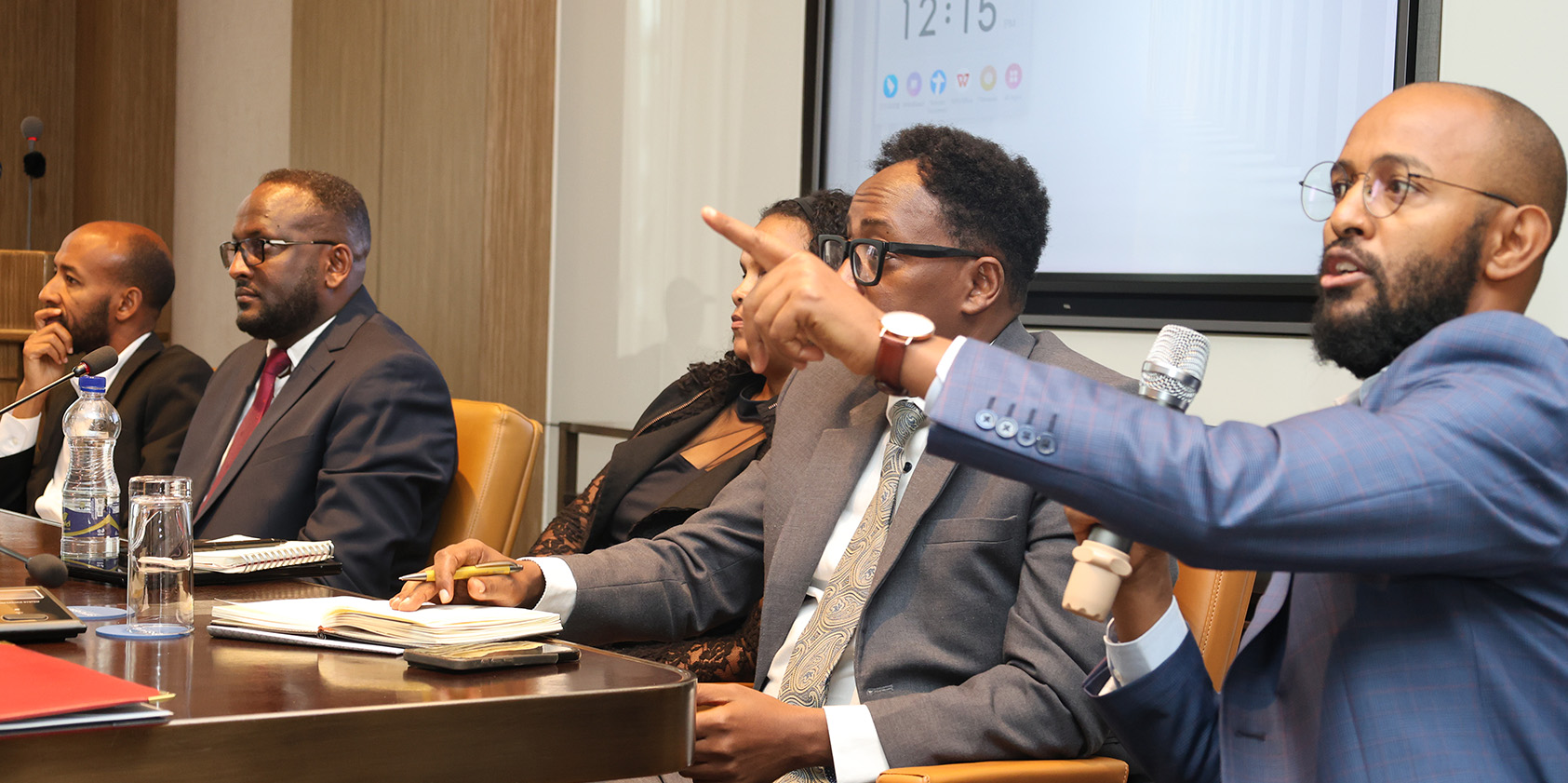
Sector actors also challenged the misconception that peacebuilding is exclusively the responsibility of government security agencies. They strongly criticized views suggesting that business owners should mind their own business and stay out of peace efforts.
Aynalem Abayneh, vice president of ECCSA, said the private sector can play a major role in Ethiopia’s national dialogue process by representing economic interests, promoting stability and contributing practical solutions to national challenges.
“The Ethiopian Chamber of Commerce and Sectoral Associations has a strong interest in supporting national dialogue outcomes that mitigate conflicts and strengthen predictability,” he said.
During the event, Ambaye Ogato noted that given the business community’s broad membership and reach, it has the potential to serve as an ambassador for peace and unity, thereby strengthening public participation and ownership.
He explained that the Ethiopian National Dialogue Commission, which has been operational for three years, developed 10 screening criteria to identify fundamental national issues, drawing from Article 6 of its establishing proclamation. Accordingly, the agendas have been divided into two categories: the first consists of core national issues to be discussed by the public at the national plenary, while the second includes grievances and inputs gathered from the woreda level upward regarding laws and policies that exist but have failed to be implemented by various stakeholders.
According to Ambaye, preparations have been completed to organize the gathered agendas and submit them to regional presidents, executive bodies and the Prime Minister. He said more than 4,000 delegates have been identified through the process, and consultations are scheduled to begin in Addis Ababa on July 14, 2026.