Following Ethiopia’s historic decision in 2024 to ban the import of internal combustion engine (ICE) passenger vehicles, the domestic transport and logistics sectors have been forced into a rapid and mandatory transformation. While many traditional industry players viewed the sudden shift to electric mobility with concern, forward-thinking entrepreneurs saw it as a major and timely opportunity.
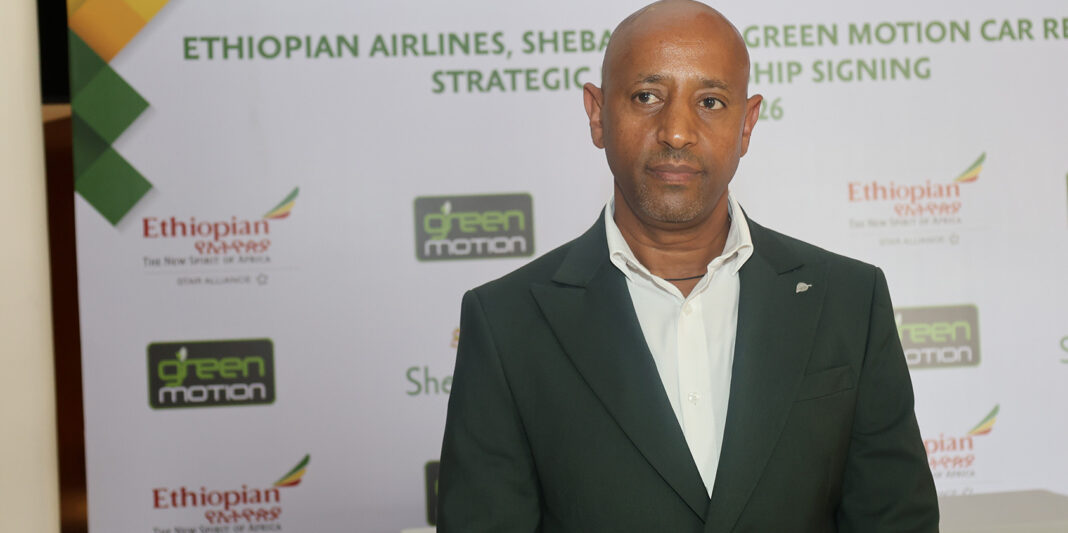
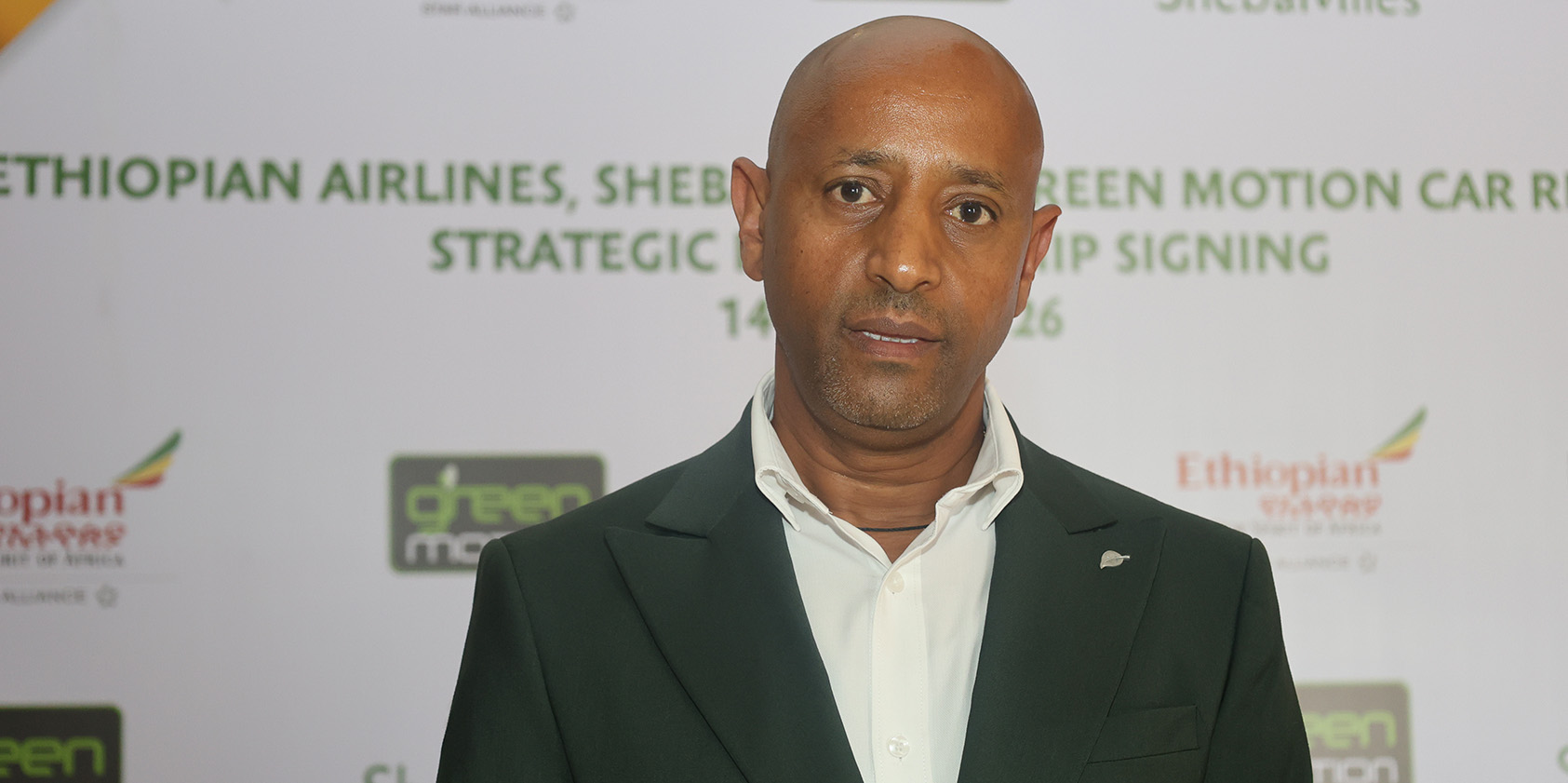
At the forefront of this movement is Bizuayehu Tadesse, General Manager and CEO of Green Motion Ethiopia, who brings extensive experience in Ethiopia’s travel, transport logistics and finance sectors. Recognizing that the country’s traditional and fragmented car rental market needed modernization, Bizuayehu successfully acquired the master franchise for Green Motion, a UK-based company globally known for its eco-friendly car rental services.
By introducing Green Motion to Ethiopia, Bizuayehu is doing more than bringing a digital, app-based international brand to the local market. He is creating a strategic link between sustainable ground transportation and East Africa’s corporate, diplomatic and tourism sectors.
Capital sat down with Bizuayehu Tadesse for an extensive discussion on the realities of building a fully green-powered vehicle fleet, overcoming infrastructure shortages, the recently signed loyalty agreement with Ethiopian Airlines’ ShebaMiles program, and redefining transport logistics regulations in Ethiopia. Excerpts:
Capital: In 2024, Ethiopia banned the import of new gasoline and diesel vehicles. How has this policy shaped your business model compared with Green Motion’s operations in other countries?
Bizuayehu: Ethiopia’s decision to stop importing new gasoline and diesel cars has created a strong opportunity for our business. In many other countries, the shift to electric vehicles is happening slowly, with companies gradually changing their fleets over time. But in Ethiopia, this policy has accelerated the transition and pushed the entire market to think differently from the start.
For Green Motion Ethiopia, this has been an advantage because we did not have to adjust or replace an existing fuel-based fleet. Instead, we built our operations from the beginning with a clear focus on hybrid and electric vehicles. This allows us to be more flexible, more efficient and better prepared for the future. At the same time, it aligns us closely with Ethiopia’s national vision of reducing emissions and promoting clean energy, especially given the country’s strong renewable energy resources. As a result, we are not only providing car rental services, but also supporting the broader shift toward sustainable and environmentally friendly transport in Ethiopia.
Capital: Considering that Ethiopia is powered almost entirely by renewable hydroelectric energy, including the Grand Ethiopian Renaissance Dam, do you view the shortage of charging stations as a “chicken and egg” problem? In your view, who should be responsible for solving it?
Bizuayehu: Yes, it is clearly a “chicken and egg” problem. Customers are hesitant to use electric cars if there are not enough charging stations. At the same time, investors may not want to build charging stations if there are not many electric cars on the road.
We believe the solution should be shared. The government should lead by creating policies and investing in infrastructure. At the same time, private companies like Green Motion should invest in electric vehicles and support charging solutions where possible. It requires cooperation from all sides.
Capital: What is the objective of the agreement signed this week between the Ethiopian Airlines ShebaMiles program and Green Motion International?
Bizuayehu: The agreement between the Ethiopian Airlines ShebaMiles program and Green Motion International is mainly focused on improving the overall travel experience and creating more value for customers. Through this partnership, we are connecting two important parts of a traveler’s journey — air travel and ground transportation.
Now, customers who rent a car from Green Motion anywhere in the world can earn one mile for every one US dollar they spend. This means that whether a customer is traveling for business or tourism, their car rental experience also contributes to airline loyalty rewards.
This is especially important for Ethiopian travelers and international visitors who frequently use Ethiopian Airlines. It gives them an added benefit and encourages them to stay within one connected travel ecosystem. In addition, it strengthens Ethiopia’s position in the global travel market by linking a national airline loyalty program with an international car rental network.
Overall, the partnership is not just about rewards — it is about making travel more seamless, more rewarding and more connected from the moment a customer lands to the moment they reach their final destination.
Capital: Given that electricity supply outside Addis Ababa can be unreliable, how are you promoting eco-friendly car rental services to tourists visiting rural areas?
Bizuayehu: We understand that electricity supply can be less reliable outside major cities, which makes it more challenging to depend only on electric cars. To address this, we are using a mixed approach. We provide both electric and hybrid vehicles. Hybrid cars are especially useful for long-distance travel and areas with limited charging stations. At the same time, we are working with hotels, lodges and tourism operators to explore small-scale charging solutions and raise awareness among travelers.
Capital: You are currently working with a local company, Excellence Car Rental. Is this a temporary supply solution, or is your long-term strategy based on local partnerships rather than importing your own fleet?
Bizuayehu: Our partnership with Excellence Car Rental is not just a short-term solution to meet current demand — it is a key part of our long-term strategy in Ethiopia. We strongly believe that working with local companies is essential for sustainable growth. Local partners bring deep knowledge of the market, customer behavior and day-to-day operational realities that international companies may take time to fully understand.
By combining this local expertise with Green Motion’s global standards, technology and brand reputation, we can create a stronger and more reliable service. This partnership also allows us to scale our operations more quickly and efficiently, without depending only on importing our own fleet, which can be challenging in the current environment. At the same time, it helps build local capacity by creating opportunities for knowledge transfer, skills development and business growth within Ethiopia.
In the long run, our goal is to build a balanced model — one that integrates international best practices with strong local partnerships. This approach not only supports our business growth, but also contributes to the development of a more professional, modern and sustainable car rental industry in Ethiopia.
Capital: You’ve said the car rental sector is underdeveloped not because of a lack of demand, but because of a lack of international brands. How are you educating the local market to trust a digital, app-driven car rental system?
Bizuayehu: The challenge in Ethiopia is not demand, but trust and familiarity. Many customers are used to traditional, informal ways of renting cars.
We are focusing on education and experience. We show customers how easy and transparent a digital system can be — clear pricing, proper insurance and reliable service. Once customers try it and see the benefits, they become more comfortable and confident in using the system.
Capital: Ethiopia plans to have 500,000 electric vehicles by 2030. With banks hesitant to provide loans for EVs and a shortage of professional mechanics, how can the private sector fill this gap?
Bizuayehu: There are two main challenges when it comes to expanding electric vehicle adoption in Ethiopia: access to finance and the shortage of technical skills. Electric vehicles usually require a higher upfront investment compared with traditional cars, and many banks are still cautious about financing them.
However, we are encouraged by the positive discussions we have had with Zemen Bank and Dashen Bank, both of which have shown strong interest and commitment to supporting this transition. This is a very important step, because tailored financing solutions — such as loans designed specifically for EVs — can make these vehicles more accessible to businesses and individuals.
At the same time, there is a clear gap in technical expertise. Electric vehicles require different skills for maintenance and repair compared with traditional cars. As part of our role in the private sector, we are looking to invest in training programs and capacity building so local mechanics and technicians are well prepared to support this new technology.
In addition, we are exploring flexible business models such as leasing, which can reduce the burden of high upfront costs and allow more customers to adopt electric vehicles gradually.
Capital: What are your organization’s goals leading up to COP32, and what is your strategic plan for the next five years?
Bizuayehu: As we move toward COP32, our main goal is to demonstrate that sustainable transport is not only possible in Ethiopia, but also practical and scalable. We want to show that with the right partnerships and planning, green mobility can work effectively even in a developing market.
Over the next five years, we have a clear growth strategy. We plan to gradually increase the number of electric and hybrid vehicles in our fleet, with a strong focus on making environmentally friendly options more accessible to both businesses and individual customers. At the same time, we aim to expand our presence beyond Addis Ababa into other key cities, tourism destinations and business corridors.
Capital: What challenges have you faced in trying to make 70 to 80 percent of your fleet electric, considering that EV charging stations are not yet widely distributed across Ethiopia?
Bizuayehu: The biggest challenge is still the limited number of charging stations and the reliability of power supply in some areas. To manage this, we are taking a step-by-step approach. We are focusing first on cities like Addis Ababa, where infrastructure is better. We also use hybrid vehicles to give customers more flexibility while the charging network continues to grow.
Capital: Beyond Bole International Airport, where is Green Motion Ethiopia headed next? Are there specific historical routes or business corridors you are targeting?
Bizuayehu: We started our operations at Bole International Airport because it is the main gateway for international travelers entering Ethiopia. It is the first point of contact for most visitors, which makes it the ideal location to introduce our services and create a strong first impression of reliable, professional and environmentally friendly transport.
Looking ahead, our expansion strategy focuses on both tourism and business mobility. We plan to grow into key historical and cultural destinations such as Lalibela, Gondar and Axum, which attract a large number of international and domestic tourists. At the same time, we are targeting important business routes and emerging economic corridors where there is increasing demand for structured and high-quality transport services.
Our goal is to build a network that connects major entry points with key destinations across the country. By doing this, we aim to support the growth of Ethiopia’s tourism sector while also making business travel more efficient. At every stage of this expansion, we remain committed to providing reliable, modern and environmentally responsible transport solutions that align with the country’s move toward greener mobility.