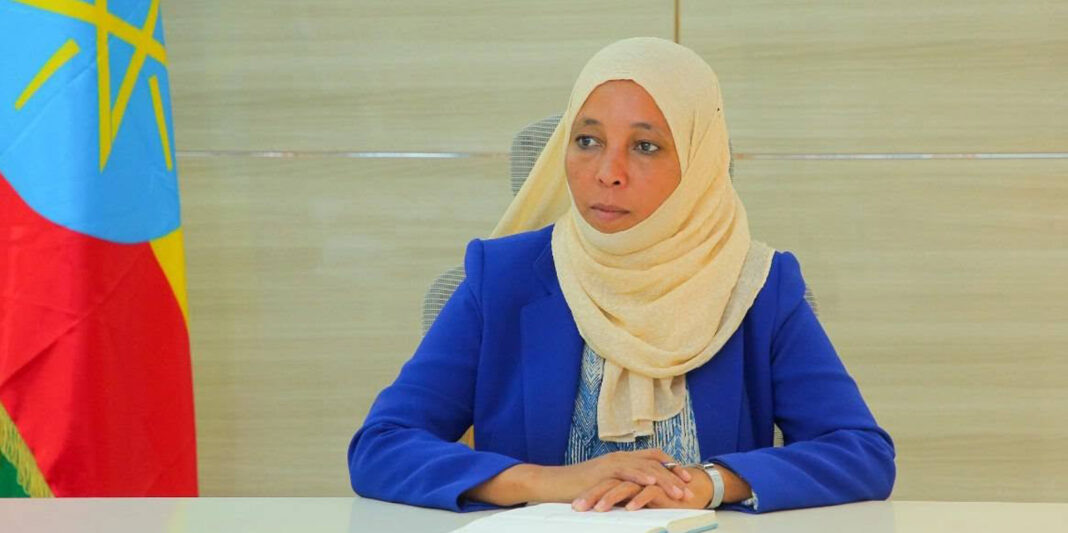
Amana Insurance Share Company, Ethiopia’s first fully interest-free insurance firm, has reached the final stage before launching its official operations. Capital has confirmed from the company’s forming board that the pioneering institution is expected to receive its final operational license from the National Bank of Ethiopia (NBE) within the next two to four weeks, enabling it to become fully operational in the first quarter of 2026.
The milestone is seen as a major turning point for the country’s rapidly growing interest-free financial sector, which previously lacked a Sharia-compliant risk insurance partner.
In a report published in August 2025, Capital revealed that Amana Insurance had laid the groundwork to become Ethiopia’s first fully interest-free insurance provider. While the company was initially named “Amana Takaful Insurance,” the name was later changed to “Amana Insurance” in compliance with NBE directives.

“We have submitted all regulatory feedback and operational responses requested by the central bank,” said Abduselam Kemal, board chairperson of Hijra Bank and company promoter. “We continue to work diligently to address all requirements and await the NBE’s official decision in due course.”
One of the crucial preparatory steps for the launch was completed recently when the National Bank officially approved Amana’s executive management. According to Abdusalam, the company has finalized its main preparatory phases, and the Sudanese expert nominated for the institution’s presidency has received the green light from the National Bank of Ethiopia.
The company has raised ETB 260.4 million in ‘subscribed capital’. While this meets the initial minimum requirement, the organizers are actively planning to meet the NBE’s new ETB 400 million capital requirement over the grace period provided under Directive No. SIB/57/2022.
Amana Insurance was established through a collaborative effort among major actors in Ethiopia’s interest-free banking industry. Instead of each Islamic financial institution opening separate small Takaful windows, the organizers coordinated key stakeholders to build a single, well-capitalized institution capable of serving the entire ecosystem.
The company has grown to around 83 shareholders, including figures from manufacturing, import-export and general retail businesses. Pioneer interest-free banks such as Hijra Bank, Rammis Bank and Shebele Bank founded the institution, each holding a 5 percent founding stake.
Regarding share payments and settlements, Abdusalam confirmed that the main institutional backers have fully met their financial obligations to ensure smooth operations. “Currently, leading institutions like Hijra Bank and Shebele Bank have paid 100 percent of their shares, and other major stakeholders have also finalized their obligations,” he said.
“The board has decided to call the first General Assembly shortly after operations begin, urging the remaining shareholders to complete their outstanding payments and move to the next capital increase plan.”
ZamZam Bank, which could not be among the three founding financial institutions for technical reasons, is also expected to join Amana’s ownership through a second-round share float after the company begins operations.
For years, Ethiopia’s interest-free financial ecosystem has faced a major structural gap. Although fully interest-free banks have grown rapidly and captured a substantial share of the domestic market, the financing and assets they generated lacked a fully Sharia-compliant domestic insurance product to support them.
Market consultants dismiss concerns that Amana will cannibalize existing insurance lines. Instead, data from the expansion of interest-free banking suggests that a standalone Takaful provider will open an entirely new segment of consumers and businesses that have long avoided conventional insurance for religious reasons.
Data shows that up to 2025, no fewer than seven insurance companies in Ethiopia were licensed to offer Takaful services through dedicated windows. The window-based market grew by 92 percent to reach 445 million birr in the 2024/25 fiscal year. However, Takaful’s contribution to Ethiopia’s total gross written premium remained below 1 percent, leaving significant room for a fully dedicated player like Amana Insurance to grow.