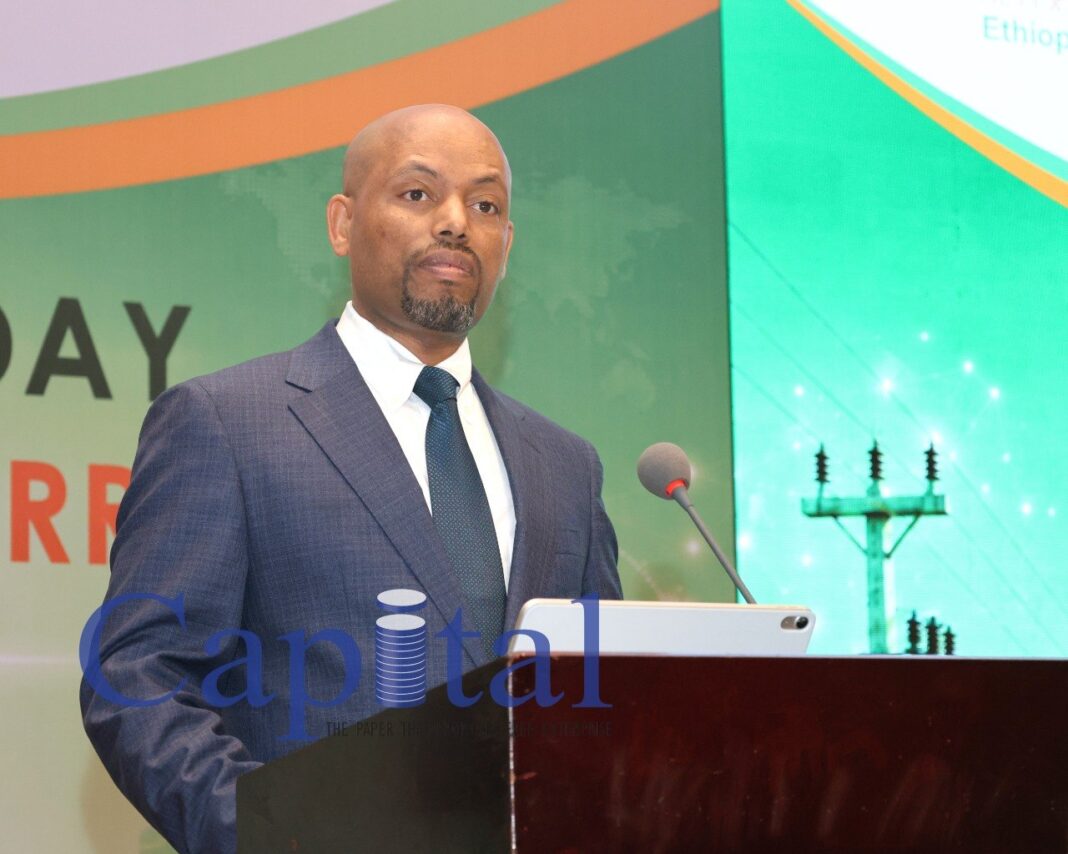
After twenty‑eight years away, I returned home with equal parts excitement and apprehension. Six months have now passed—long enough to observe, to listen, and to feel the pulse of Addis Ababa beyond the headlines and the celebratory narratives. And what I have seen is a country shimmering with ambition, yet shadowed by widening vulnerabilities that threaten the very social cohesion we proudly claim as our national fabric.
Walking through Addis today is like stepping into a city determined to announce itself to the world. The new roads, the polished pathways, the parks, the gleaming buildings—these are achievements worthy of admiration. They reflect a nation that refuses to be defined by its past. But beneath this glitter lies a quieter, more troubling reality: the transformation is not translating into security, dignity, or opportunity for the majority.
The parks are for everyone, yes. But financial security is not. Meaningful jobs are not. Affordable housing, reliable transport, and accessible healthcare remain out of reach for millions.
This is the contradiction that compelled me to write—not to diminish the progress, but to illuminate the widening gap between the visible and the lived.
A City Growing, A People Struggling
The newspapers speak of growth. The news channels speak of modernization. But the lived experience of ordinary citizens tells a different story.
According to the World Bank (2024), Ethiopia’s poverty rate has risen to 31%, reversing years of progress. Urban living costs have surged: food inflation reached over 30%, and housing costs in Addis have climbed beyond what most households earning the median income can afford. The UNDP’s 2023 Human Development Report notes a decline in real household consumption, meaning people are earning more nominally but living worse in real terms.
A few are doing exceptionally well—so well that the system increasingly appears designed to let a small group win by default. But the majority are being pushed into precarity. This is not merely an economic issue. It is a social one. It is a political one. And it is a moral one.
The Youth Bulge: A Sleeping Volcano
Policy makers often speak of Ethiopia’s “demographic dividend”—the idea that a young population is an economic advantage. That may have been true in the industrial era. But in the age of AI, automation, and rapid technological displacement, the dividend can quickly become a demographic time bomb.
The International Labour Organization (ILO) estimates that over 60% of Ethiopian youth are either unemployed or underemployed. Meanwhile, the new economy demands skills that our education and training systems are not yet prepared to deliver. The pace of technological change is outstripping the pace of skill development, leaving young people stranded between aspiration and reality. The labour market is shrinking faster than new jobs are being created, and digitalisation is displacing more workers than it absorbs. Governments around the world—including in the West—are back‑pedalling, struggling to balance innovation with inclusion. Ethiopia is not alone, but Ethiopia is more vulnerable.
Digitalisation Without a Safety Net
The government’s race to digitalise services is understandable. Modern economies require efficiency, transparency, and technological integration. But digitalisation without social protection is not modernization—it is exclusion.
When a government has limited fiscal capacity to provide welfare support, rapid digitalisation can unintentionally dislocate thousands of public‑sector workers, create new jobs that require skills most citizens do not yet possess, and widen the gap between the digitally fluent and the digitally forgotten. This becomes counter‑intuitive development: creating jobs while simultaneously erasing others, often among the most vulnerable. Digitalisation must therefore be paced, sequenced, and accompanied by reskilling programs—not rushed as a substitute for economic justice.
Why the Free Market Alone Cannot Govern
There is a dangerous assumption circulating in policy circles: that the free market can solve everything. It cannot.
Markets allocate resources efficiently, but they do not allocate compassion. Markets reward competitiveness, but they do not guarantee dignity. Markets create wealth, but they do not ensure fairness. The domain of government—its moral obligation—is to ensure that no one is left behind. Ethiopia cannot afford to copy‑and‑paste models from countries with different histories, institutions, and social contracts. A society where only a few win is not a society—it is a marketplace.
The Political Implications of Vulnerability
When citizens become economically vulnerable, the consequences are not abstract. They are political. They are psychological. They are existential.
Increased vulnerability breeds frustration, hopelessness, mental health crises, social fragmentation, and distrust in institutions. If economic justice is not prioritized, governments may find themselves building more prisons than universities—not because people are inherently criminal, but because desperation is combustible. A nation cannot sustain glitter on top of growing cracks.
A Call to the Upper Class and Business Community
The upper class and business community must pay heed. Their prosperity is not insulated from the instability of the majority. Social cohesion is not a luxury—it is the foundation of every investment, every enterprise, every dream. A society is strongest when its people rise together, not when a few rise while many sink.
A Returnee’s Hope
Despite the concerns, I remain hopeful. Ethiopia is a country of resilience, creativity, and profound social bonds. But hope alone is not a strategy. We must confront the uncomfortable truths: growth is not the same as development; glitter is not the same as equity; modernization is not the same as inclusion.
If we want a future where the transformation of Addis is felt not only in its skyline but in its households, we must commit to economic justice, balanced digitalisation, and a humane approach to governance.
I returned after twenty‑eight years because I believe in Ethiopia. I still do. But belief must be matched with action—and action must be guided by compassion, evidence, and a clear understanding that no society can shine when its people are dimmed by vulnerability.