United Nations Trade and Development (UNCTAD) has warned of a sharper slowdown in the global economy in its Trade and Development Report 2026. Global growth is projected to ease to 2.6% in 2026, down from 2.9% last year, while growth across developing economies is expected to decelerate to 4.0% from 4.7% in 2025.
The report cites mounting structural vulnerabilities, heightened energy shocks, and a widening divergence between dynamic regions and the rest of the developing world.
Despite the overall loss of momentum, performance across developing economies remains sharply divided. Asia is projected to contribute 59% of global economic growth in 2026, with India expected to grow 7.3%, Indonesia 5.2%, Vietnam 7.8%, and China 4.5%.
Outside these dynamic Asian economies, however, income convergence has stalled since the mid-2010s, with import-dependent nations facing persistent trade asymmetries and limited fiscal capacity.
According to UNCTAD, external macroeconomic pressures are aggravating the slowdown. Regional conflicts have triggered severe fluctuations in crude oil and energy prices, hitting import-dependent economies and poorer households hardest through higher retail and transport costs. Meanwhile, portfolio flow volatility has roughly doubled, and Official Development Assistance to least-developed countries and small island developing states is projected to fall nearly 7% in 2026—its third consecutive annual decline.
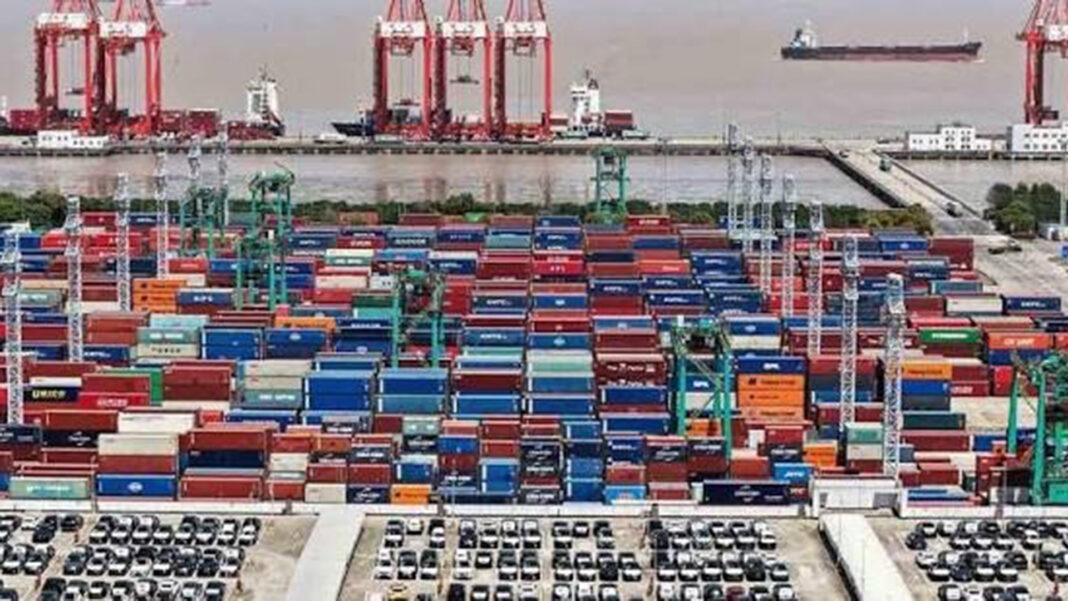
Although global trade in goods and services is expanding by roughly 4% at constant prices, reports show that market entry into high-value sectors remains skewed. Developed economies capture about 70% of the value in strategic greenfield investments such as semiconductors, energy-transition technologies, and artificial intelligence infrastructure, while developing nations remain relegated to low-value segments.
Africa, for instance, mines most of the world’s cobalt but retains less than 1% of the value in clean energy supply chains. UNCTAD stresses that regional integration, coordinated industrial policies, and stronger local supplier linkages are urgently needed to secure genuine long-term development gains.