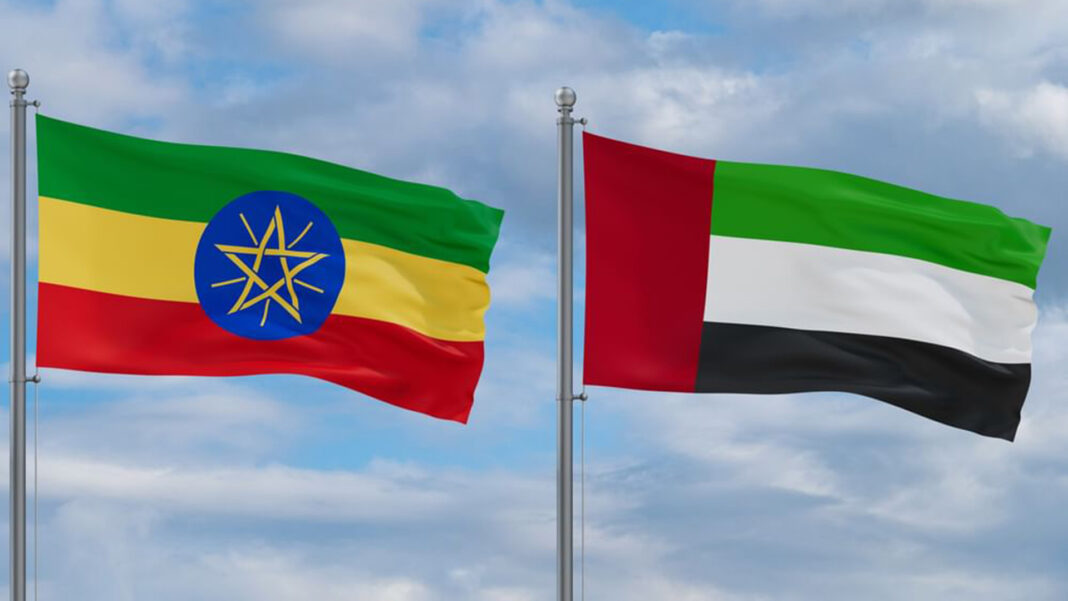
Growing commercial ties between Ethiopia and the UAE are creating opportunities to move beyond traditional trade towards industrial production, value-added exports and long-term economic cooperation.
Ethiopia’s economic relationship with the United Arab Emirates (UAE) has grown considerably over the past decade. Trade has expanded, investment interest has deepened, and cooperation increasingly extends beyond the exchange of goods. The latest engagement between business communities in Addis Ababa suggests that manufacturing could become an important new chapter in this relationship.
The opportunity is significant. Ethiopia has long exported agricultural commodities while importing fuel, fertiliser and manufactured products. With Emirati businesses showing growing interest in its industrial sector, the country has an opportunity to retain more value from its exports, expand domestic production and create employment.
A recent visit by a delegation from the Sharjah Chamber of Commerce and Industry offers an indication of how the relationship is evolving.
The delegation brought together around 150 Emirati and Ethiopian businesses at a bilateral forum organised with the Addis Ababa Chamber of Commerce and Sectoral Associations, the Ministry of Foreign Affairs and diplomatic representatives from both countries.
The two chambers signed a Memorandum of Understanding (MoU) to strengthen business cooperation, building on an institutional relationship first established in 2001. The agreement reflects a longer history of engagement, but its importance lies in the new commercial opportunities it could support.
The Sharjah visit followed a separate mission by the Dubai Chamber of Commerce in May. That delegation recorded 510 business-to-business meetings under its New Horizons initiative, the highest number since the programme was launched in 2023.
The presence of two major Emirati chambers in Addis Ababa within the same year points to growing confidence in Ethiopia’s commercial potential. It also suggests that the relationship is moving towards more direct engagement between businesses, where investment opportunities can be identified and developed.
The foundations are already substantial. According to Ethiopia’s Ministry of Trade and Regional Integration, bilateral trade reached 5.6 billion dollars between 2021 and 2025. Ethiopian imports accounted for 4.4 billion dollars, largely driven by refined petroleum products and urea fertiliser, while exports reached 1.2 billion dollars, led by coffee, sesame seeds, livestock products, cut flowers and fresh produce.
These exchanges reflect the complementary needs of both economies. Ethiopia benefits from access to essential commodities and established international trading networks, while the UAE remains an important market for Ethiopian agricultural products.
The next opportunity is to build on this foundation by expanding investment into domestic manufacturing and processing.
For Ethiopia, the benefits could extend well beyond export revenues. Manufacturing creates opportunities for skilled employment, technology transfer, stronger local supply chains and greater participation in international markets. For Emirati investors, Ethiopia offers access to agricultural resources, a growing workforce and an expanding regional market.
The coffee industry illustrates what such cooperation could achieve. Ethiopia is internationally recognised for the quality and diversity of its coffee, yet much of the value generated through roasting, packaging, branding and distribution is captured after the product leaves the country.
Emirati investment in processing and packaging facilities could help Ethiopian producers retain a greater share of this value. Combined with the UAE’s logistics infrastructure and international market access, such investments could strengthen Ethiopia’s position not only as a supplier of coffee beans but as an exporter of finished products.
The potential extends to other industries.nDuring the Sharjah delegation’s visit, officials from Ethiopia’s Ministry of Industry encouraged Emirati enterprises to explore opportunities in agro-processing, food and beverage production, textiles, leather goods, pharmaceuticals, packaging and agricultural machinery.
These sectors align with Ethiopia’s industrial development priorities and the commercial interests of Emirati businesses seeking new manufacturing and supply-chain opportunities.
The relationship also benefits from the different strengths each economy brings.The UAE has developed extensive international logistics networks, access to investment capital and commercial links across Asia, Europe and the Middle East. Ethiopia offers agricultural resources, an expanding industrial workforce and opportunities to serve markets across the African continent.
The African Continental Free Trade Area (AfCFTA) adds another dimension. By creating opportunities for greater trade between African economies, it strengthens the case for investment in Ethiopian manufacturing facilities capable of supplying regional markets.
Industrial centres around Addis Ababa and Bishoftu could play an important role in this transition, particularly where foreign investment is combined with local enterprise development and technology transfer.
Recent engagements suggest that both sides are looking beyond general expressions of commercial interest.
The Sharjah delegation’s programme included visits to Addis Industry Village and consultations with the Ethiopian Investment Commission, the Ministry of Agriculture and the Ministry of Trade and Regional Integration.
Such engagements are important because investment decisions depend on more than market potential. Businesses need to understand local conditions, identify credible partners and assess the infrastructure and regulatory environment required to establish operations.
Ethiopia has made industrial development a central economic priority, although investors continue to face challenges relating to infrastructure, reliable power supply, administrative processes and the availability of serviced industrial land.
Addressing these constraints will be important in converting new commercial interest into productive investment. The growing institutional cooperation between Ethiopian and Emirati business organisations provides a useful platform for that process. Chambers of commerce can help connect investors with local enterprises, facilitate market information and support the development of joint ventures.
Their role could become increasingly important as the relationship shifts from traditional trading activity towards more diversified commercial cooperation.
The progress of this partnership should ultimately be judged by the productive capacity it creates.New manufacturing ventures, investment contracts, processing facilities and an expanding range of Ethiopian finished products reaching Gulf markets would provide practical evidence of success.
For Ethiopia, this would support ambitions to expand industrial output, create skilled employment and strengthen its export competitiveness. For the UAE, it would deepen an already important economic relationship while opening new opportunities for businesses across manufacturing, agriculture and logistics.
The recent missions by the Sharjah and Dubai chambers demonstrate how the relationship is continuing to evolve. What began as a commercial exchange increasingly has the institutional networks and business interest needed to support more substantial industrial cooperation.
The opportunity now is to translate that momentum into investments that connect Ethiopian production with regional and international markets. If sustained, this next phase could see the UAE–Ethiopia partnership become an increasingly important contributor to Ethiopia’s manufacturing ambitions, demonstrating how trade and investment cooperation can support long-term economic development on both sides.