Djibouti has clarified its port fee structure in response to recent criticisms that conflated its charges with separate logistics and transport expenses incurred by Ethiopian firms. As a conciliatory gesture, the nation has also invited Ethiopian vessels to utilize its newly operational shipyard facility.
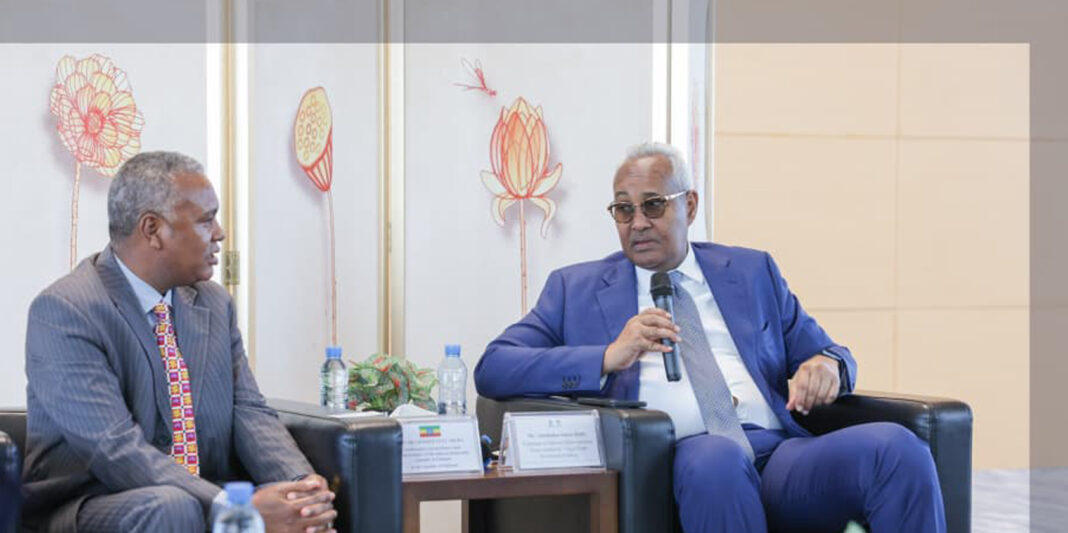
This discussion occurred during a meeting on Wednesday, December 3, between Aboubaker Omar Hadi, Chairman of the Djibouti Ports and Free Zones Authority (DPFZA), and Ethiopia’s newly appointed Ambassador to Djibouti, Legesse Tulu, at the authority’s headquarters.
Chairman Hadi addressed what he described as a widespread misunderstanding about expenses at Djibouti’s ports, which serve as a vital trade gateway for landlocked Ethiopia. In a statement obtained by Capital, the authority sought to clarify misconceptions regarding port revenues.
“The Chairman clarified the widely circulated misinformation regarding Djibouti’s port revenue, which is often inaccurately estimated at USD 1.4 billion,” the statement read. “He explained that port revenue is around USD 400 million for all ports combined, including domestic cargo, transshipment, and transit.”
The authority emphasized that the larger figure often cited includes inland transportation costs, totaling approximately USD 1.2 billion—a sector predominantly managed by Ethiopian trucking companies.
“DPFZA’s accounts are audited by EY and KPMG, and we are providing an open book,” Omar Hadi assured the head of the Ethiopian diplomatic mission.
Highlighting deepening cooperation, the chairman noted opportunities for Ethiopian Shipping and Logistics (ESL) vessels to undergo repairs at the new Djibouti Ship Repair Yard, described as “the largest and most competitive dry dock in the Red Sea,” offering a more accessible alternative to longer, costlier routes to other continents.
Ethiopia, the world’s most populous landlocked country, operates its own deep-sea vessels, setting it apart from many African nations.
The meeting aimed to strengthen the logistics partnership between the two nations. In a confidence-building measure, the DPFZA agreed to deploy Djiboutian marine officers on ESL vessels upon the company’s request.
Other collaborative initiatives discussed included a sea-air cargo program, where goods arriving by sea in Djibouti would be transported onward by air to 28 cities across 25 countries via Ethiopian Airlines and RwandAir.
Partners also reviewed the Djibouti-Ethiopia-South Sudan-Uganda (DESSU) corridor project, which aims to enhance regional integration by creating a strategic land link to promote cooperation and economic development among the participating countries.
In a social media post, the Ethiopian Embassy in Djibouti stated that discussions centered on improving the efficiency of Djibouti’s ports and trade corridors to better facilitate Ethiopia’s import and export flows.