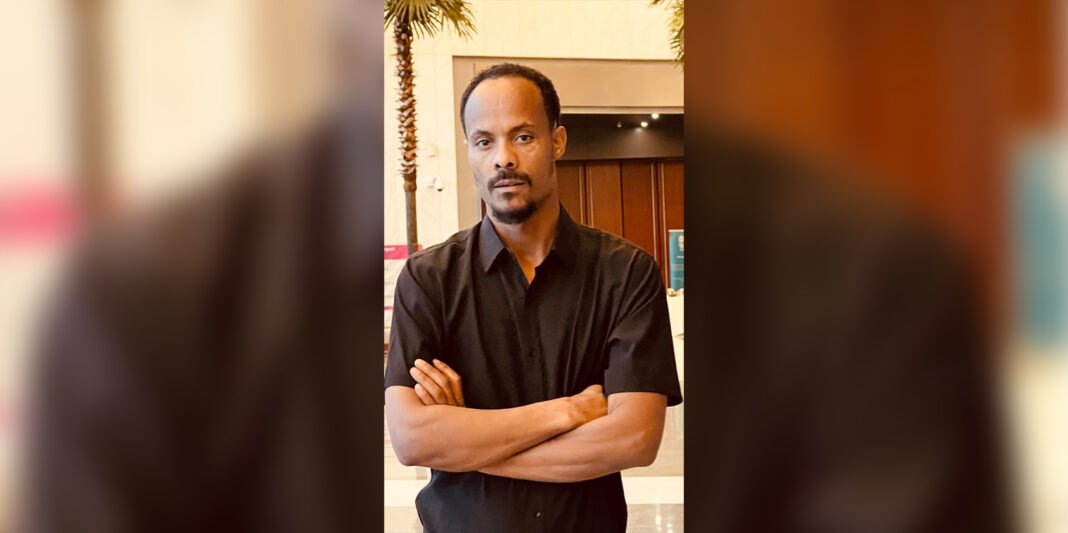
GOBEZ Academy is reimagining how Ethiopian students learn by blending the art of storytelling with the power of technology. Drawing on his 15-year career in film and documentaries, founder Toffic Shafi has built a platform where physics can become a short drama, history can feel like a documentary, and supplemental podcasts and audio-visual content turn lessons into memorable experiences. At the same time, by investing his own resources, prioritizing multilingual access in five local languages from the outset, and working closely with the Ministry of Education, Regional Bureaus, teachers, and civil society partners, he is positioning GOBEZ not just as an app, but as a national tool for inclusion—one that aims to give Ethiopia’s next generation the digital confidence to create, innovate, and solve local problems at scale. Excerpts;
Question: Toffic, you’ve transitioned from a 15-year career in filmmaking to leading a digital education company. How does your background in film and documentaries shape the way you approach education at GOBEZ Academy?
Toffic Shafi : Completely. Film is not just about cameras; it’s about storytelling, engagement, and making complex ideas accessible and memorable. At GOBEZ, we don’t just digitize textbooks. We use that storytelling DNA. We ask: how can a physics concept become a short drama? How can a history lesson feel like a documentary? My team at Ton Multimedia collaborates closely with our educators to build this. We create supplemental podcasts, dramas, and documentaries that don’t just inform, they captivate. This is the power of merging media and education: it builds a connection that pure text often cannot, which is crucial for the digital generation.
Question: GOBEZ Academy has developed a vast library of curriculum-based and supplementary materials without any government funding. What motivated you to invest your personal resources into this, and what has been the biggest challenge?
Toffic: The motivation was simple: we saw a critical gap and a national priority. The government has a clear policy to promote digital technology, but the ecosystem of localized, high-quality digital content was nascent. We believed we had the skills to help build it. The biggest challenge, unquestionably, has been scale and sustainability. Bootstrapping forces immense discipline, every feature, every language module, every piece of content must justify its cost. But it has also given us agility. We could move quickly, experiment, and build a product based on direct need without bureaucratic delay. It proved the model’s viability.
Question: Your app supports five local languages, which is crucial for accessibility. Why was multilingual support a non-negotiable part of your mission from the beginning?
Toffic: Because true digital inclusion cannot happen in a single language. Education is most effective in one’s mother tongue, especially in the early years. If we are serious about helping students across Ethiopia, from Oromia to Somali region, be active in digital technology, we must meet them where they are, in the language they think and dream in. This wasn’t just an add-on; it was the foundation. It’s a matter of respect and effectiveness. It ensures our tools are a bridge to opportunity, not another barrier.
Question: You’ve built a strong network of supporters, from the Ministry of Education to NGOs. How have these partnerships been essential, and what does successful collaboration look like for you?
Toffic: These partnerships are our validation and our compass. Technically, organizations like Initiative Africa and the Ethiopian Teachers Association have been invaluable. But more importantly, engagement with the Ministry of Education and Regional Bureaus ensures our work aligns with the national curriculum and real classroom needs. Successful collaboration isn’t about funding; it’s about shared purpose. It’s when a teacher gives feedback that shapes our app, or a ministry expert helps us refine an exam manual. That dialogue turns a product into a shared mission for the country’s educational future.
Question: Looking ahead, with digital education quickly becoming the norm, what is your ultimate vision for the impact of GOBEZ Academy on Ethiopia’s next generation of students?
Toffic: My vision is for GOBEZ to be a foundational platform that demystifies technology and makes high-quality learning ubiquitous. We don’t just want students to use digital tools; we want them to understand and create with them. Ultimately, I see a generation that isn’t passively consuming global digital content but is empowered to use these tools to solve local problems, tell their own stories, and drive Ethiopia’s economy forward. We want GOBEZ to have helped plant that seed of digital confidence and creativity in every student we reach.
These answers are designed to present Toffic as a visionary pragmatist, someone who understands both the creative power of media and the hard realities of building a sustainable venture for social impact. They tell a cohesive story of opportunity, challenge, and mission-driven work.