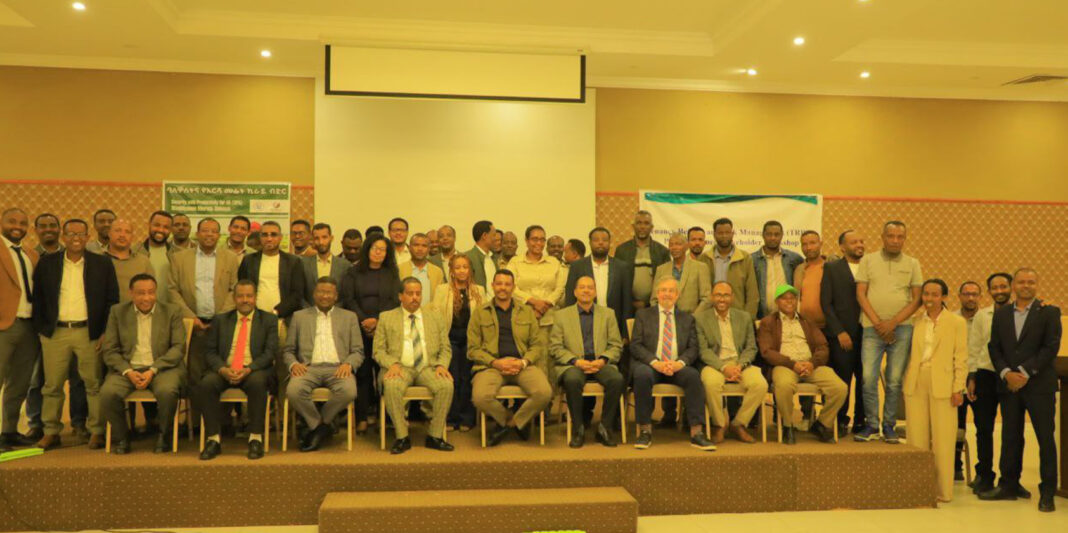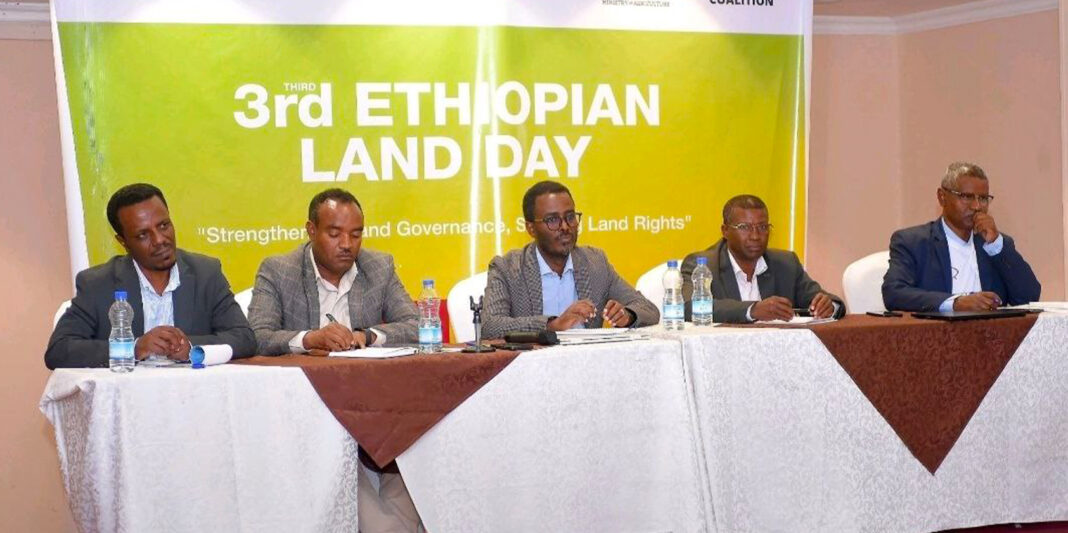
Land governance failures in Ethiopia are accelerating ecological degradation and pushing the country toward a potential food security crisis, land policy experts have warned. Policymakers and advocates at the Land for Life–Ethiopia “Land for Life Forum” said that without urgent reforms, weak land management will undermine the very agricultural base on which the economy depends.
Although agriculture remains the backbone of Ethiopia’s economy, experts argue that outdated laws, poor implementation and weak enforcement in the land sector are eroding the foundations of the entire food system. They describe land management as the “invisible infrastructure” that determines who can use land, under what conditions, and for how long — and say that the current framework is failing farmers and ecosystems alike.
Research presented at the forum indicates that the absence of secure land rights is discouraging long‑term investment in soil health, water conservation and climate‑resilient practices. Instead, many farmers, unsure whether they can keep or pass on their plots, are forced into short‑term, extractive use of the land, which accelerates degradation and reduces productivity over time.
Experts stressed that land management is not just a technical exercise, but a matter of equity, stability and survival. Widespread disputes over land tenure, illegal occupation and opaque allocation processes are deterring responsible agricultural investment and fuelling local tensions. Participants urged the government to treat land governance as a national security issue and to move quickly to resolve conflicts and clarify rights.
Weak institutional oversight has also created openings for corruption and discriminatory practices in land administration. This, analysts warned, is pushing smallholder farmers — who make up the bulk of Ethiopia’s rural population — to surrender their land rights, deepening extreme poverty and widening inequality. They argued that building a modern, digitally supported land information system is an urgent priority, not a long‑term luxury.
“Land management is an invisible infrastructure of our entire food system. When this infrastructure is weakened, the whole system will be destroyed,” said Bezualem Bekele at the event. He linked the loss of tenure security and misuse of land directly to ecological decline, noting that degraded soils, deforested hillsides and eroded watersheds are symptoms of deeper governance failures.
Experts also highlighted the twin pressures of large‑scale investment and rapid change in Ethiopia’s lowlands. In the absence of clear and enforceable legal frameworks, communities face displacement risks from uncontrolled foreign and domestic investment, as land is reclassified and leased out without meaningful consultation. Rather than supporting sustainable development, this pattern of allocation is depleting natural resources and deepening ecological imbalances, they said.
The country’s centuries‑old pastoralist systems are among the most affected. Rapid urbanisation, population growth and state policies that prioritise permanent agriculture and capital‑intensive investment have steadily squeezed traditional grazing lands. Pastoral areas are often treated as “empty” or “idle” land, despite their long‑standing role in supporting livelihoods and maintaining fragile ecosystems through mobility‑based herding.
Advocates argue that this narrative mislabels pastoral production as “backward” and environmentally harmful, while ignoring the ecological value of seasonal movement and flexible grazing patterns. As communal rangelands are privatised or converted to farms, livestock pressure intensifies on the remaining open pastures, fuelling conflicts and accelerating land degradation.
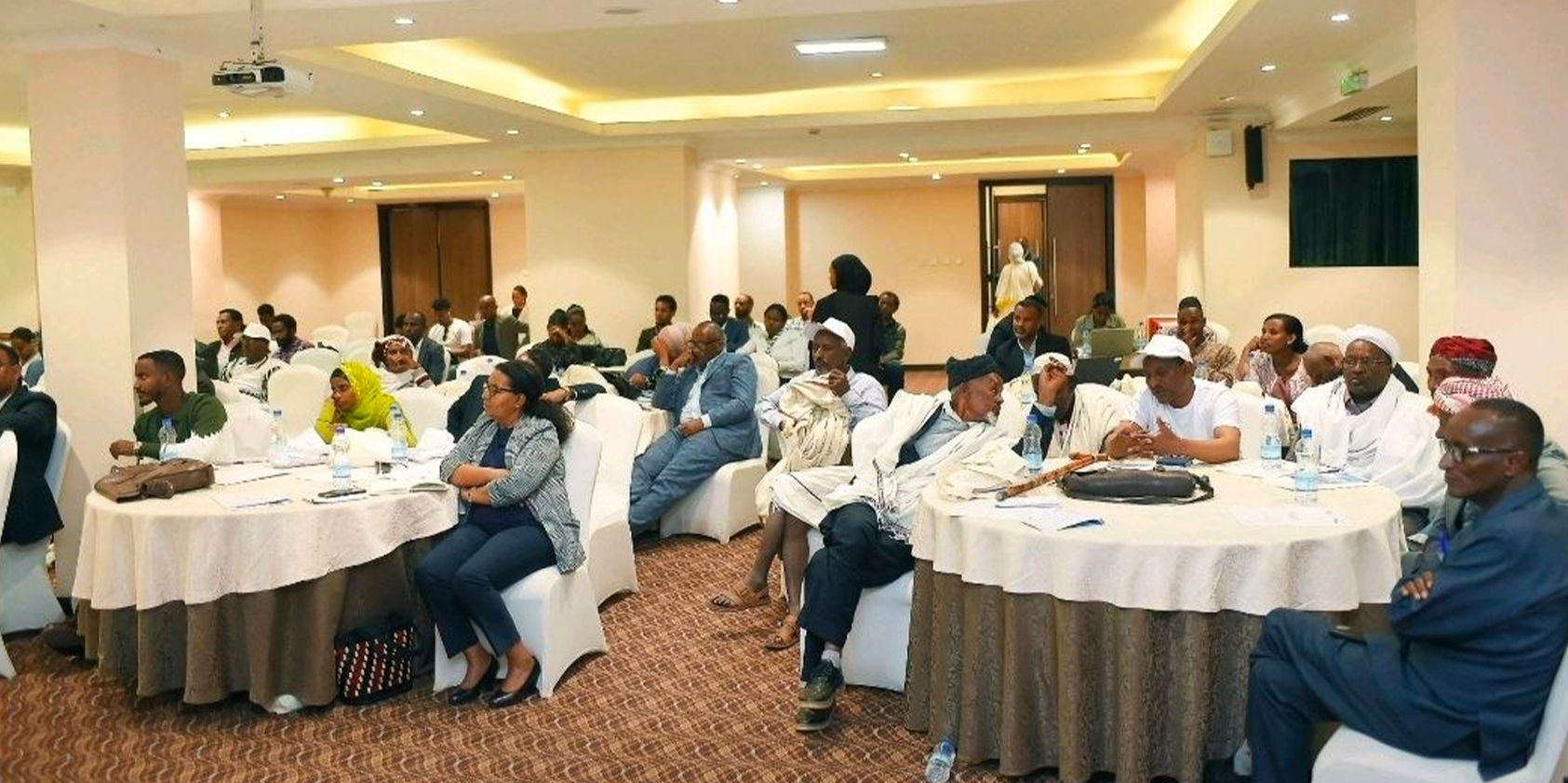
Despite strong constitutional language, implementation has lagged. Article 40(5) of Ethiopia’s Constitution recognises pastoralists’ rights to freely access land for grazing and cultivation and to protection from arbitrary displacement. Yet in practice, experts say, pastoral communities are being excluded from decision‑making as their grazing areas are reduced and fragmented by new projects and enclosures.
With climate shocks intensifying in the lowlands, regional bodies such as the African Union and IGAD have begun to acknowledge that mobility is a critical survival strategy rather than an anachronism. Specialists at the forum called for legal recognition of “flexible borders” and seasonal corridors, similar to arrangements in parts of West Africa, to allow herders to move across administrative and even international boundaries in response to rainfall and pasture conditions.
Proposed measures include mapping and formalising livestock routes, harmonising cross‑border regulations with neighbouring states and integrating pastoralists’ traditional knowledge into national research and extension systems. Experts argued that these steps would help stabilise livelihoods, reduce conflict and support more climate‑resilient land use.
Participants also criticised decades of top‑down development approaches in the lowlands, noting that billions of dollars in projects since the 1960s have failed to deliver lasting improvements in pastoral communities’ wellbeing. They blamed this on policies that sideline local voices, misunderstand the logic of pastoral systems and impose fixed, sedentary models on landscapes and societies built around mobility.
Without a decisive shift toward inclusive, transparent and ecologically grounded land governance, experts warned, Ethiopia risks further soil depletion, biodiversity loss and rural impoverishment — with direct consequences for national food security and social stability.