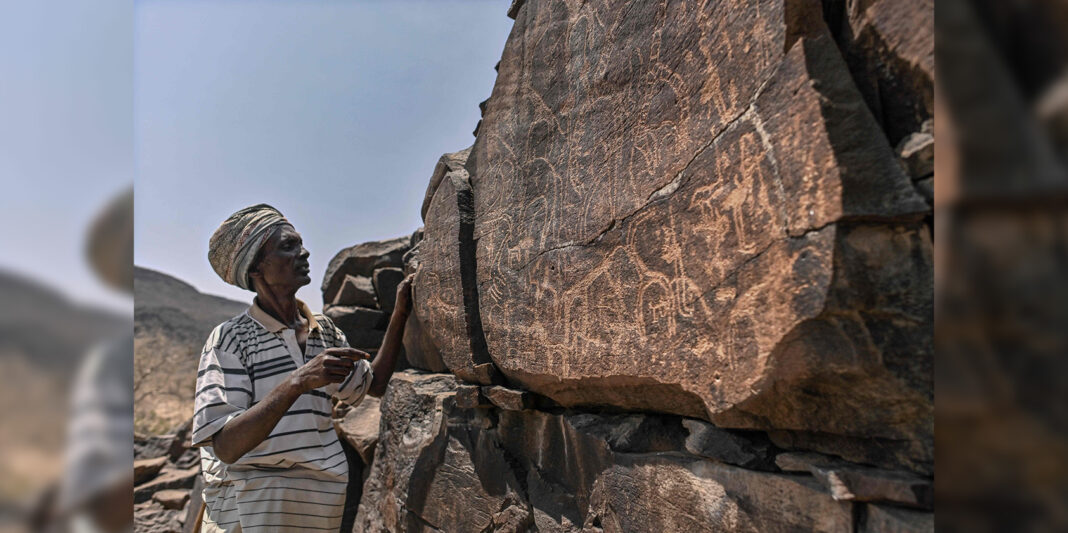
Djibouti has taken a major step toward its first UNESCO World Heritage designation by officially declaring the Abourma rock art site in the Tadjourah region a national monument.
The decision, ratified during the first Council of Ministers meeting of 2026 on Tuesday and presided over by President Ismail Omar Guelleh, grants the site formal state protection under a new decree. Located in the Makarassou Massif, Abourma features more than 900 well‑preserved Neolithic engravings depicting giraffes, ostriches, antelopes and other wildlife — evidence of a once‑lush landscape in what is now arid terrain.
Experts hail the site as one of the Horn of Africa’s most significant archaeological treasures, offering insights into prehistoric human–environment interactions. The government move aligns with Djibouti’s National Heritage Law (No. 208), passed in late 2025, to meet UNESCO’s strict criteria for world heritage status.
In parallel, the Council approved creating a National Commission for Heritage and Culture, which will advise the Ministry of Youth and Culture on identifying, registering and safeguarding tangible and intangible assets. Djibouti, which ratified the UNESCO World Heritage Convention in 2007, currently has 10 sites on its tentative list, with Abourma poised as the first formal nomination.
The ministry also announced near completion of the Station Museum (Musée de la Gare) in the capital’s Plateau du Serpent area. Housed in the historic Djibouti–Ethiopia railway station, it will chronicle the nation’s transportation and urban development history.
Officials described these initiatives as part of a broader effort to preserve Djibouti’s cultural legacy amid growing tourism and regional interest in Horn of Africa heritage. The Abourma designation is expected to boost conservation, research and eco‑tourism while elevating Djibouti’s global cultural profile.