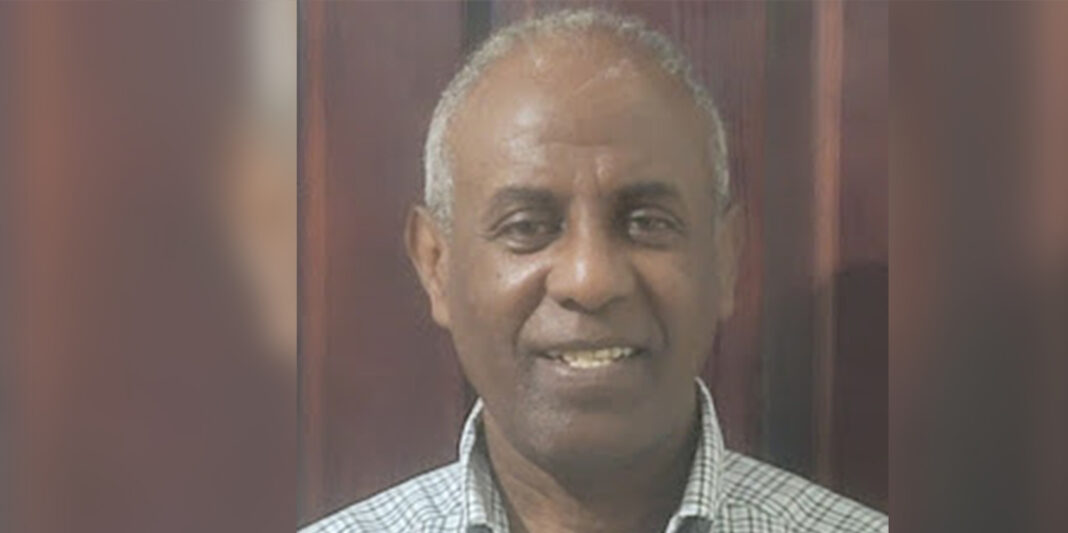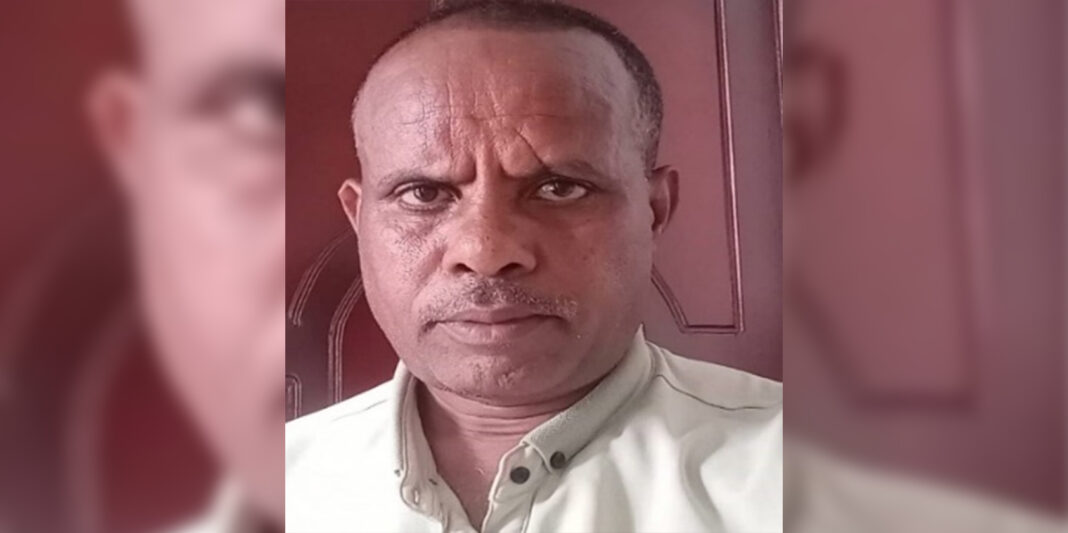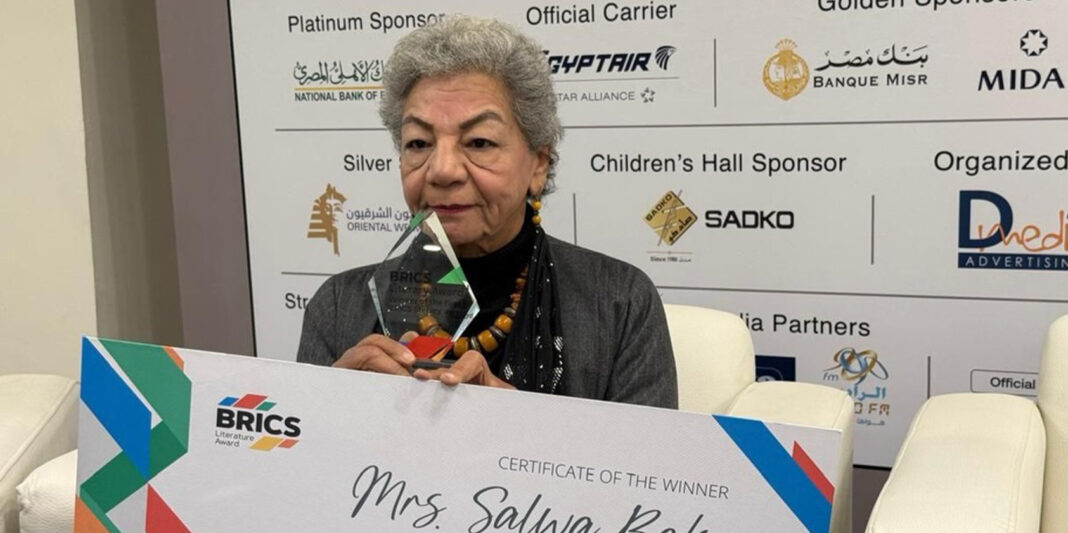
Egyptian writer and novelist Salwa Bakr has been named the inaugural laureate of the BRICS Literature Award, an international honor established to foster intercultural dialogue and promote shared humanistic values through literature.
Bakr received the award at a ceremony held during the 57th Cairo International Book Fair, one of the largest literary gatherings in the Arab world. The event took place at the Egypt International Exhibition Center (EIEC), where she was presented with the prize by Aleksandr Ostroverkh-Kvanchiani, Executive Director of the BRICS Literature Award and Director of the Eurasian Foundation for Humanitarian Values. The recognition carries a cash prize of 1 million rubles (about 600,000 Egyptian pounds).
The ceremony drew international attention, with distinguished guests in attendance including Vadim Teryokhin, Co-chair of the BRICS Literature Network Writers’ Association; Doha Mostafa Assi, Egyptian MP and co-founder of the award; and Sastri Bakri, Indonesia’s national coordinator for the BRICS Literature Network.
Founded in 2024, the BRICS Literature Award highlights writers whose work advances cultural understanding among the member countries — Brazil, Russia, India, China, South Africa — and their partners. The selection process spanned several months and countries: a long list of 30 candidates was unveiled in Brazil in September 2025, narrowed to 10 finalists in Jakarta, before Bakr’s win was announced on November 30, 2025, in Khabarovsk, Russia.
In her acceptance remarks, Bakr expressed pride in representing Egyptian and Arabic literature on an international stage, calling the award “deeply meaningful” for its emphasis on civilizational dialogue through the arts.
“Ancient Egypt was developing literature at a time when Europe was living through the Dark Ages,” she said, emphasizing the shared literary heritage among BRICS member nations.
Known for her vivid portrayal of Egyptian society and women’s experiences, Bakr has authored seven novels, seven short story collections, and a play, with her works translated into multiple languages.
Member of Parliament Doha Mostafa Assi hailed Bakr’s win as a milestone for modern Egyptian writing. “This is not just news about a prize — it is a message that contemporary Egyptian prose is being heard far beyond our country,” she said. “Within BRICS, cultural dialogue is taking shape on equal terms, beyond politics and economics.”
The BRICS Literature Award, according to Ostroverkh-Kvanchiani, offers “a living dialogue between writers and readers across nations,” promoting translation, publication, and global recognition of diverse voices. Russian State Duma deputy Dmitry Kuznetsov added that Bakr’s works will be published in Russian by Zakhar Prilepin’s “KPD” publishing project, underlining BRICS’ commitment to literary exchange.
The award’s first season also saw a special honor for Indonesian writer Denny JA, who received the prize “For Innovation in Literature” for his pioneering of the poetic essay — a genre blending imaginative writing with factual and documentary elements.
Concluding the ceremony, Vadim Teryokhin highlighted the network’s growing reach. “The BRICS Literature Network has become a true platform for dialogue,” he said. “Each member country has added its voice to the global conversation about the future of literature, and the works of the winners will soon be available in 10 languages.”
As BRICS expands its cultural collaboration, Bakr’s recognition marks a promising beginning for the award — and a significant moment for the international presence of Arabic and Egyptian literature.