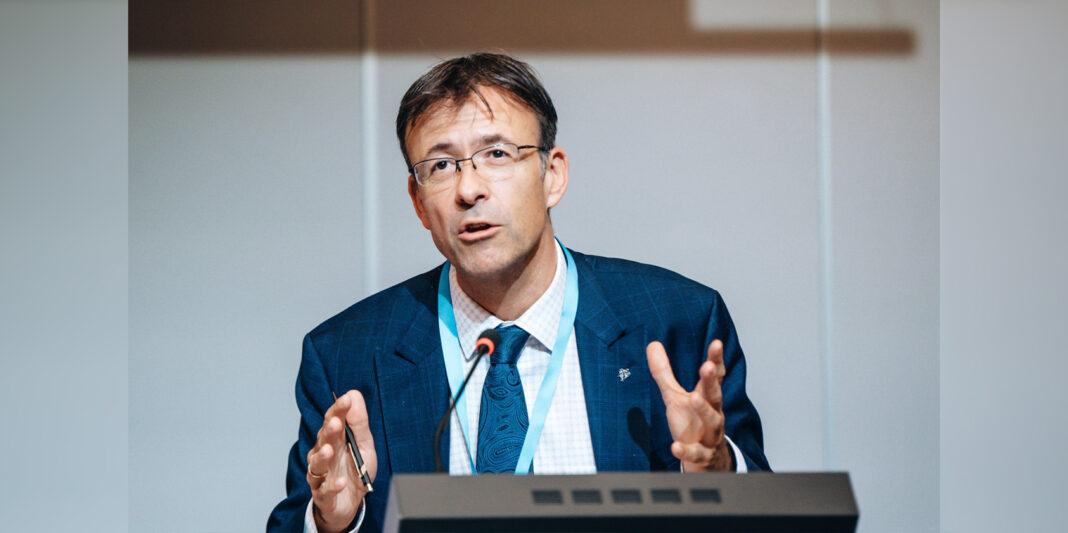
The 2027 FIATA World Congress, set to take place in Addis Ababa, is being positioned as far more than a prestigious industry gathering. In an exclusive interview with Capital, FIATA President Stéphane Graber stresses that the congress should be understood as the visible peak of a much longer process: a three‑year partnership through which the global freight forwarding body is working with Ethiopian authorities and industry to modernize the country’s logistics ecosystem from the inside out.
For Graber, hosting the congress is the outcome of groundwork already underway rather than a starting point. Over the past three years, FIATA has been engaging with local associations, regulators and regional stakeholders to align Ethiopia’s logistics practices with evolving global standards. This has included setting up working groups, piloting digital documentation, and preparing the sector to adopt international legal instruments on electronic records and negotiable cargo documents. The objective is to arrive at 2027 not only with a successful event, but with concrete reforms to showcase — from digital freight documentation to improved compliance with global data and legal standards.
The stakes are high. Ethiopia is battling persistently elevated logistics costs that erode export competitiveness and weigh on domestic prices. At the same time, global supply chains are under pressure from conflict, pandemics, regulatory shifts and decarbonization demands. Graber argues that for a landlocked country aspiring to be a regional gateway, the response must be strategic: build resilience through multimodal transport, invest in people as much as technology, and adopt global legal tools that give investors and shippers confidence in electronic trade processes. Excerpts;
Capital: Beyond hosting the 2027 FIATA World Congress in Addis Ababa, how do you believe this congress will contribute to modernizing Ethiopia’s logistics sector and reducing the high logistics costs often reported in the economy?
Stéphane Graber: The congress should not be viewed merely as a standalone event; rather, it represents a continuum and a journey leading up to the congress itself. Over the past three years, we’ve collaborated with local associations, authorities, and regional stakeholders, effectively bridging the expertise of FIATA with the local market.
In reality, we need to see the congress as part of a three-year journey in which FIATA is actively engaged and committed to the country, working alongside key players and leading various projects. We’ve established working groups in preparation for the congress and planned activities to pilot developments, such as implementing digital documentation. Our goal is to showcase these initiatives at the congress in a year and a half. This congress serves as a bridge-builder and offers a valuable opportunity to share knowledge and expertise in logistics, addressing regional challenges while also educating the global community about Ethiopia’s potential for development and its role as a logistics hub.
Currently, there is a somewhat biased perception from outside regarding the rapid evolution in Africa. Many people are still unaware of the vibrant changes happening here. Ethiopia is transforming at an astonishing pace, and even those we met remarked on how quickly this change is occurring. For outsiders who haven’t had the chance to connect and see the local market, it can be challenging to grasp the reality.
Capital: Global supply chains are currently vulnerable to various disruptions. Based on your visit, what is the primary step Ethiopia must take to build a robust and competitive logistics ecosystem that international companies can rely on?
Stéphane: Today, we are facing numerous shocks, including the pandemic, conflicts, and supply chain disruptions. Therefore, we need to build a more resilient supply chain. Digitalization is essential, but it also requires ensuring interoperability between systems. While there are many digital initiatives worldwide, they must adhere to certain standards that facilitate connections among different stakeholders.
We can focus on several key areas. First, we need to ensure that we have the right expertise and that we train individuals to bring more skilled professionals into the industry. This is crucial because freight forwarding and logistics are people-centric businesses; no system can replace human expertise. Secondly, we must introduce technology and digitalization in a way that aligns with global standards. For example, adopting the United Nations C-Fact data standard can help ensure that systems communicate effectively without reinventing the wheel, allowing freight forwarders to utilize existing global frameworks that are widely recognized.
So that’s one aspect. Then there are the legal considerations. Today, new legislation called MLETR is coming into force globally. MLETR is the model law for electronic transferable records.It provides a legal framework for the exchange and acceptance of electronic documents, similar to what we have had for paper documents in the past.
This law must be implemented by all countries worldwide, and it has been adopted by the UN. Currently, 15 countries have completed the implementation of the MLETR. As a model law, it requires time for adaptation, as there is a process involved in understanding its benefits and consulting local partners.
We can assist in this process, which is essential for effective implementation. Additionally, there is a new convention called the Negotiable Cargo Document Convention, which was adopted by the UN Legal Council in July of last year and ratified by the UN General Council in December.
This law enhances the security of using electronic documents and titles of goods for transportation, whether by rail or road, and it also opens up financing opportunities by allowing documents to be used as collateral.
Implementing this international convention is crucial, as it requires ratification by the relevant authorities. Therefore, the government needs to consider and implement these legal tools in Ethiopia to strengthen the legal security for managing modern logistical systems.
Capital: Ethiopia is currently working hard to secure sea access. How critical is port diversification for a landlocked country in ensuring its economic sovereignty? What role can FIATA play in facilitating such processes?
Stéphane: Access to ports and the sea is indeed very important because the majority of goods are transported by sea. However, the future of logistics lies in multimodality. Due to sustainability pressures and the need for decarbonization, modern logistics systems will increasingly rely on a combination of sea, rail, and road transport. This is where the Negotiable Cargo Document Convention plays a vital role, as it supports the use of multimodal documents.
For a landlocked country like Ethiopia, having access to the sea is essential. The efforts being made with Djibouti, such as the railway project we visited in conjunction with the free trade zone in Djibouti and Addis, are critical. Ultimately, goods will not only move by sea but will also utilize rail and road transport.
Ethiopian Airlines serves as one of the primary platforms for air freight in Africa, being a leading airline for cargo transport on the continent and a significant player globally. It is important to focus on multimodality, as freight forwarders play a key role by not limiting themselves to one mode of transport but rather combining various modes to move goods from origin to destination.
What is truly important? It doesn’t matter whether goods are transported by sea, air, road, or rail. What we seek is the most effective mode of transport, which means prioritizing cost efficiency, speed, reduced time, and reliability. Clients want assurance that their goods will be delivered on time and at the best possible cost. This combination is crucial for logistics. While access to the sea and building transport corridors are important, we also need alternatives. With today’s uncertainties and disruptions, we cannot predict whether a port will be operational tomorrow, necessitating a reorganization of the supply chain. Therefore, flexibility in logistics is essential.
Developing various corridors enhances adaptability in the face of disruptions. A prime example is the Suez Canal incident, where traffic was halted, forcing a quick reorganization of goods flow. Some shipments were rerouted to Saudi Arabia and then transported by air or truck across the Arabian Peninsula to bypass the affected area.
These alternatives are vital because they ensure that in the event of a blockage, options are available. Although short-term disruptions may impact logistics prices, these fluctuations tend to stabilize quickly. This is important because the cost of logistics directly influences the final price of goods for consumers. For many countries today, the priority is to lower logistics costs to make goods more affordable for end customers.
Capital: Ethiopia has implemented policies to promote a green economy, including bans on internal combustion engine vehicles. How can the logistics sector align this essential “green transition” with current growth demands and the need to reduce operational costs?
Stéphane: We need to focus on multimodality, especially since Ethiopia is a landlocked country. To reach markets and export effectively, it is essential to use various transport modes. Optimizing the use of these transport modes and developing key corridors is crucial for reducing carbon emissions in logistics.
By enhancing the logistics system, seeking alternatives, and investing in infrastructure to strengthen specific corridors while addressing bottlenecks, we can lower carbon emissions and promote sustainability. Emphasizing multimodality and smart railway use, as observed recently, combined with optimal transport modes, will help reduce carbon emissions.
Capital: The European Union’s new Carbon Border Adjustment Mechanism (CBAM) has been in effect since January 1, 2026. What impact will this have on Ethiopian exporters? Is it possible to turn this regulatory challenge into a new opportunity for innovation within Ethiopia’s logistics sector?
Stéphane: The role of FIATA and its member associations, like EFFSAA, is crucial in addressing various regulations, including ICS2 release 2 and ICS3 release 3, which establish requirements for exporters to ensure their products can enter the European market. It is essential to ensure that logistics professionals have adequate knowledge and can meet these requirements.
The primary impact of these regulations is the need for training and understanding how to adapt to them so that the market can continue to export successfully and comply with Union mandates. This involves enhancing the expertise and knowledge of logistics actors and making necessary investments to meet the criteria for exporting to the EU.
Capital: FIATA is renowned for its rigorous and high-quality diploma training programs. In preparation for the 2027 World Congress, how is FIATA collaborating with EFFSAA to build the capacity of local logistics professionals?
Stéphane: We are at a critical juncture. Our industry has tremendous potential, but we face a shortage of trained staff. There are significant opportunities to train new professionals to strengthen the workforce. Additionally, the requirements for working in this industry are becoming more demanding. As you mentioned, current regulations increase complexity and necessitate that individuals be better trained and more knowledgeable to maintain access to foreign markets.
To address this, we collaborate closely with EFFSAA, which is currently one of the leading training hubs in logistics. Last year, EFFSAA trained more individuals than in the previous ten years combined. They even launched the first “Train the Trainers” program for the Higher Diploma in Supply Chain Management—a diploma that FIATA also offers to its association members for those seeking advanced training in the supply chain field. The Freight Forward Diploma serves as a foundational credential for logisticians involved in operations, while the higher diploma delves deeper into supply chain management. EFFSAA was the first to implement these training courses for the higher diploma.
Training trainers is vital because it expands the capability to pass on knowledge, enabling individuals to act with greater skills within the industry. EFFSAA has also initiated a program supported by the Ministry of Transport focused on training women in logistics.
Our industry has traditionally been male-dominated, and there is much more we can do to attract and train women. We should consider integrating women’s programs, not just on Youth Leadership Program (YLP) days, but also by incorporating Women’s in Logistics days. This could build upon the excellent work done by the Ministry of Transport and EFFSAA.
Capital: FIATA is currently conducting a global review of the Authorized Economic Operator (AEO) certification, advocating for its benefits to be accessible to companies of all sizes. What is the current status of the AEO program’s implementation in Ethiopia?
Stéphane: I will leave the specifics of the implementation in Ethiopia to our local association. However, we are heavily involved in promoting the EU program, which we believe is crucial, especially for small and medium-sized enterprises (SMEs).
It’s essential that this program is accessible to SMEs, as they represent a significant portion of the industry. The AEO status enhances security and safety while facilitating trade. Although it can be challenging for SMEs to obtain AEO certification, it ultimately aids trade facilitation. It serves as an excellent tool for anticipating compliance and verification, thereby increasing the safety and security of logistics.
The AEO program is beneficial for customs operations and contributes to mitigating risks that logistics may face, while also enhancing the knowledge and expertise of local companies. Our global efforts focus on ensuring these programs are accessible to SMEs, supported by training that equips them with the necessary knowledge and processes.
We want to ensure that the benefits of the program outweigh the investment required for participation. A significant risk is that if companies invest heavily without receiving the expected benefits in trade facilitation, they may be discouraged from pursuing the EU program. It truly is a win-win situation for authorities, border agencies, and logistics companies, and we must work together to implement it effectively and ensure these benefits are realized.
Another crucial area we are addressing, in collaboration with the World Customs Organization, is e-commerce. In Ethiopia, e-commerce is a growing trend, and we anticipate continued growth in this sector. We are leading a working group within the World Customs Organization to establish criteria for e-commerce, ensuring that it remains accessible to logistics stakeholders. Our goal is to define the appropriate parameters to support this growth, making it safe and secure while delivering the expected benefits.