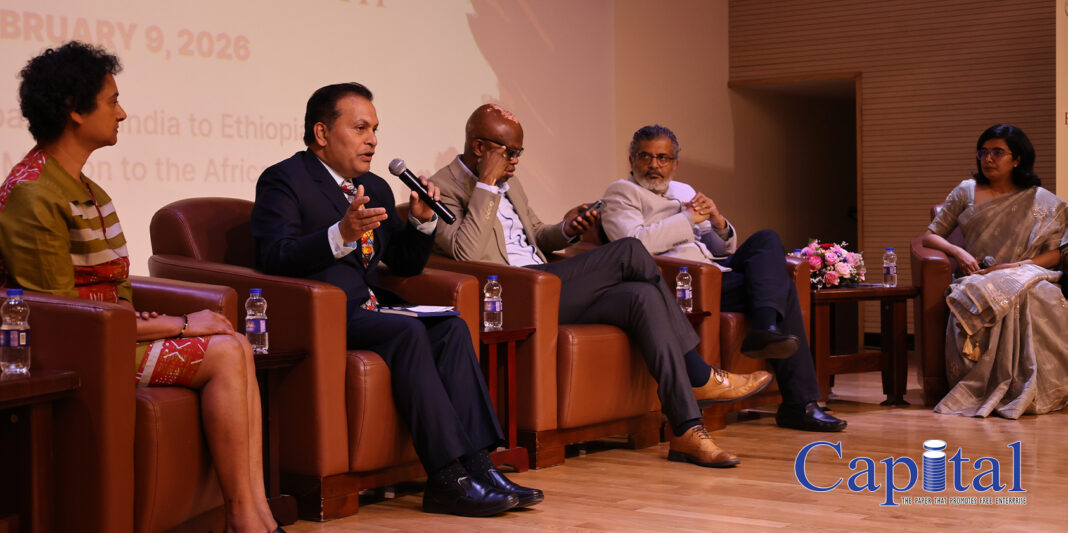
It has been announced that Ethiopia is set to play a pivotal role within the new South-South cooperation framework. A new report titled “The Africa-India Blueprint for Growth,” released in early February 2026, has charted a visionary path for collaboration centered on economic and human capital development.
The report highlights that Ethiopia’s historical and growing influence underscores its global strategic importance within this partnership. Ethiopia’s active participation in Regional Economic Communities (RECs) was a focal point of the report.
Specifically, its leadership within the IGAD and its efforts toward regional connectivity are seen as vital for aligning Indian infrastructure investments with the African Continental Free Trade Area (AfCFTA).
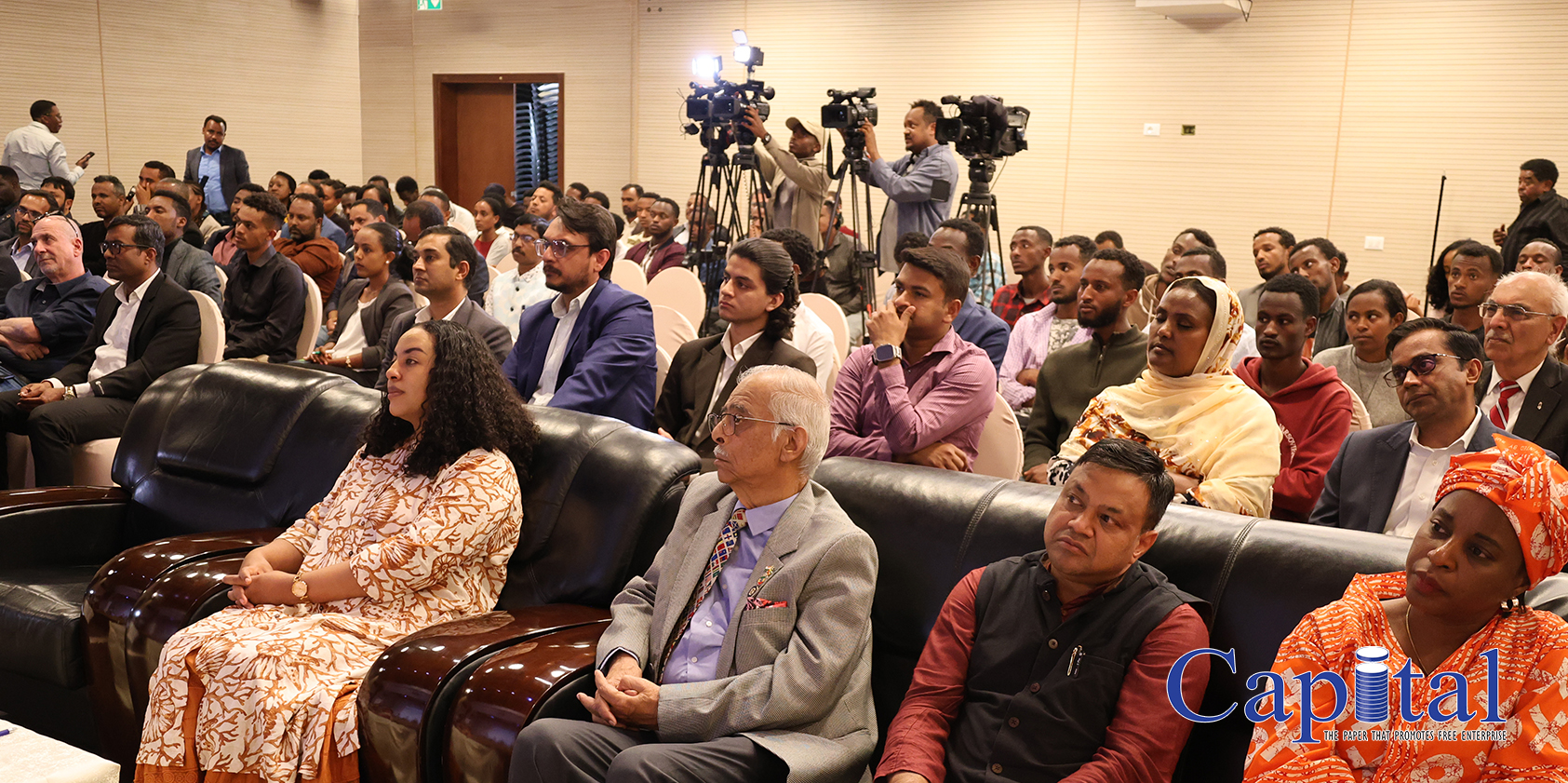
The report was jointly prepared by the Embassy of India in Ethiopia, the Centre for Social and Economic Progress (CSEP), and the African Union Development Agency (AUDA-NEPAD), and was recently inaugurated.
While Indian investment in Ethiopia has traditionally focused on transport, logistics, and digital infrastructure, the priority has now shifted toward “FDI Leadership.”
This transition aims to move beyond merely building projects toward creating sustainable partnerships focused on indigenous knowledge and technology transfer. This approach will allow Ethiopia to leverage India’s extensive infrastructure experience and “Frugal Innovation” to meet its own developmental needs.
One of the most promising areas of cooperation is the green energy transition. The report indicates that Ethiopia’s power goals can be supported by India’s renewable energy expertise and integrated energy planning. Notably, India possesses technical modeling capabilities specifically suited to the realities of East Africa.
Furthermore, Ethiopia has the opportunity to participate in joint mineral processing and battery manufacturing. The document recommends creating “Regional Value Chains” where minerals produced in one country can be processed in another, such as Ethiopia, and supplied to the continental market duty-free. This strategy enables Ethiopia to add value to its resources rather than exporting raw minerals.
The digital sector marks a new chapter in Ethiopia-India relations. Ethiopia’s large youth population and its digital transformation journey align perfectly with India’s Digital Public Infrastructure (DPI) experience.
Successful Indian models such as UPI (Unified Payments Interface) and Digital ID were presented as financial inclusion frameworks that Ethiopia could adapt to its context. Additionally, the report explained that the experience of Indian telecom giants like Bharti Airtel in Africa could pave the way for Ethiopia to encourage its own tech entrepreneurs and reduce the cost of service delivery for citizens.
As Ethiopia is projected to become one of the world’s largest contributors to the global workforce by 2040, the report emphasized a focus on Education and Technical and Vocational Education and Training (TVET).
The activities of Indian higher education institutions, such as IIT Madras, in East Africa serve as a model for Ethiopia. The report recommends that India increase its Technical and Economic Cooperation (ITEC) training slots for Africa to 10,000, with a specific focus on women and STEM (Science, Technology, Engineering, and Mathematics) fields.