The fight against polio, cholera, and Neglected Tropical Diseases (NTDs) in Africa risks becoming a perpetual crisis unless the continent dramatically scales up sustainable Water, Sanitation, and Hygiene (WASH) infrastructure.
That was the stark warning from global health leaders and policymakers who gathered on the sidelines of the 39th African Union (AU) Summit. The high-level forum called for a decisive shift from fragmented, disease-specific responses toward an integrated strategy linking water, sanitation, and health systems to permanently eradicate polio and other waterborne diseases.
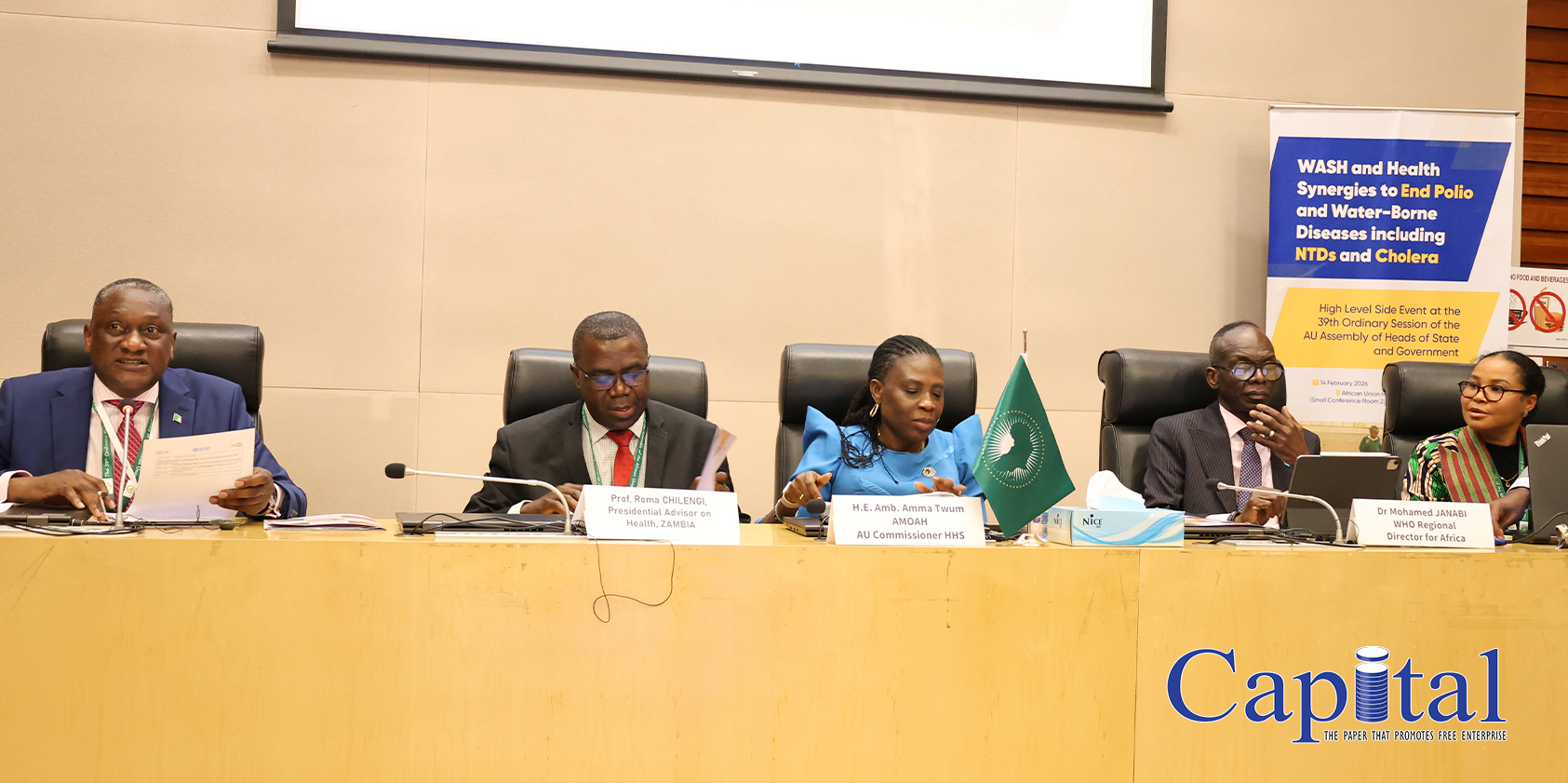
Held on February 14, 2026, under the theme “WASH and Health Synergies to End Polio and Water-Borne Diseases, including NTDs and Cholera,” the meeting was convened by the World Health Organization Regional Office for Africa and the African Union Commissioner for Health, Humanitarian Affairs, and Social Development, in collaboration with the governments of Nigeria and Zambia.
Participants stressed that while vaccines and medicines are lifesaving, they are not enough. In communities where unsafe water and poor sanitation persist, disease transmission continues unabated. Experts noted that up to 80 percent of NTDs could be prevented through access to clean water and reliable sanitation.
Carol Karutu, Vice President of Programs at the END Fund, criticized the overreliance on periodic Mass Drug Administration (MDA).
“If we solve unsafe water, poor sanitation, and lack of hygiene, we will solve 70 to 80 percent of Neglected Tropical Diseases,” Karutu said. Of the 21 known NTDs, at least 15 are directly linked to water and sanitation conditions.
“Preventive medicines quickly reduce the disease burden,” she added. “But without WASH improvements and behavioral change, reinfection happens almost immediately. We treat, and the cycle begins again.”
Alison Parker, Regional Director for UNICEF Eastern and Southern Africa, reinforced the call for prevention-first strategies, emphasizing that infrastructure must go hand in hand with education and behavior change.
“Vaccines save lives, but safe water and good hygiene prevent disease,” Parker said. “Without sustainable WASH systems, outbreaks will keep returning.”
She highlighted the importance of hygiene advocacy and learning, particularly in schools and communities. “Hygiene education must start early and be sustained,” she noted. “When children learn proper handwashing and sanitation practices, they become ambassadors for change in their homes and communities. Investment in hygiene promotion is an investment in lifelong health.”
“No child should fall sick because they lack clean water,” Parker added. “WASH is not just a health intervention—it is a child protection and equity issue.”
Recent data shows that safely managed water and sanitation services could have saved 1.4 million lives globally in a single year. In Africa—home to roughly 40 percent of the global NTD burden—the absence of clean water continues to fuel disease transmission.
Although Africa has been certified free of wild poliovirus since 2020, new variant strains detected in 2025, alongside recurring cholera, typhoid, and other NTD outbreaks, continue to strain fragile health systems.
Cholera remains a major concern. The case fatality rate rose to 2.0 percent in 2025, with Africa accounting for 80 percent of global deaths. Diseases such as bilharzia (schistosomiasis) continue to impose significant health and economic costs, particularly on women and children, due to inadequate sanitation facilities and widespread open defecation.
Despite these challenges, responses to outbreaks remain largely reactive, focused on short-term emergency aid rather than long-term investments in water infrastructure, sanitation systems, and robust disease surveillance.
The forum also served as a strategic launchpad for the African Union’s declaration of 2026 as the Year of Ensuring Sustainable Water Supply and Reliable Sanitation Systems. Member states were urged to treat the designation not as symbolic, but as a turning point for mobilizing financing and accelerating structural reforms.
For decades, polio eradication, cholera control, and NTD programs have operated in silos, each with separate funding streams and logistics. Thoko Elphick-Pooley, Deputy Director for Advocacy and Communications (Africa Offices) at the Bill & Melinda Gates Foundation, argued that integration is now imperative, citing the Global Polio Eradication Initiative as a model.
“Integration is not an option; it is a necessity,” she said. “Polio is found in the most challenging, hard-to-reach places. Community health workers are risking their lives to reach these communities. If those systems can reach the most remote areas, we must use them to deliver other essential health services as a single, integrated package.”
Africa requires an estimated $30 billion annually to achieve Sustainable Development Goal 6—clean water and sanitation for all—by 2030. Yet the returns are substantial: every dollar invested in water and sanitation is projected to generate seven dollars in increased productivity and reduced healthcare costs.
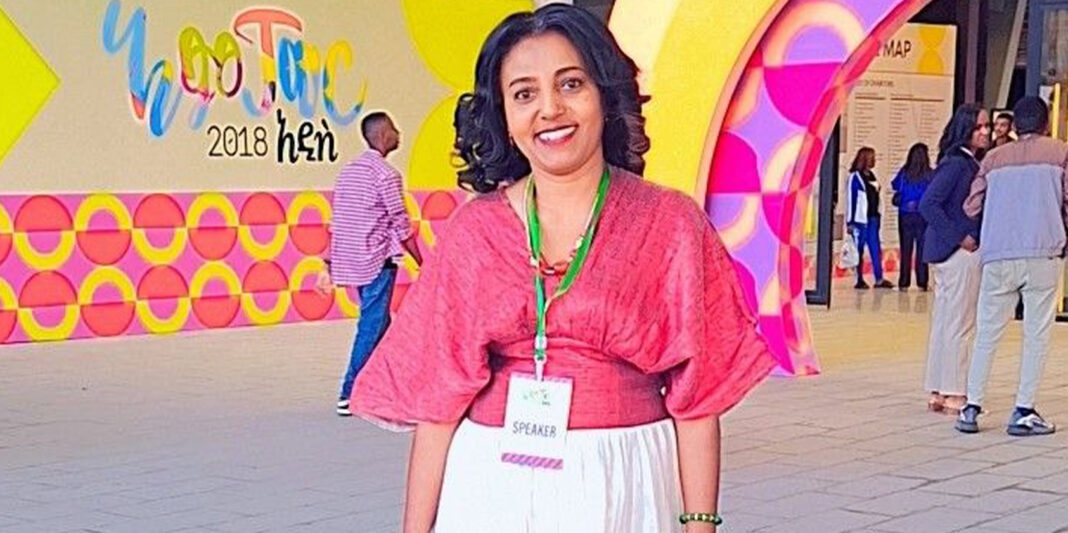
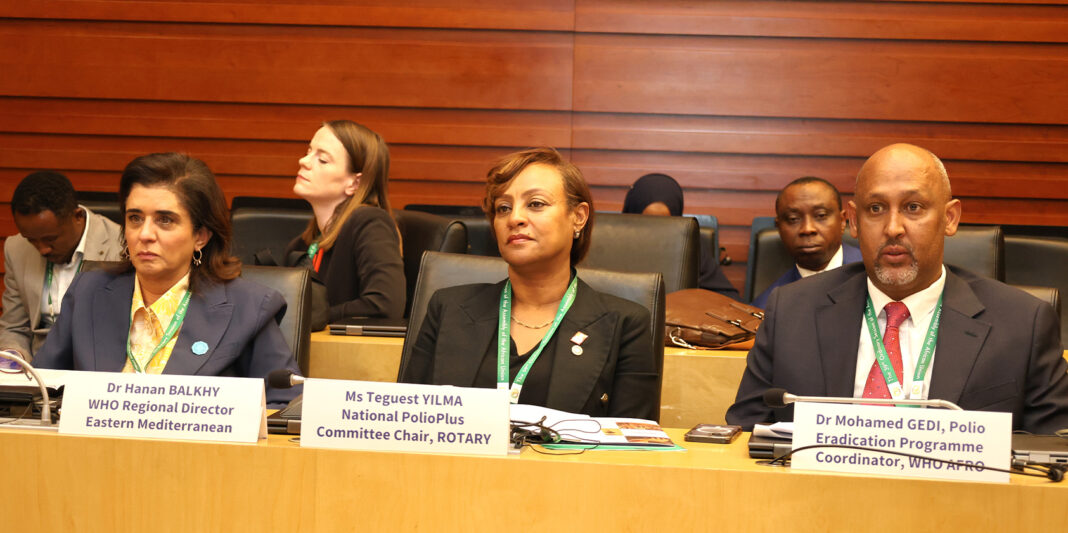
Teguest Yilma, Chair of Rotary National PolioPlus Committee Ethiopia, said the science, data, and technology to solve these challenges already exist. What is missing, she argued, is sustained political commitment.
“Success demands more than policy declarations,” Teguest stressed. “It requires political courage, sustained investment, and cross-sector collaboration.”
“Polio may be close to eradication, but its final defeat—and the control of cholera and other water-borne diseases—depends on our collective commitment to integrated solutions. No child should be left behind. Now is the time for action.”
Dr. Hanan Balkhy, WHO Regional Director for the Eastern Mediterranean, warned that pathogens recognize no borders, conflict lines, or political divisions.
“We must protect water and health facilities, especially in conflict zones,” Balkhy urged, noting that in some fragile settings, access to reliable sanitation remains as low as 8 percent.
The message from the AU forum was unmistakable: without bold investment in water, sanitation, and hygiene—paired with sustained hygiene advocacy and community learning—Africa risks fighting the same diseases year after year. Sustainable WASH investment is not optional; it is the foundation of resilient health systems and the protection of every child’s right to survive and thrive. With it, the continent can not only eliminate polio and curb cholera and NTDs, but also build the human capital necessary to achieve the ambitions of Agenda 2063.