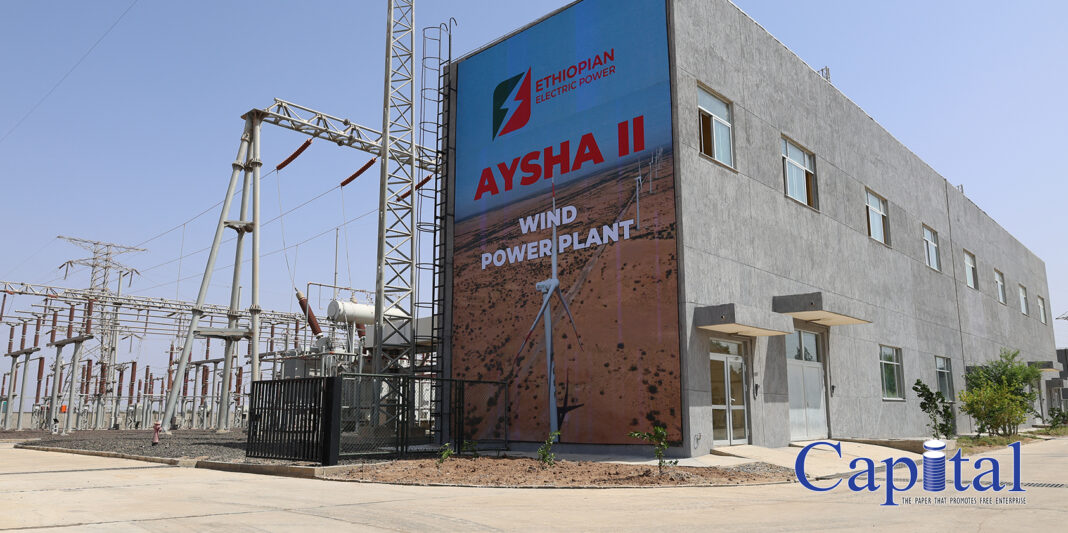
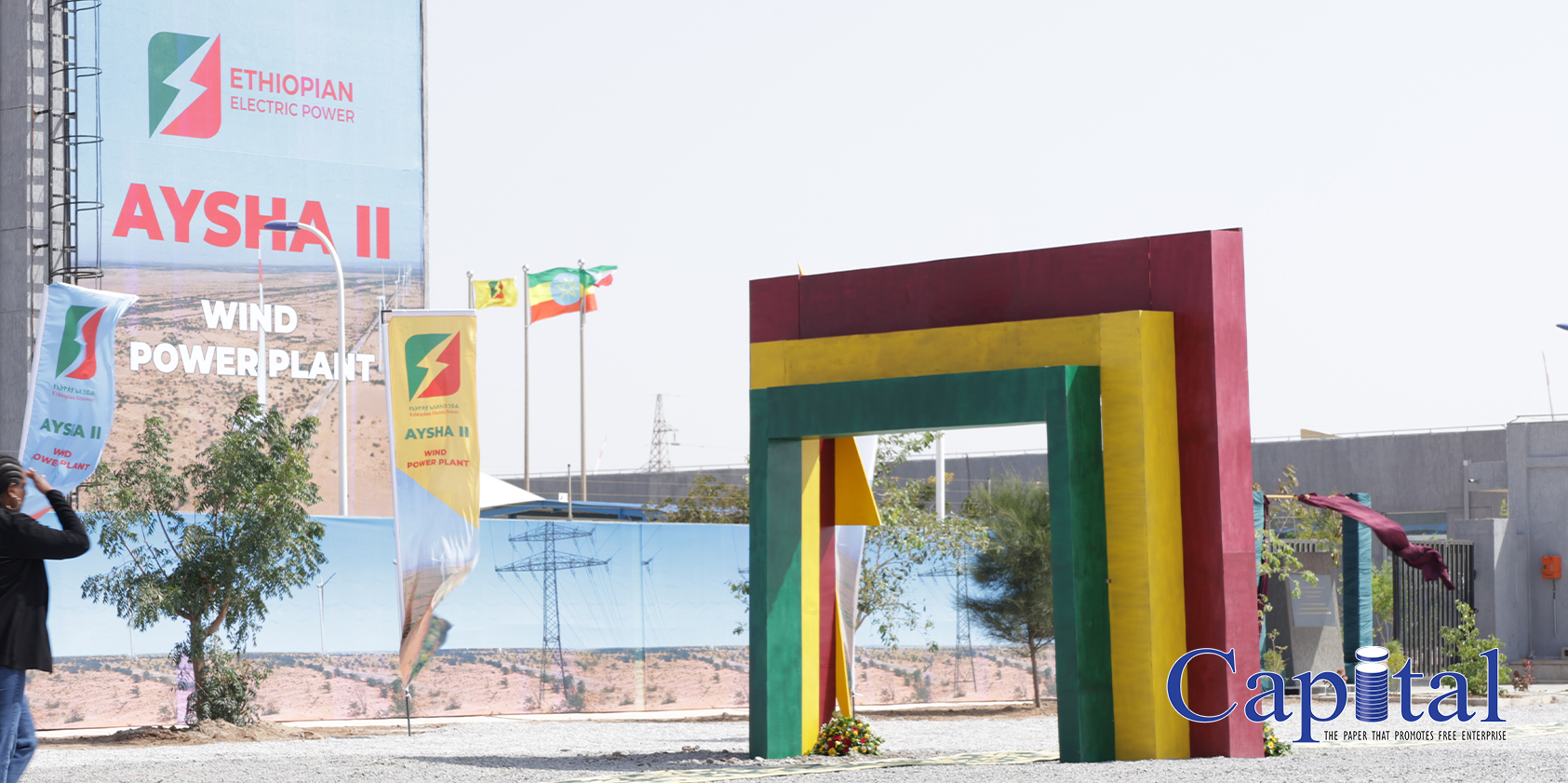
The Ethiopian Electric Power (EEP) has announced that the second phase of the Aysha II Wind Farm is expected to be completed in less than a year, marking a significant milestone for one of the country’s most efficient renewable energy projects.
The first phase of the project was inaugurated recently in the presence of regional leaders, including Prime Minister Abiy Ahmed, Somali President Hassan Sheikh Mohamud, and Djibouti President Ismail Omar Guelleh.
Samson Tadesse, Project Manager for Aysha II at EEP, said most preparations for the second phase are already in place. The wind turbines have arrived at the site, while towers and other essential equipment are currently being shipped from China. Transporting the materials and completing installation at the site—located less than 40 kilometers from Djibouti and 30 kilometers from the Somaliland border—will be the main tasks remaining. Once complete, the second phase will contribute an additional 40 megawatts to the national grid. Foundation work for the turbine towers has already been finalized.
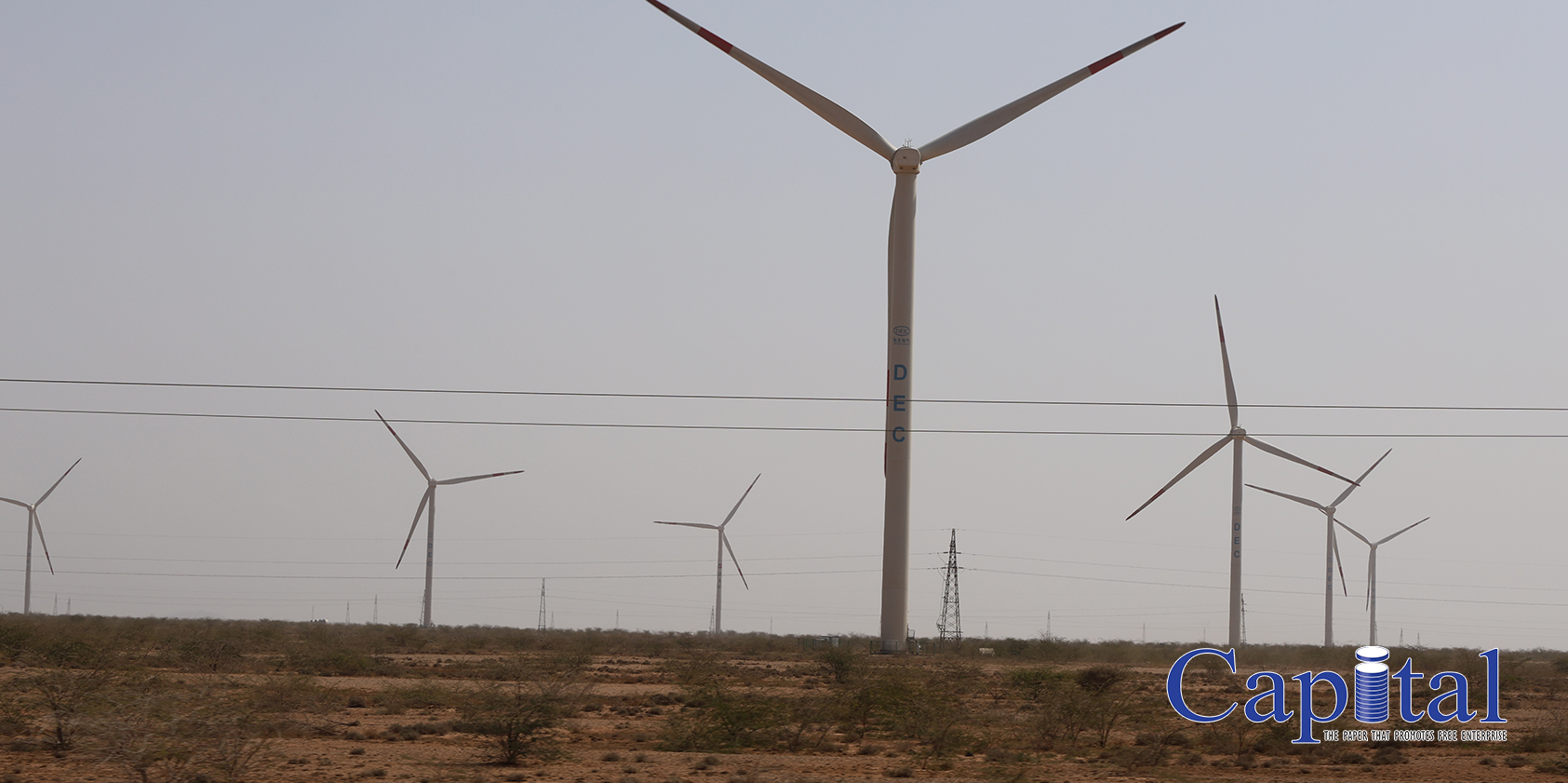
The Aysha II project, designed entirely by EEP, initially secured financing from the Export-Import Bank of China. However, disbursements were suspended over concerns about Ethiopia’s rising debt levels, prompting EEP to fund and complete the project using its own resources.
Located about 670 kilometers east of Addis Ababa near an international transmission line connected to Djibouti, the wind farm is considered a strategic asset with strong potential for regional energy exports. The original financing agreement, signed nearly a decade ago, had the Chinese Exim Bank covering 85 percent of costs, with the Ethiopian government responsible for the remaining 15 percent. According to Moges Mekonnen, Head of Corporate Communication at EEP, only 40 percent of the promised funds were ever released.
Despite these financial challenges, the wind farm began generating power three years ago. The first phase, now fully operational, contributes 80 MW toward the total installed capacity of 120 MW. The funding delays left the Chinese contractor, Dongfang Electric Corporation, to continue work without consistent payment, until EEP stepped in to complete the project independently.
The facility comprises 48 turbines, each with a 2.5 MW capacity, at an estimated total cost of USD 257.3 million. Situated in the Sitty Zone of the Somali Region, about 170 kilometers east of Dire Dawa, the wind farm is expected to generate significant foreign currency through energy exports to Djibouti, which already imports Ethiopian renewable energy.
Dongfang Electric Corporation brought extensive experience to the project, having previously contributed to multiple electromechanical and hydropower initiatives across Ethiopia. The official inauguration of the first phase held on January 31 underscored the project’s regional significance and Ethiopia’s commitment to expanding its renewable energy capacity.
In a related development, Ethiopian Investment Holdings, the parent company of the EEP, reviewed the power generator’s performance for the first half of the fiscal year at the end of last week.
During the six-month period, EEP reported a profit of 7.1 billion birr, while its foreign currency earnings surged by 138 percent.
The company supplied 20.6 billion birr worth of electricity to the Ethiopian Electric Utility, along with two billion birr to large industries, 220 million birr to the Railway Corporation, and 180.2 million dollars to the data mining sector.
According to EEP CEO Ashebir Balcha, the company’s total foreign currency earnings during the period amounted to 248 million dollars, generated from both electricity exports and data mining services.
In the first half of the budget year, power production reached 18.3 terawatt-hours, marking a 35 percent increase compared to the same period last year and achieving 90.4 percent of the target.
The Grand Ethiopian Renaissance Dam contributed 51 percent of the total electricity generated during this period.