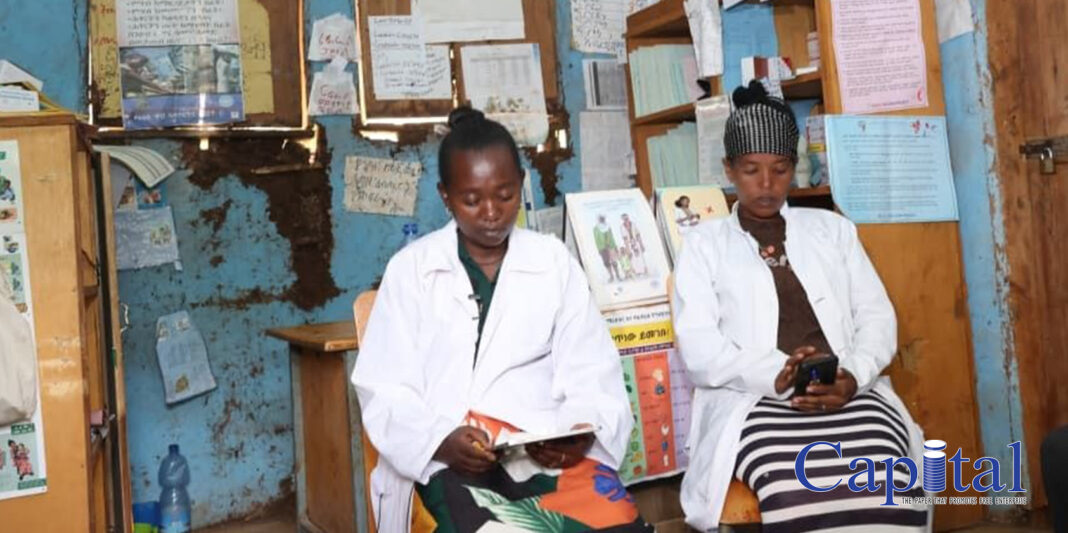
In the steep and remote hills of West Abaya, where reaching a health facility has long meant hours of walking over rough terrain, a new digital tool is beginning to reshape the delivery of primary healthcare. For communities in the Daga Birbir cluster, an ordinary fever or a child’s cough once meant a painful journey to the nearest health post, often with a sick patient carried on a traditional stretcher known as a kareza. For health workers stationed at these posts, the challenge was not only the burden of distance but also the limits of the system itself.
At Laywetarga Kebele health post, Health Extension Worker Fikre Bargo has spent 11 years serving one of Ethiopia’s most isolated communities. For much of that time, she says, her work was defined by frustration and helplessness. Patients would arrive exhausted after a four-hour trek, only for her to refer them to a higher-level facility because she lacked quick access to specialist advice. The emotional weight of turning people away was, in her words, one of the hardest parts of the job.
“I used to pray I hadn’t chosen this profession,” Fikre said, recalling the years when paper-based guidelines, limited training support and long distances to health centers made it difficult to manage even moderately complex cases. “Patients travel four hours through difficult terrain to reach us. By the time they arrive, they are exhausted and weak. Because I lacked the confidence to provide immediate expert support or treat complex cases, I would send them back to the Daga Birbir health center.”
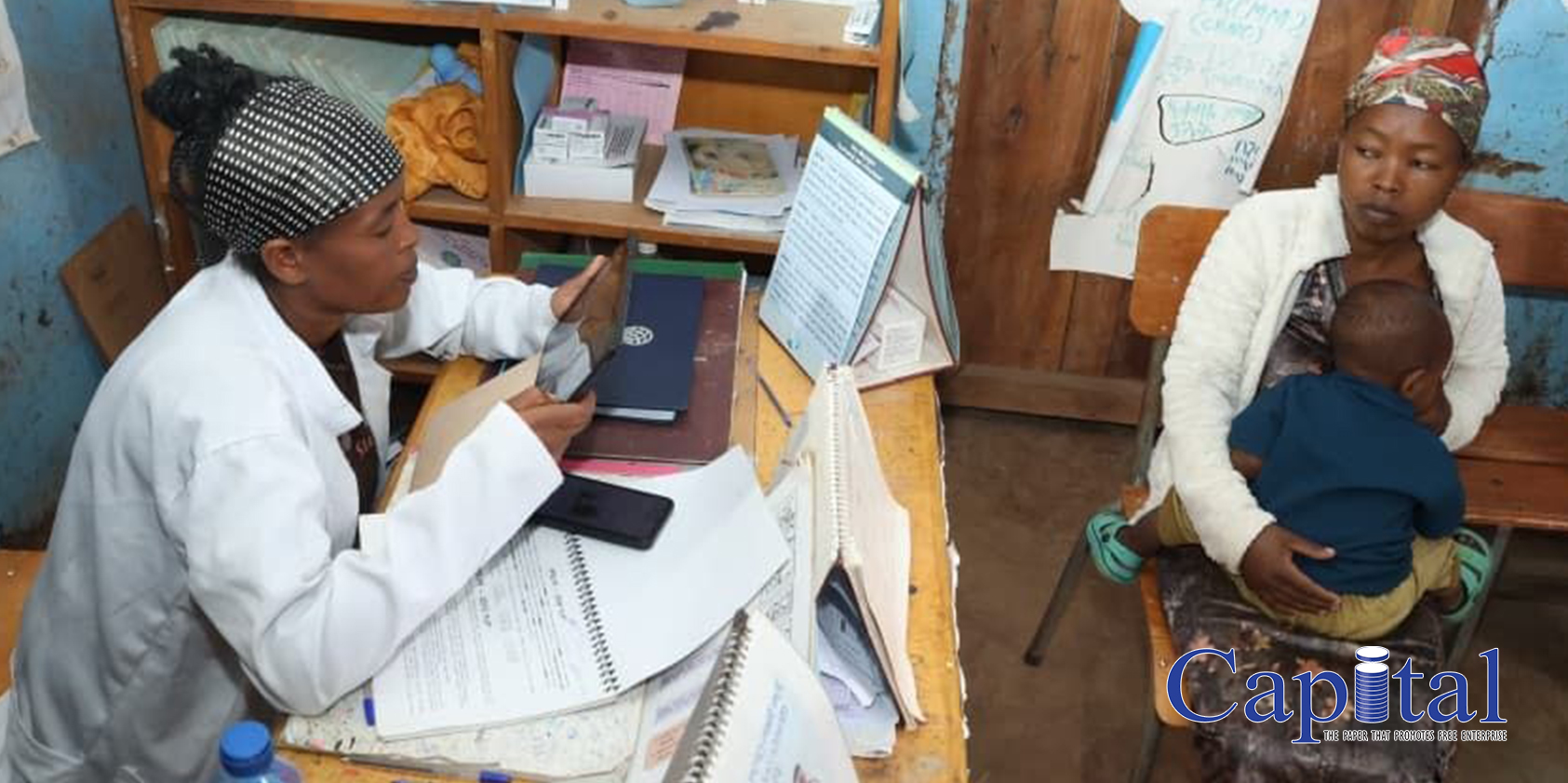
That experience is now changing through a new artificial intelligence tool called Health Assist, developed for Ethiopia’s Health Extension Program through a collaboration between the Ministry of Health and Last Mile Health. The system gives health extension workers direct access to clinical guidance through their smartphones, offering a kind of digital specialist support to frontline providers in remote areas.
Instead of leafing through manual pages or waiting for phone consultations, workers can now describe symptoms through audio input and receive answers based on national medical guidelines in a matter of minutes. For Fikre, that shift has been more than technical; it has changed the way she sees her own profession.
“I use the audio feature because it’s fast,” she said. “I tell the patient, ‘There is a professional better than me, let me consult them and tell you the answer.’ When the phone returns the correct medical procedure, the patient’s eyes light up with joy; they believe the government has brought the hospital right to their doorstep.”
The technology is part of a broader effort to modernize Ethiopia’s frontline health services and reduce the long-standing referral burden that has shaped rural care for decades. In many parts of the country, health extension workers are the first point of contact for patients, but when they face cases beyond their training, the only option has often been referral. That system can mean more travel, more expense and more suffering for patients who are already weak or in pain.
Aynet Adelow, another health extension worker, said the old model was deeply discouraging. She described the difficulty of telling a patient who had already travelled for hours that they needed to continue to another facility, often after she had spent time searching through the “Chart Booklet,” the printed medical manual used by frontline workers.
“In the past, I would refer patients even when I could have handled the case,” she said. “I knew I had the potential, but I struggled with confidence and getting quick verification. Time would be wasted while the patient sat there and I flipped through the booklet. They would get angry, thinking I was doing my own personal work. It was very sad.”
The arrival of AI support has begun to change that dynamic. According to Last Mile Health, the Health Assist system has been piloted in seven regions and 15 districts, making it one of the country’s first attempts to use AI as a workplace assistant for health extension workers. The idea is to strengthen decision-making at the lowest level of the health system, while keeping care as close to the community as possible.
In the first two months of the pilot alone, the system recorded 18,000 calls for support. Last Mile Health says this translated into about 6,000 patients receiving treatment closer to home rather than being sent onward to higher facilities. For a rural health system under pressure, those numbers suggest significant demand for the service and its potential to ease congestion at health centers.
Dr. Ruth Diriba, senior program manager at Last Mile Health, said the tool was introduced cautiously because of the risks that come with using artificial intelligence in healthcare. Safety, she stressed, was built into the system from the start. The app was not launched immediately. Instead, it underwent about 18 months of review by Ministry of Health experts and senior physicians before being deployed more widely.
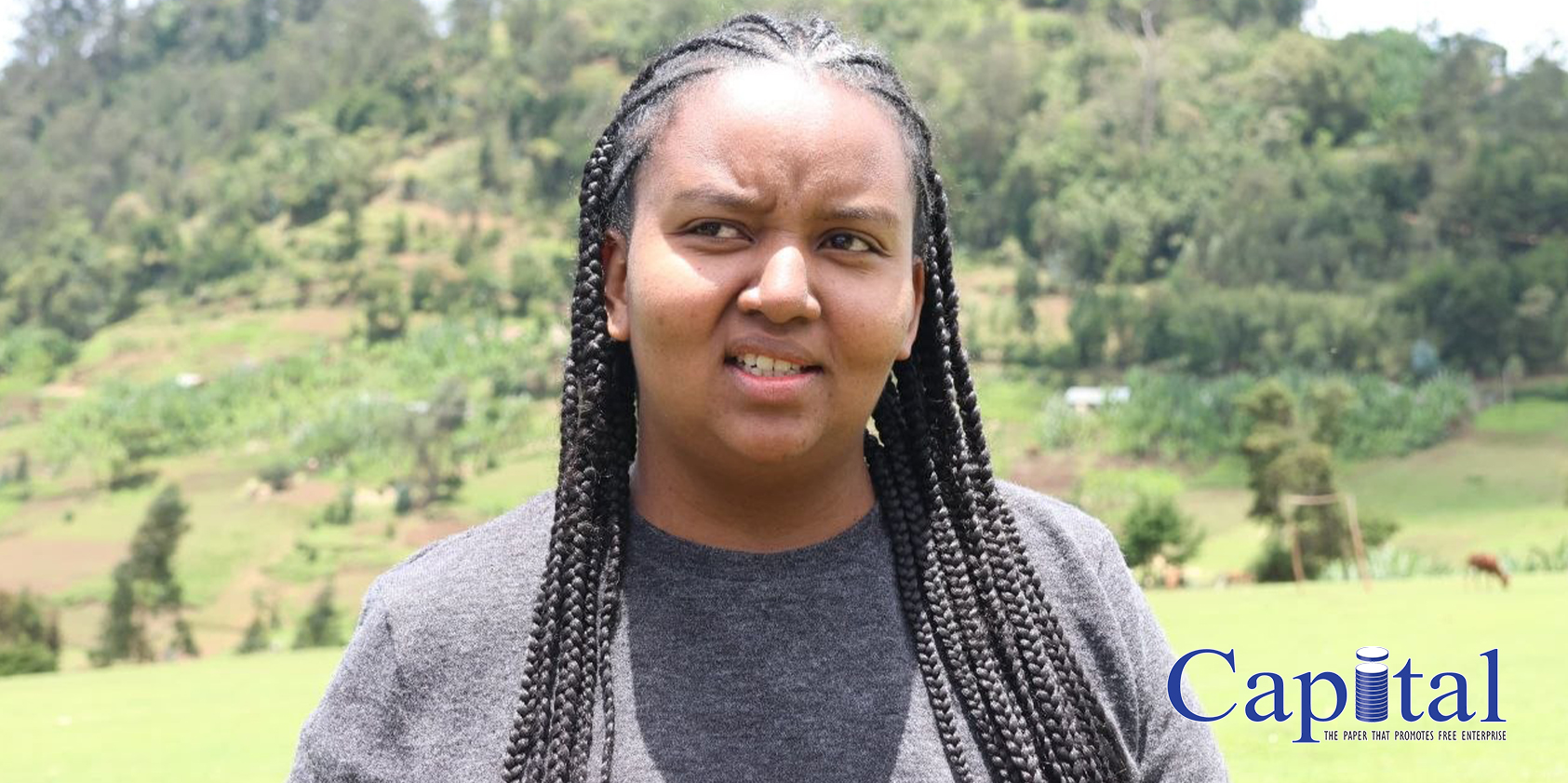
“We didn’t put the app into service immediately,” she said. “It was reviewed by Ministry of Health experts and senior physicians for a year and a half. Initially, we ensured human oversight by having workers access the support through call agents before using it directly.”
That layered approach reflects the broader concern around AI in medicine: trust. A machine can process information quickly, but its usefulness depends on accuracy, supervision and whether frontline workers can rely on it in real-world settings. Last Mile Health says the system is designed to match responses against national clinical guidelines, with human oversight still playing a central role in the early stages of deployment.
The impact is already visible in everyday patient care. Aynet recalled the case of a mother who had been suffering for a year due to complications from a family planning injection. After receiving advice and medication support through the AI-enabled system, the woman recovered. Months later, when she returned with her child and reported that she was feeling normal again, Aynet said the experience was deeply rewarding.
Another benefit has come in malaria management, particularly in remote areas where cases are common and decisions must be made quickly. Health workers say the system has helped them determine dosage and treatment with more confidence, especially in cases where they once hesitated or had to escalate unnecessarily.
Still, the digital revolution in rural healthcare remains constrained by basic infrastructure. Many health posts continue to lack electricity, and mobile network coverage is inconsistent. Health workers say the system can only function if there is data, and in some remote locations the absence of power and connectivity can limit its usefulness.
“If there is no data, it doesn’t work; it just sits there blank,” Aynet said. “Mothers bring sick children at night. Malaria doesn’t wait. We treat them using candles or flashlights. If we had solar power, this AI could help our people 24 hours a day.”
Officials argue that these challenges are part of a larger national transformation. Gemechis Melkamu, digital health lead at the Ministry of Health, said the project aligns with the government’s Digital Ethiopia 2030 strategy, which seeks to expand access to digital public services and improve equity in service delivery.
“Our goal is to align with the national digital economy vision,” Gemechis said. “AI helps us maintain medical service standards. We are ensuring that a patient in the center of Addis Ababa and a patient in rural West Abaya receive the same quality of care.”
For Fikre, the change is not only about better service, but about professional dignity. After more than a decade of work, she says the new system has given her confidence and a renewed sense of purpose. What once felt like a job filled with uncertainty now feels like a profession backed by knowledge and support.
“I have served for 11 years, but I became a true health professional only this year,” she said. “Now I feel complete. Instead of seeing a mother travel four hours with a referral paper, seeing her leave happily with her medicine gives me peace.”