Despite achieving record export earnings in the 2025/26 fiscal year, Ethiopia’s export sector remains heavily concentrated in just two commodities — gold and coffee — underscoring the country’s continued struggle to diversify its foreign exchange sources.
The fiscal year, which ended on Tuesday, is expected to generate more than 11 billion dollars in export revenue, surpassing the government’s 9.8 billion dollar target and rising sharply from 8.3 billion dollars in the previous fiscal year.
However, the record performance was overwhelmingly driven by gold and coffee, which together generated 8.6 billion dollars, accounting for 78.2 percent of the country’s total export earnings. Their combined share increased from 73.5 percent a year earlier, indicating that Ethiopia’s export base has become even more concentrated despite years of policy efforts to diversify exports.
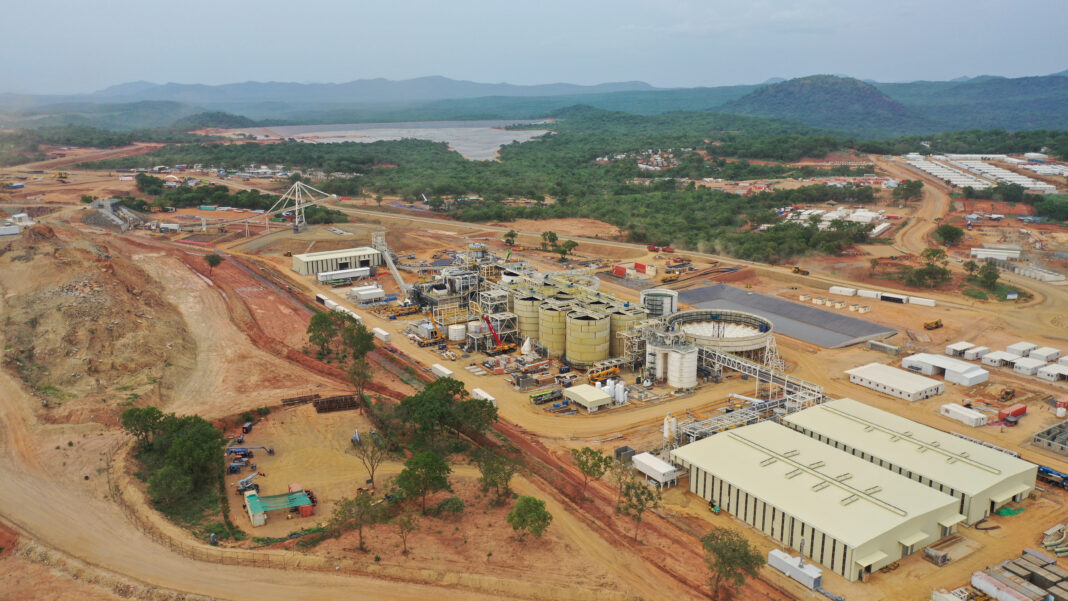
Gold remained the country’s largest foreign exchange earner, generating nearly 5.5 billion dollars, or about half of total export receipts. The figure represents a 62 percent increase from 3.4 billion dollars in the previous fiscal year.
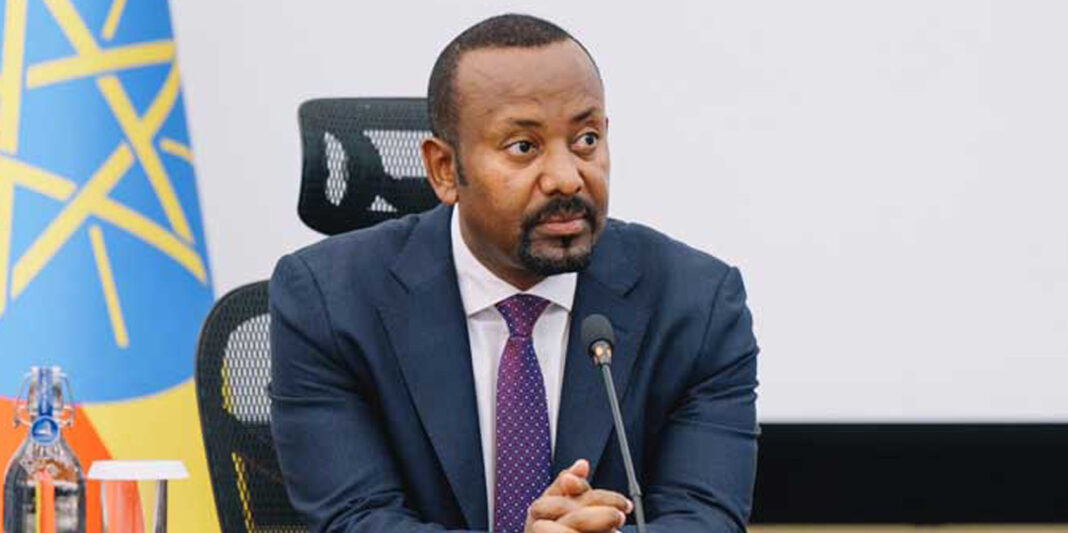
Prime Minister Abiy Ahmed described the achievement as unprecedented, noting that Ethiopia exported 5.5 billion dollars worth of gold in a single fiscal year, exceeding the cumulative 3.7 billion dollars generated during the 27 years before his administration took office in 2018.
Coffee retained its position as the second-largest export commodity, earning 3.1 billion dollars, up 19 percent from 2.6 billion dollars in 2024/25.
The figures illustrate that Ethiopia’s export growth continues to depend largely on primary commodities, leaving the economy vulnerable to fluctuations in global commodity prices, production levels and external demand. While the government has repeatedly identified export diversification as a strategic priority, non-traditional export sectors continue to contribute only a modest share of total foreign exchange earnings.
Officials attributed the surge in gold exports to macroeconomic reforms introduced in July 2024, saying the measures reduced contraband trade and encouraged producers to export through official channels.
Meanwhile, the government hopes manufacturing will gradually reduce the country’s dependence on commodity exports. Prime Minister Abiy said Ethiopia aims to increase manufacturing exports to 1 billion dollars in the new fiscal year, up from 370 million dollars in 2024/25, as part of broader efforts to expand the country’s export base.
Manufacturing Shows Momentum
Beyond export targets, the government reported robust growth across the industrial sector during the 2025/26 fiscal year, reinforcing its ambition to make manufacturing a larger contributor to economic growth and foreign exchange earnings.
Prime Minister Abiy told lawmakers that Ethiopia has intensified its import substitution program, which he said has now reached an estimated 5 billion dollars in value by replacing imported industrial products with locally manufactured goods.
According to the prime minister, the manufacturing sector expanded by 20.3 percent during the fiscal year, while mining registered an even stronger 24 percent growth, supported by higher gold production and exports.
The construction materials industry also posted notable gains. Cement production increased by 26 percent, while electricity consumption by manufacturers rose by 16 percent, reflecting growing industrial activity. Abiy also highlighted improved output in the steel, glass and ceramic tile industries as evidence of expanding domestic manufacturing capacity.
Looking ahead, the government projects the industrial sector will grow by 12.7 percent during the 2026/27 fiscal year, driven by continued investment, industrial park expansion and policies aimed at boosting domestic production and exports.
Services, Investment and Remittances
The services sector remained another major pillar of the economy, recording 9.8 percent growth during the fiscal year.
Ethiopian Airlines continued to anchor the sector, transporting approximately 17 million international passengers and 4 million domestic passengers, further strengthening its role as one of Africa’s leading aviation hubs.
According to the government’s presentation, the services sector generated approximately 9.5 billion dollars in foreign exchange earnings during the year.
Ethiopia also attracted 4 billion dollars in foreign direct investment (FDI), while remittance inflows reached 7.9 billion dollars, reflecting continued confidence among investors and the Ethiopian diaspora despite global economic uncertainty.
In addition, the country secured about 5 billion dollars in grants and external loans to finance development programs and infrastructure projects.
Overall, Ethiopia received an estimated 38 billion dollars in total foreign capital inflows during the fiscal year, an 18.4 percent increase compared with the previous year.
The government estimates the economy expanded by 10.2 percent during the 2025/26 fiscal year, supported by broad-based growth across agriculture, industry and services.
Inflation featured prominently in the prime minister’s annual address to Parliament.
Abiy acknowledged that Ethiopia’s steady progress in bringing inflation under control had been interrupted by external developments, particularly geopolitical tensions in the Middle East.
He said the conflict involving Iran, the United States and Israel disrupted international markets, reversing the country’s gradual decline in inflation and pushing price growth back into double-digit territory. Nevertheless, the government expects inflationary pressures to ease as external conditions stabilize and ongoing macroeconomic reforms take further effect.
Politics
On regional security, Prime Minister Abiy accused Eritrea of attempting to reignite conflict in northern Ethiopia by encouraging renewed hostilities in the Tigray region.
Addressing Parliament, he said the Ethiopian government remains committed to preserving peace despite growing military tensions along the northern frontier.
“The Ethiopian government prefers peace,” Abiy told lawmakers. “However, the Eritrean government is working to create conditions for war to re-emerge in the Tigray region.”
He urged leaders of the Tigray People’s Liberation Front (TPLF) to learn from previous conflicts and avoid actions that could undermine the fragile peace established under the Pretoria Peace Agreement.
Abiy said Ethiopia’s military preparedness is intended to deter external threats rather than initiate conflict.
“Our military readiness is directed against external actors seeking to use the TPLF and other forces to destabilize the country,” he said.
The prime minister also alleged that the TPLF has become involved in Sudan’s ongoing civil war between the Sudan Armed Forces (SAF), led by Lieutenant General Abdel Fattah al-Burhan, and the Rapid Support Forces (RSF).
According to Abiy, young people from Ethiopia’s Tigray region have been compelled to participate in the conflict alongside forces aligned with the SAF. The allegations have not been independently verified.
Meanwhile, international organizations and foreign governments have continued to warn about the deteriorating security situation in northern Ethiopia, cautioning that renewed fighting could trigger another humanitarian crisis. They have called on all parties to resolve their differences through dialogue and uphold the commitments made under the Pretoria Peace Agreement.
Human Rights Watch (HRW) has also expressed concern over alleged forced recruitment by Tigrayan forces. In a recent report, the rights organization said Tigrayan fighters and local officials have allegedly recruited civilians, including children as young as 15, since at least April 2026.
According to HRW, former combatants, men and boys were reportedly taken from homes, workplaces, streets and artisanal gold-mining sites across the Tigray region. The organization said its findings were based on interviews conducted in June with 18 witnesses, relatives of those recruited, and individuals who said they had escaped or evaded recruitment.
The allegations have added to growing international concern over the security and humanitarian situation in northern Ethiopia as diplomatic efforts continue to focus on preventing renewed conflict and preserving the gains achieved under the Pretoria Peace Agreement.