
The Ministry of Agriculture (MoA) has called for strict compliance with international quality standards and phytosanitary requirements for banana exports, saying higher production alone will not enable Ethiopia to penetrate global markets.
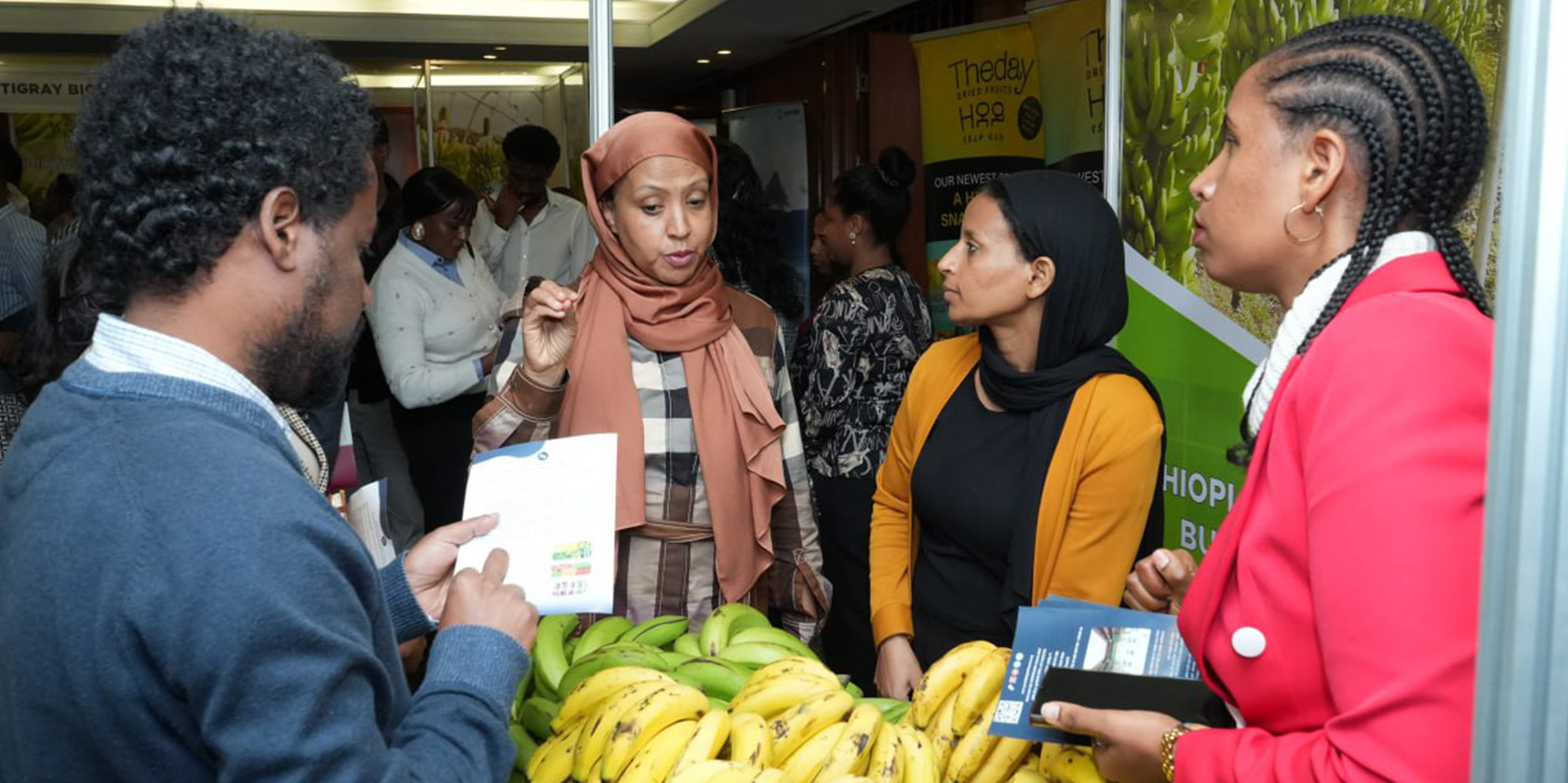
The directive was issued at the National Banana Conference in Addis Ababa, held under the theme, “From Bunch to Breakthrough: Positioning Ethiopia as a Global Banana Export Powerhouse.” The conference brought together government institutions, producers, exporters, researchers, financial institutions and development partners to discuss production, quality, logistics, finance, market access and value addition.
Sofiya Kassa, State Minister for Agricultural Investment and Input Supply Development at the Ministry of Agriculture, said Ethiopia has substantial banana-production potential but must improve quality and meet international standards to compete in wider markets.
“Ethiopia has massive production, but quality is one of the main challenges to penetrating the world market,” Sofiya said.
She urged producers, exporters and public institutions to focus on export-grade bananas capable of entering markets beyond Ethiopia’s traditional destinations, including Djibouti and Somalia.
The Ministry said commercial production clusters will be subject to pre-production verification, disease-control measures and phytosanitary inspection protocols. The Ethiopian Agricultural Authority and the Ethiopian Institute of Agricultural Research are expected to support the process.
Phytosanitary compliance refers to measures designed to prevent the spread of pests and diseases through international trade in plants and plant products. Exporters must meet the plant-health requirements of destination countries, often through inspection, treatment, testing and certification before goods are shipped.
The government said the stricter approach is part of a wider effort to move the horticulture industry away from a volume-driven domestic focus toward a quality-assured, export-oriented supply chain.
The initiative is linked to Ethiopia’s 10-Year National Horticulture Strategy, the Agricultural and Rural Development Policy, contract-farming models and the National Agricultural Finance Implementation Roadmap.
According to figures presented at the conference, Ethiopia earned USD 38 million from exports of 91,320 tonnes of bananas and avocados over the past five years, mainly to Djibouti, Somalia and Middle Eastern markets. Banana exports accounted for USD 25 million of that revenue, from 72,599 tonnes.
Despite ranking among the world’s leading banana-producing countries, with annual output reportedly nearing 7.3 million tonnes, Ethiopia exports only a limited share of its production through formal channels. Most bananas are consumed locally or traded informally.
Tewodros Zewde, Executive Director of the Ethiopian Horticulture Producer Exporters Association, said Ethiopia’s export income remains far below its potential.
“We have the potential to generate hundreds of millions—if not billions—of dollars from both fresh and processed banana products,” Tewodros said.
However, he said the industry continues to face major obstacles, including limited access to virus-free planting materials, low productivity, inadequate technical capacity and limited financing.
“Access to finance remains the single largest challenge in the banana industry,” he said, calling on financial institutions to increase lending to producers, exporters and horticulture developers.
The government has set a target of generating USD 700 million from fruit and vegetable exports during the current fiscal year. Officials expect the banana subsector to contribute to that objective, alongside other horticultural commodities.
Ethiopia launched its electronic phytosanitary platform, known as e-Phyto, in November 2025. The Integrated Export and Import Certification System allows exporters to apply for and receive plant-health certificates electronically, reducing processing time and improving the traceability of export documents.
The system is linked to the International Plant Protection Convention’s ePhyto hub, allowing certificates to be transmitted directly to importing countries. Such digital certification can reduce delays and fraud risks, provided both exporting and importing countries are connected to the platform.
Ethiopia’s climate, diverse production zones and potential for year-round cultivation give it a comparative advantage in banana production. Major producing areas include the South Ethiopia, Sidama, Oromia and Amhara regions, as well as the Omo-Rate cluster.

Industry representatives said production could be raised closer to international standards through improved harvesting systems, including cable-way technologies, as well as investment in cold-chain logistics, laboratory-tested planting materials and skills training.
Sofiya called on commercial banks and financial institutions to expand credit facilities for smallholder farmers and commercial horticulture developers.
Without sufficient capital, she warned, local producers will struggle to modernise farm infrastructure, improve productivity and obtain the international certifications required to access higher-value export markets.