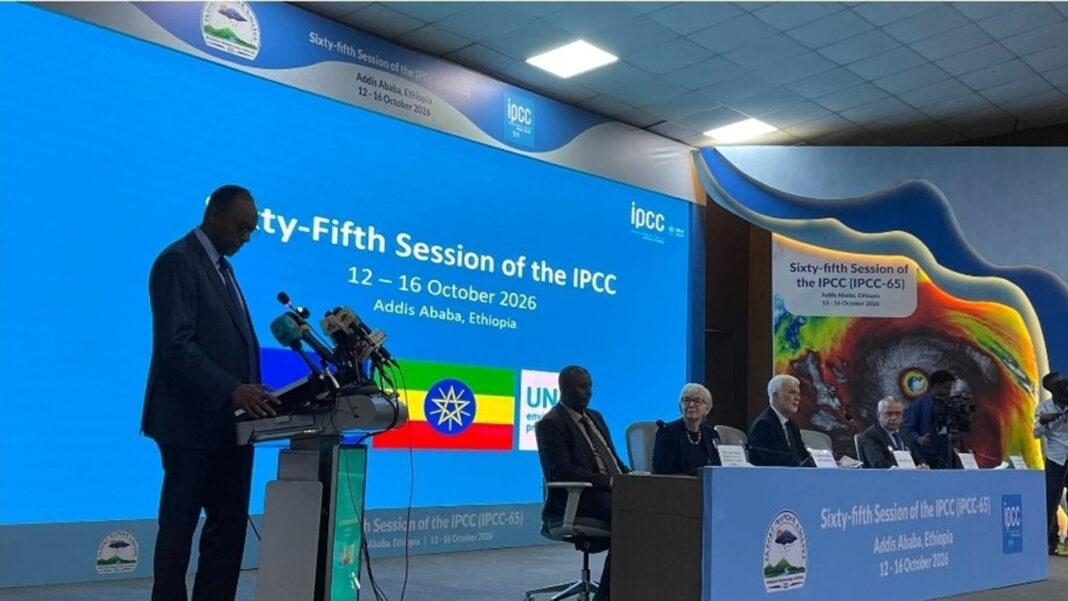
A major international climate science meeting hosted in Addis Ababa ended without agreement on the publication schedule or budget for the Intergovernmental Panel on Climate Change’s (IPCC) next assessment reports, raising concerns over the delivery of scientific evidence needed to guide global climate action.
The breakdown at the IPCC’s 65th session, held in Ethiopia, has renewed pressure on governments to resolve deep divisions over the timing of the Seventh Assessment Report (AR7). The reports are intended to inform the United Nations’ second global stocktake of climate action, scheduled to conclude in late 2028.
The failure to reach consensus marked the sixth consecutive IPCC meeting at which governments could not agree on a timeline for the three major working group reports. IPCC Chair Sir Jim Skea described the outcome as a “profound disappointment,” calling it one of the most difficult meetings in the panel’s history.
The talks also exposed financial challenges that could threaten the completion of the assessment cycle. Delegates failed to agree on the IPCC’s proposed budget amid declining voluntary contributions and rising operating costs.
The IPCC secretariat estimates that approximately 33 million Swiss francs are needed to complete the AR7 cycle. At 2025 contribution levels, the organization’s trust fund could be depleted by the end of 2028, potentially preventing the delivery of the reports.
The central dispute in Addis Ababa concerned whether all three working group reports should be completed in time for the 2028 global stocktake or published afterward. The global stocktake evaluates progress in tackling climate change and helps guide national emissions targets and climate policies.
Countries supporting a 2028 publication schedule argued that the latest scientific findings must be available before the stocktake concludes. They warned that delaying the reports could disadvantage vulnerable island nations and developing countries facing severe climate impacts.
However, other delegations—including India, Kenya, Russia, and Saudi Arabia—supported a longer timeline, arguing that developing countries needed sufficient time to prepare for, review, and approve the reports. China opposed holding more than three plenary sessions annually and argued the reports need not be tied to the stocktake.
Skea suspended the meeting without a resolution after several delegations, including representatives of small island states, departed.
The impasse has drawn criticism from countries on the front lines of climate change. Marshall Islands climate envoy Tina Stege described the failure as a serious setback, arguing that countries need the latest science to protect lives and livelihoods. Vanuatu similarly warned that every year of delay increases climate-related risks.
During the meeting, nearly 120 scientists preparing the AR7 reports signed an open letter pledging to continue their work while warning that the world should not conduct the next global stocktake without updated IPCC findings.
Financial disagreements further complicated negotiations. According to the secretariat, 2025 contributions were 5.3 million Swiss francs lower than in 2023, and the United States has not contributed financially since 2024.
Despite the political deadlock, the IPCC stated that scientific work is continuing, including a special report on climate change and cities scheduled for 2027. The panel pledged to reconvene the suspended session at the earliest opportunity, though no date or location has been set.