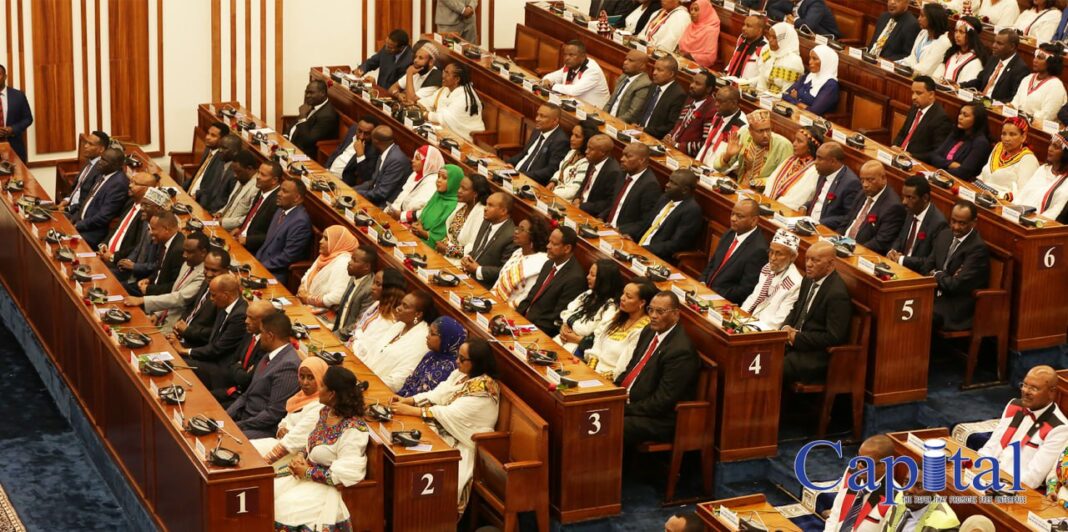
Despite concerns raised by some parliamentarians, the long-awaited property tax law has been ratified.
This proclamation, discussed for several years, aims to provide municipalities with a consistent revenue stream to support development projects within their communities.
Some Members of Parliament expressed that the proclamation would place additional strain on low-income individuals when it was presented for ratification on Tuesday, January 14.
They argued that the measure could disproportionately affect low-income earners and those on fixed incomes more than it would impact businesses.
Others, including systems experts, have weighed in on the timing of the proclamation. After nearly a decade of development, it has been formalized as a draft bill for the past two years.
The executive body has stated that the proclamation aims to enhance the quality and modern standards of government services, ensure equitable wealth distribution among urban populations, and help cover investment costs for ongoing urban infrastructure development through taxes linked to rising property values.
In addition to applying nationwide, the proclamation allows regional states to draft and implement their own property tax legislation in accordance with their specific circumstances.
Reports indicate that this measure, common in other countries, will enable towns to secure a steady revenue stream for infrastructure projects and other development activities.
The proclamation stipulates that 25% of the property value will be taxable, with levies ranging from 0.2% to 1% for land and from 0.5% to 1% for structures.
Despite having a narrow tax base, it has been noted that the government fails to adequately collect the revenue generated by the economy.
To enhance revenue collection and broaden the tax base for financing development projects, the government is implementing various programs in collaboration with international partners.
One of the new taxes introduced to promote resource mobilization is the property tax, which primarily affects urban areas.