Ethiopia has been thrust into the ranks of the world’s most underfunded crises, with the United Nations Population Fund (UNFPA) warning that a severe health-financing gap is putting millions of women and girls at risk and appealing for 42.1 million dollars by 2026 for life‑saving services.
In its 2026 Humanitarian Action Overview, UNFPA lists Ethiopia as the eighth‑largest country appeal globally, seeking 42.1 million dollars for sexual and reproductive health (SRH) and gender‑based violence (GBV) services—a sharp increase of more than 38 million dollars compared with its 2025 country request. The agency links the higher needs to overlapping, protracted conflicts, climate‑driven shocks and weakening protection systems that are hitting women and girls hardest.
UNFPA notes that chronic underfunding has already forced it to scale back or suspend critical SRH and protection programmes, leaving “millions of women and girls” worldwide without access to safe deliveries, emergency obstetric care, contraception and GBV support, with Ethiopia a stark example of this trend. In 2025, its Ethiopia humanitarian plan sought 38.1 million dollars but had received only about 4 million dollars by mid‑year—barely 10 percent of the requirement—underscoring how far resources have fallen short.
UNFPA’s Executive Director, Diene Keita, has warned that cuts translate directly into closed clinics, surgeries without anaesthesia and survivors of rape turned away without support, describing the situation as one where “the world’s most vulnerable have their lifelines hanging by a single thread.” The agency stresses that SRH and GBV services are “non‑negotiable, life‑saving pillars” of humanitarian response and must be in place from day one, alongside food, water and shelter.
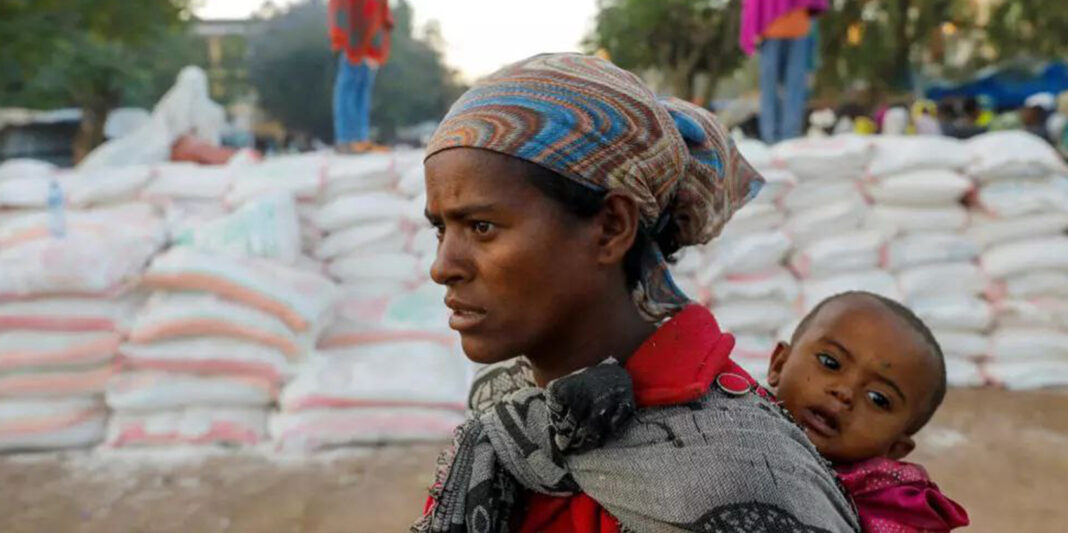
In Ethiopia, UNFPA highlights a convergence of crises—conflict, climate change, displacement and a large, restless youth population—that is driving up demand for services. Recurrent droughts and floods are displacing families, deepening hunger and further degrading already fragile health systems, with each disruption amplifying pre‑existing gender inequalities.
Ethiopia’s plight is compounded by the escalating emergency in neighbouring Sudan, which tops UNFPA’s 2026 appeal list at 116.5 million dollars. Nearly three years of war there have triggered famine risks, disease outbreaks, the collapse of basic services and widespread, often systematic, conflict‑related sexual violence against women and children.
UNFPA estimates that 7.3 million women and girls of reproductive age in Sudan, including 1.1 million pregnant women, require urgent assistance, while up to 80 percent of health facilities in conflict‑affected areas are closed or only partially functioning. Ethiopia, already hosting large refugee populations from Sudan and other neighbours, faces additional pressure on its strained humanitarian and health systems.
The funding crisis is not limited to UNFPA. UNICEF’s 2025 Humanitarian Action for Children appeal for Ethiopia sought 493.3 million dollars but had secured only 77.3 million dollars by mid‑2025, leaving an 84 percent shortfall of more than 415 million dollars. The largest gaps hit water, sanitation and hygiene (WASH), child protection, nutrition and health, where funding deficits of 83–90 percent are putting life‑saving services at risk for children and their caregivers.
Humanitarian partners warn that without rapid, scaled‑up funding across agencies, Ethiopia’s already fragile progress in reducing maternal mortality, preventing GBV and protecting children could unravel, deepening a crisis that is increasingly driven not only by needs on the ground but by shrinking resources to meet them.