The government’s practice of making health contribution payments a requirement for obtaining and renewing business and professional licenses has drawn growing criticism from the private sector, which accuses authorities of inconsistent implementation and administrative overreach.
In several regions of the country, businesses and professionals in health-related and other sectors have been required to make mandatory “health contributions” before receiving business or professional licenses. While the policy aims to support public health funding, business leaders argue that the procedure lacks transparency and is being applied unevenly across regions.
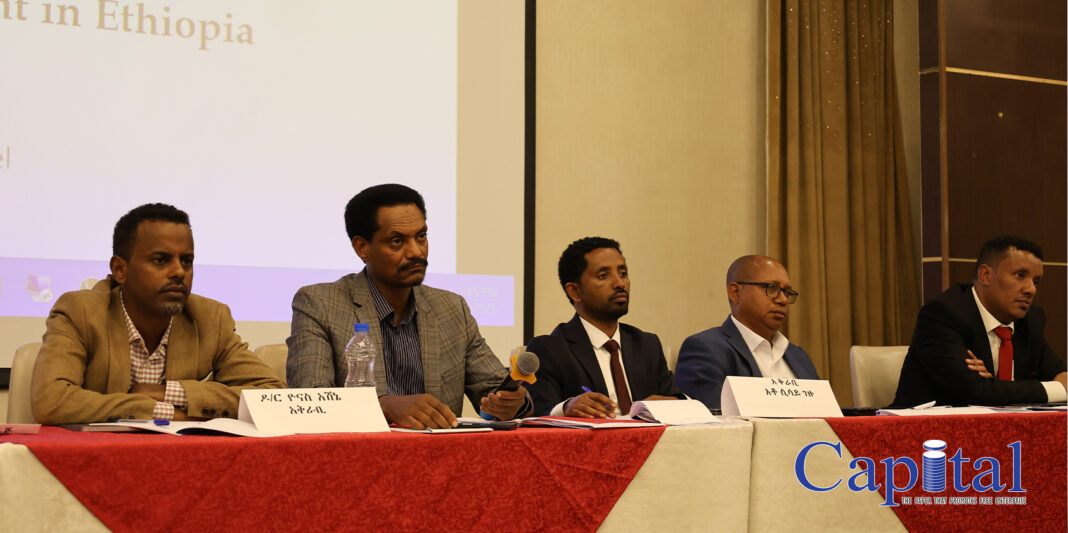
At a recent public–private consultation forum organized by the Addis Ababa Chamber of Commerce and Sectoral Associations under the theme “Investment, Good Governance, and Institutional Efficiency for Private Sector Development”, business owners expressed strong dissatisfaction with the current system.
Biniyam Birhanu, chairman of the Addis Ababa Chamber’s Kolfe Branch, said health contribution collections vary widely and often appear arbitrary. “In some areas, paying health-related fees is mandatory before renewing a professional or business license. In others, there is no such requirement at all,” he said.
He added that changes in proclamations and directives have created uncertainty among entrepreneurs. “The government has revised these rules several times in a short period, mainly to increase revenue. This has confused both business owners and the officials tasked with implementation,” he said.
Biniyam further argued that many employees within revenue offices lack the necessary understanding of the regulations, leading to inconsistent application. “The staff enforcing these directives are not adequately trained. Instead of informing us correctly, they often give misinformation, which disrupts business operations,” he noted.
Experts echoed these concerns, citing examples such as the 2024/25 profit tax directive, which initially appeared to apply to all taxpayers but was later clarified as excluding importers — a change that triggered what some described as “widespread frustration and mistrust.”
Representatives from the Addis Ababa Revenue Bureau acknowledged administrative shortcomings but defended the intent behind the health contribution requirement. A bureau spokesperson said the measure is “a public investment” designed to strengthen the city’s social and health infrastructure.
“The health contribution is not a penalty — it’s part of building sustainable systems that benefit all residents,” the bureau explained. It also emphasized that, as the executive arm of the revenue sector, it is legally obligated to enforce directives issued by higher authorities, including the Ministry of Health and the Ministry of Transport.
The Revenue Bureau said it is working closely with both ministries to align administrative procedures and clarify ambiguities in the implementation process.
Officials also highlighted the persistent problem of tax non-compliance, which they said continues to undermine government revenue and create unfair competition in the marketplace.
Sisay Gezu, head of the Tax Fraud Investigation Directorate at the Ministry of Revenue, said compliance levels remain alarmingly low. “If we go to Merkato today and survey the area, how many traders would issue proper invoices?” he asked, stressing that widespread underreporting harms both public finances and legitimate businesses.
To address this, the Ministry has begun enforcing tighter controls, especially through digital systems. As of January 1, 2026, all merchants are required to use the new barcode-enabled electronic invoice system, which is designed to curb counterfeit receipts and ensure transparency.
“Merchants who fail to use the barcode invoice will not be tolerated,” Sisay warned, emphasizing that enforcement will remain strict until the system is fully operational across the country.
Despite government assurances, the business community continues to call for uniform application of tax and contribution policies, clearer directives, and stronger capacity-building within revenue institutions.
Chamber officials said that while businesses recognize their responsibility to contribute to national development, the current mix of inconsistent directives, untrained enforcement personnel, and overlapping institutional mandates threatens Ethiopia’s goal of building a transparent, digital economy.
“The principle of contribution is not the problem,” said one participant at the consultation forum. “It is the way it’s being enforced — unpredictably and without clear communication — that is eroding trust between the private sector and government institutions.”