The African Development Bank Group and the Government of Djibouti have signed four financing agreements totaling $80 million to fast-track the country’s strategic priorities in transport infrastructure, urban climate adaptation and food systems resilience.
The agreements, signed on February 5, combine concessional resources from the African Development Fund—the Bank Group’s concessional financing arm—and the Green Climate Fund.
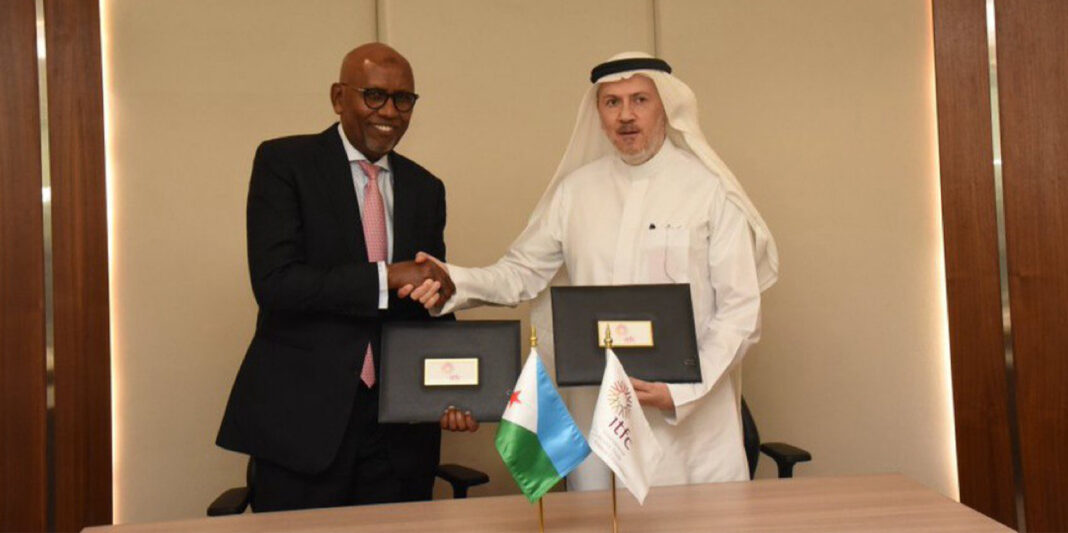
Signatories included Djibouti’s Minister of Economy and Finance in charge of Industry and Bank Group Governor, Ilyas Moussa Dawaleh, and the Bank’s Director General for East Africa, Alex Mubiru. The ceremony was attended by the Bank Group’s Vice President for Regional Development, Integration and Business Delivery, Nnenna Nwabufo.
Under the first agreement, a $22 million grant from the African Development Fund will finance the rehabilitation of seven kilometers of urban roads in Djibouti City as part of Phase I of the Integrated Urban Infrastructure and Climate Adaptation Project. The project aims to strengthen municipal resilience to climate shocks while improving mobility and access to essential services.
A second $30 million African Development Fund grant will support the upgrading of a key transport corridor linking Djibouti with Ethiopia and South Sudan under the Djibouti–Ethiopia–South Sudan Regional Transport Corridor Project. The initiative is expected to reduce logistics costs, shorten transit times and deepen regional trade integration across the Horn of Africa.
Two parallel agreements—each comprising a $14 million grant and loan from the Green Climate Fund—were signed under the Building Resilience for Food and Livelihoods in the Horn of Africa programme. The initiative promotes climate-smart agriculture, reinforces pastoral and agro-pastoral livelihoods, and expands economic opportunities for women and youth. The programme forms part of a broader regional strategy to shield vulnerable communities from recurring droughts and mounting ecological pressures.
“These agreements reflect our vision for a modern and resilient Djibouti,” Minister Dawaleh said. “By investing in our roads and agriculture, we are not just building infrastructure—we are securing the future of our most vulnerable communities.”
Mubiru added: “The agreements we sign today reaffirm our commitment to supporting the government’s development priorities, including Vision Djibouti 2035 and the emerging National Development Plan 2025–2030.”
The newly signed financing packages mark a significant expansion of the Bank’s engagement in Djibouti. According to official figures, the institution’s active portfolio in the country has more than doubled—from about $100 million at the launch of the 2023–2027 Country Strategy to $221 million within two years.
In a related development, the International Islamic Trade Finance Corporation and the Republic of Djibouti activated a $35 million sovereign financing facility, with Red Sea Bunkering designated as the executing agency.
The funding will support the procurement of refined petroleum products, strengthen bunkering operations and diversify revenue streams for Djibouti’s strategic maritime hub.
The facility operates under a broader $600 million, three-year framework agreement signed in May 2023. By prioritizing procurement from Organisation of Islamic Cooperation member states, the initiative seeks to boost intra-OIC trade, reinforce regional supply chains and advance Sustainable Development Goals 8, 9 and 17.
PIC
Ilyas Moussa Dawaleh, Djibouti’s Minister of Economy and Finance in charge of Industry and Bank Group Governor, and Alex Mubiru, the Bank’s Director General for East Africa.
QUOTE
“These agreements reflect our vision for a modern and resilient Djibouti,” Minister Dawaleh said. “By investing in our roads and agriculture, we are not just building infrastructure—we are securing the future of our most vulnerable communities.”